


We may receive a commission on purchases made from links.
It’s hard enough to create a show that wins over audiences and critics, let alone one that regularly keeps fans satisfied across its entire run. This is certainly true of science fiction series and even many of the most underrated sci-fi shows of all time have noticeable bad seasons. Shows can recover from bad seasons and return to their fans good graces, but the dip in quality still puts a blemish on an otherwise perfect track record. Simply put, keeping a show firing on all creative cylinders from top to bottom is a daunting challenge but definitely not insurmountable.
This list highlights science fiction series that ran for multiple seasons and maintained a strong level of quality throughout their respective runs. To clarify, this isn’t to say that all seasons are of equal quality or that there aren’t mediocre individual episodes. But the shows included here maintained a baseline level of quality across each season overall that make for a consistently enjoyable viewing experience. These are 10 sci-fi TV shows without a single bad season, ready to enjoy fully from beginning to end.
The Twilight Zone (1959)
Influential screenwriter and producer Rod Serling created the premier anthology television series “The Twilight Zone,” which ran for five seasons until 1964. With Serling personally hosting every episode, each installment featured a story combining bold imagination with thematically moral parables. Though the show veered into fantasy and horror, it also often depicted sci-fi tales and whenever it did so, it represented the genre magnificently. Standout examples from the original series include the sinister alien visitation episode “To Serve Man” and the terrifying thriller “The Invaders.”
After premiering in 1959, “The Twilight Zone” became one of the best shows of the 1960s, advancing the types of stories that could be told through television. Serling and the show’s other writers contributed plenty of thought-provoking tales, often punctuated with twist endings that left a haunting impact with audiences. The series was revived on television, each time with varying levels of success, but the original version remains the best. Still the bar against which all subsequent anthology series are judged, “The Twilight Zone” offered plenty of effective, self-contained sci-fi stories.
The Outer Limits (1963)
Premiering shortly before the final season of “The Twilight Zone,” “The Outer Limits” is another one of the best horror anthology shows of all time. The 1963 series also featured standalone stories with rotating casts in every episode, often concluding with a twist ending. Distinguishing “The Outer Limits” from Rod Serling’s creation is that it leaned into science fiction and horror more regularly than “The Twilight Zone.” This included the time-bending episode “The Man Who Was Never Born” and the alien invasion story “Corpus Earthling.”
With its pronounced genre focus, “The Outer Limits” often featured darker and more intense stories than the occasionally whimsical “The Twilight Zone.” Ultimately, the series is one that burned out quickly, cancelled after two seasons following a disastrous decision to change its time slot for its second season. Thirty years later, it received a revival in 1995 which ran for twice as long though never outshone the enduring charm and legacy of the original series. With just two seasons, “The Outer Limits” carved a lasting legacy and sterling track record that wasn’t afraid to get scary and weird.
Battlestar Galactica (2004)
After working for years on various “Star Trek” projects, Ronald D. Moore developed a reimagining of the cult classic sci-fi show “Battlestar Galactica.” The show opens with the Cylons, a race sentient androids, launching a devastating sneak attack on humanity, killing billions. The surviving humans flee the solar system in a small flotilla led by the aging cruiser Galactica in search of Earth to set up a new home there. The refugees are pursued mercilessly by the Cylons, who include agents disguised as humans among the fleeing group.
Whereas the original “Battlestar Galactica” was a campy product of its time, the 21st reboot is a grounded and gritty take on the space opera. This darker approach isn’t more intense just for intensity’s sake but signals a deeper and more mature level of storytelling being implemented from the top down. Audiences have debated if the series finale completely ruins the show for nearly 20 years but, regardless of the divisive ending, the rest of Season 4 still holds up well. “Battlestar Galactica” breathed new life into television sci-fi, bringing the genre into the age of prestige television as a stellar achievement in itself.
The Expanse
Premiering in 2015, “The Expanse” is a sweeping sci-fi show chronicling a harrowing conflict between Earth and human colonies throughout the solar system. Based on the novel series by James S.A. Corey, the story features Earth and Mars going to war against hostile colonies in the system’s asteroid belt. This is juxtaposed with the discovery of alien technology and a strange substance, known as a protomolecule, in the belt. The middle of these volatile developments is the Rocinante, a small gunship caught in the middle of the fighting.
Though it has slam-bang action sequences right from its early episodes, “The Expanse” provides audiences with a slow burn in terms of narrative scope. Ever since the beginning, the show deftly balances multiple plot lines and character arcs before converging them all spectacularly. The series also isn’t afraid to kill its darlings, keeping audiences off-balance with major deaths and plot twists every step of the way. Easily one of the best sci-fi shows streaming on Prime Video, “The Expanse” escalates into an explosive interplanetary adventure that only gets more riveting as it progresses.
Stranger Things
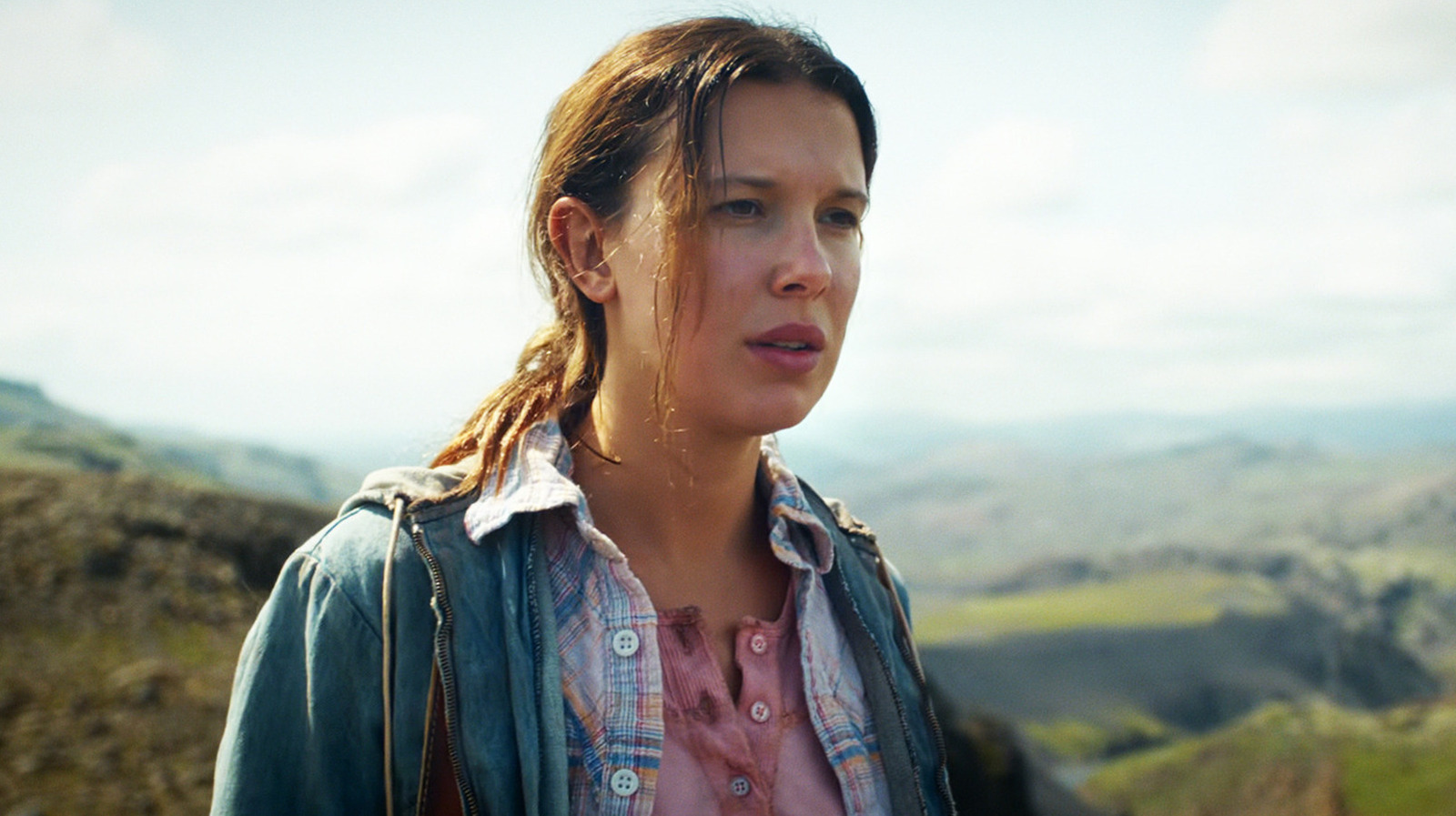
“Stranger Things” is one of the best sci-fi series streaming on Netflix, blending ’80s nostalgia with extra-dimensional horror and government cover-ups. The show is set in the Indiana town of Hawkins, starting in 1983, with a top-secret government facility nearby opening a portal to another dimension, nicknamed the Upside-Down. As unleashed monsters menace the community, a girl known as Eleven (Millie Bobby Brown) possessing powerful telekinetic abilities escapes custody and seeks refuge with a group of nerdy friends. One of the original Upside-Down test subjects, Vecna (Jamie Campbell Bower), commands the monsters from this nightmarish dimension to aid his plans to merge the world with his domain.
Yes, “Stranger Things” has another finale with a polarizing ending among fans, but its five-season achievement shouldn’t be discarded because of it. Every season felt like an event whenever it debuted and completely dominated television-centric discourse for months afterwards while any rumor about upcoming seasons became buzzworthy. Season 5 still packs plenty of surprises, even with audiences divided on how Vecna is defeated and the final fate of Eleven. A global phenomenon that kept audiences riveted whenever new episodes dropped, “Stranger Things” maintained its five-season iron grip on pop culture for a good reason.
Dark
Arguably the finest sci-fi show to come out of Europe, at least during the streaming era, the Netflix series “Dark” provides viewers a mystery of time-bending proportions. The show takes place in a small German town where children across multiple generations begin to suddenly disappear. As the four families affected by these incidents begin investigating what’s happened to the missing people, they discover it’s linked to caves under a nearby nuclear power plant. Uncovering a wormhole capable of traveling to different time periods, the families realize that a post-apocalyptic future is connected to their otherworldly find.
“Dark” maintains a complex web that only gets more elaborate as the story continues across its three-season run. The show starts out as a noir-tinged mystery before it ups the ante with its sci-fi elements, unafraid to get strange with its story. True to its title, there is an underlying uneasiness that gives way to sheer horror as the full scope of the series comes into focus. Moreover, “Dark” works towards a clear ending, rather than spinning its wheels or trying to make things up as it goes along, crafting a satisfying conclusion to its mystery.
For All Mankind
One of the inaugural Apple TV originals when the streaming service launched in November 2019 is “For All Mankind.” The show is set in an alternate history where the Soviet Union successfully lands a man on the moon before the United States. This prompts both the Space Race and Cold War to escalate and continue well into the 21st century. Global tensions inform humanity’s presence on the moon and Mars as this divergent timeline continues to experience ripple effects from 1969’s pivotal landing.
“For All Mankind” is one of the best alternate history TV shows of all time, creating a grounded sci-fi story that reframes and expands the Space Race. The show expertly maintains the delicate balance between the spacefaring stakes and the raw emotional drama between its main characters. With each season taking the narrative ahead roughly a decade, this saga becomes generational, adding the story’s sheer scope. “For All Mankind” will wrap with its sixth season at Apple TV, providing viewers through an alternate global history that presents prominent sci-fi elements fueled by complex interpersonal dynamics.
Upload
After creating shows like “Parks and Recreation” and the American version of “The Office,” Greg Daniels introduced a very different kind of comedy with “Upload.” The Prime Video series centers on the recently deceased Nathan Brown (Robbie Amell), whose consciousness is uploaded into a digital afterlife as part of a paid service. Even in this virtual paradise, Nathan has to contend with microtransactions and other foibles that come with his post-mortem status quo. Among the living, Nathan’s customer service rep Nora Antony (Andy Allo) begins to investigate the suspicious circumstances behind his death, uncovering a sinister conspiracy.
At once a meditation on mortality and a satire on a society that’s increasingly technologically dependent, “Upload” is one of the more sophisticated shows that Daniels has worked on. There are genuinely tragic and emotional moments that punctuate the story, but also some of the most surreal and absurd gags in a sci-fi comedy in recent memory. Amell brings a wide-eyed enthusiasm and easygoing going charm that elevates a lot of these jokes, complemented by a solid ensemble cast. Running for four seasons on Prime Video, “Upload” consistently finds humor in life after death -– for those willing to pay for it.
Resident Alien
The comic book “Resident Alien” by Peter Hogan and Steve Parkhouse serves as the basis for the Syfy series of the same name, premiering in 2021. The show follows an extraterrestrial who crashes on Earth, derailing his plans to eradicate humanity as per his superiors’ orders. Taking on the guise of small-town physician Harry Vanderspeigle (Alan Tudyk), the alien tries to blend in while plotting to continue his mission. However, through his interactions with the community of Patience, Colorado, including his best friend Asta Twelvetrees (Sara Tomko), Harry decides to spare humanity and protect it from future threats.
“Resident Alien” definitely contains plenty of screwball comedy elements, but steadily veers into time-bending sci-fi action and small-town drama as it progresses. This comes, in no small part, thanks to a career-best performance from Alan Tudyk, with the rest of the ensemble cast really elevating the material alongside him. This cast really makes Patience feel like a lived-in and fully realized community, gelling together and growing beautifully across the series’ run. Though “Resident Alien” was cancelled, fans still got a complete story and one that consistently grew richer in its four-season run.
Star Trek: Strange New Worlds
Another sci-fi show technically still on the air but headed for a clear ending with a solid run so far is “Star Trek: Strange New Worlds.” Set several years before the events of “Star Trek: The Original Series,” the 2022 show follows the adventures of Christopher Pike (Anson Mount) during his captaincy of the Enterprise. Despite knowing his tragic destiny, Pike leads his crew to defend the United Federation’s interests across the galaxy as they explore the cosmos. Joining him on the crew are younger versions of “Star Trek” familiar faces, including Spock (Ethan Peck) and Nyota Uhura (Celia Rose Gooding).
While its third season may not quite have reached the same level of quality as its two predecessors, “Star Trek: Strange New Worlds” still makes the franchise fun again. The show brings the social commentary, philosophical themes, and space combat the property is known for, but while remembering not to always take itself too seriously. This is elevated by the series’ sharp writing and effervescent ensemble cast, channeling the classic camaraderie that underscored “Star Trek’s” appeal for generations. “Strange New Worlds” is set to end with Season 5 and if it’s as good as Season 3, it’ll still be one of the best “Star Trek” shows in years.