Welcome to the Scoop: a weekly email series in which Elektra Kotsoni quizzes fashion insiders on the stories of the week. This will be a way for the Vogue Business community to synthesize and reflect on the latest headlines and get a little inside scoop every Friday.


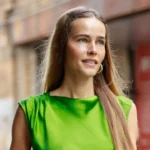
This week’s guest is Fashion Council Germany CEO Scott Lipinski. When Mercedes-Benz pulled its sponsorship of Berlin Fashion Week in December 2022, many thought it would be the end of the event. But Lipinski, who has been in the job since 2017, and his team took the blow as an opportunity for a new beginning.
It seems they succeeded. We keep covering it after all. Berlin Fashion Week starts today, so yesterday, I gave Scott a call.
Hi Scott! What’s the scoop?
We are working on opening up a showroom in Paris. It’s part of our international strategy. There are two phases in our strategy that we set in early 2023, when we relaunched Berlin Fashion Week after Mercedes-Benz pulled out as an organizer and sponsor. The first phase was establishing a new Berlin Fashion Week, which we did. The second phase was “Go International”. We do delegation trips, of course — we’ve traveled to the US four times, and we have also been to Korea and Japan. The next step is opening up a showroom during Paris Fashion Week. It’s looking good. We are hoping to launch either this October or at the beginning of next year.
That’s really exciting. How does it work? Who gets to show in the showroom?
If you look at Berlin Fashion Week, we have something called Berlin Contemporary, where an international jury selects around 20 brands per season to be supported by the Senate for Economic Affairs, Energy and Public Enterprises, each receiving €25,000 to organize their show. It might be mainly out of that pool from Berlin contemporary that we will choose the showroom brands. But we might also end up handpicking others that we find are a perfect match for that showroom. It’s very important to us that the showroom feels highly curated.
What does it take to open a showroom for a national fashion council?
It takes money. We are looking into finalizing partnerships with private institutions that would want to support us. But we are also looking at governmental bodies for support, and it’s looking positive.
The age of AI is upon us, and everyone is worried about job security and unsure how to build their careers. How do you advise Berlin designers and other creatives in your circle when it comes to safeguarding their future?
At the very beginning of my career, I started working with a company called Accenture. I was consulting with large companies like DHL and the Deutsche Post in ERP systems, like SAP or Oracle, which were just being implemented. I always compare that time to now. People were so worried about losing their jobs back then. And it did mean that fewer people were needed in the sales or purchasing departments. But other departments, like IT, grew bigger.
Looking at AI from a macroeconomic perspective, it doesn’t necessarily mean that jobs are going to be lost, but that they will be changing. And what I see right now among the young designers in Berlin is that they’re not so afraid of AI. We did a delegation trip to Korea and Japan recently and I was really surprised by how much the brands we met there use AI as a supportive tool. They use it to complement weaknesses they have, writing formal letters or planning content. I haven’t seen any brands use it to get out of their creative tasks.