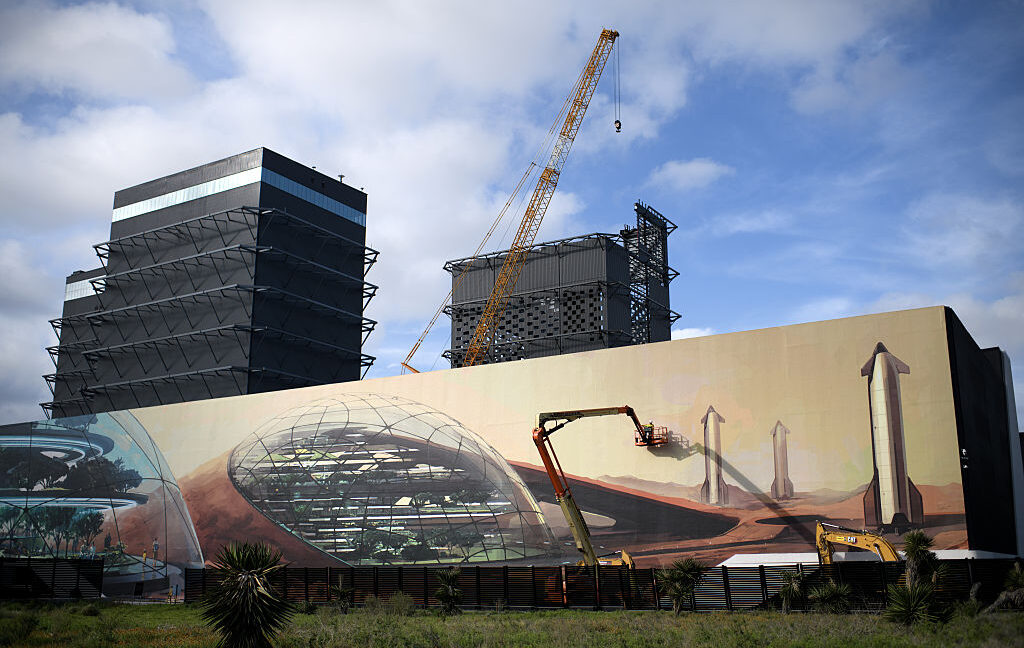
In this, Musk is starting to sound a lot more like Bezos when it comes to his vision for human habitation in space, rather than the Mars-first advocate he has always been.



One other sobering thing to think about in terms of a lunar mass-driver: it is potentially an extremely potent weapon to threaten Earth with large projectiles. We cannot know if Musk has had any conversations with US military officials about this, but anyone who has read The Moon Is a Harsh Mistress by Robert Heinlein will understand Luna’s position as the ultimate high ground. And the US Space Force is not ignorant of this.
So what does all this mean?
In the short-term, it does not mean a whole lot. To anyone paying attention, SpaceX was not on track to send a Starship to Mars in 2026, and the 2028 window was looking rather unlikely as well. Mars was always in the distance, and now it will remain so.
By focusing on the Moon, Musk is making a decision that benefits NASA and the United States. Because for all of Blue Origin’s promise with a slimmed down lunar lander, Starship offers a promising avenue to return humans to the Moon in the near term.
Another advantage of Starship is its enormous payload capacity, able to bring 100 metric tons, or more, of cargo down to the Moon. For anyone seeking to build a commercial business on the Moon, Musk’s 180-degree pivot represents an enormous opportunity.
For Mars advocates, however, Musk’s turn is a bitter pill to swallow. There have long been many dreamers who spoke of settling Mars, but only Musk actually built the hardware and financial war chest to make such dreams a reality. And it is true that, in the long-term, Mars offers a more favorable (although still inhospitable) environment for human settlement, with a thin atmosphere, water ice both on the surface and beneath the ground, methane, and more.
But those dreams are now deferred as Musk has bowed to a harsh reality: The Moon may be hard, but it is a lot easier to develop than Mars, which is only accessible every 26 months when the planets align.