Many European nations have their own satellite projects. Historically, their preference for launching on European rockets has not been as strong as it is for pan-European programs managed by ESA and the EU. So it has never been unusual to see a British, German, Spanish, or Italian satellite launching on a foreign rocket.



This posture is starting to change. All four of these nations have invested in homegrown rockets in recent years. Germany made the biggest splash last year when the government announced $41 billion (35 billion euros) in space spending over the next five years. “Satellite networks today are an Achilles’ heel of modern societies. Whoever attacks them paralyzes entire nations,” said Boris Pistorius, Germany’s defense minister, during the announcement.
Every satellite network needs a launch pad and a rocket. In late 2024, the German federal government made more than $110 million (95 million euros) available to three German launch startups: Isar Aerospace, Rocket Factory Augsburg, and HyImpulse. All three are also backed by private funding, with Isar leading the pack with approximately $650 million (550 million euros) from investors. None have reached orbit yet. For comparison, Rocket Lab, the world’s most successful launch startup not founded by a billionaire, raised $148 million (approximately $200 million adjusted for inflation) before reaching orbit in 2018. Nearly all of it came from private sources.
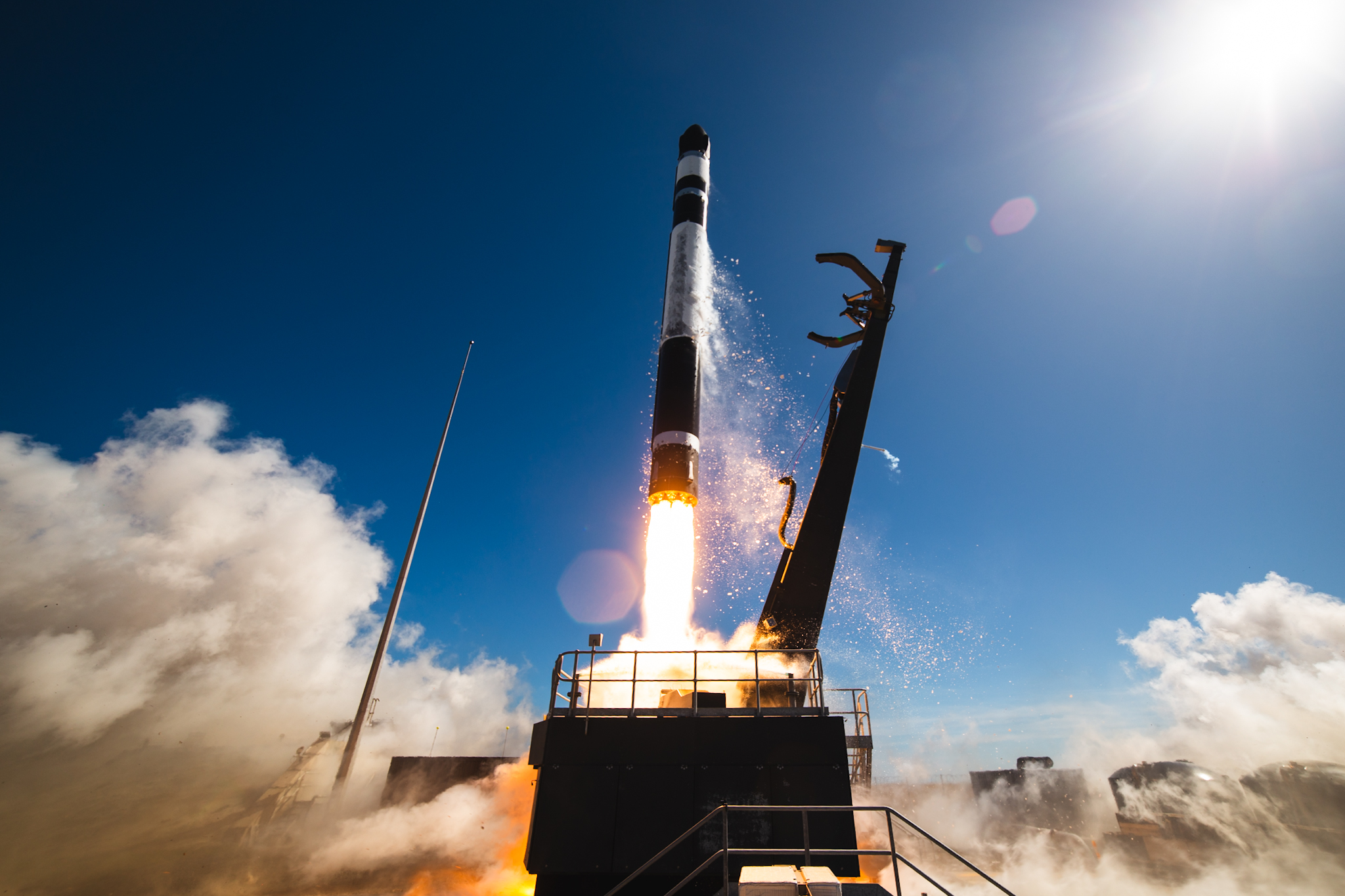
Credit:
Rocket Lab
Rocket Lab, which operates the Electron small satellite launcher seen in this image, is the most successful modern commercial launch startup not founded by a billionaire. Rocket Lab went public in 2021, three years after its first successful orbital launch.
Credit:
Rocket Lab
In 2023, the Italian government committed more than $300 million in support of Avio, the company that already builds and operates the Vega satellite launcher. Avio is based in Italy and is using the funds to develop methane propulsion, among other things.
With help from other ESA member states, Italy is one of the countries that already has a rocket made largely of domestic or European components. The United States, Russia, China, France, Japan, the United Kingdom, India, Israel, Iran, North Korea, South Korea, and New Zealand have also successfully launched satellites using their own rockets.