Ice racing is probably the purest and most challenging form of low-grip driving. On ice, the performance envelope of a normal car on normal tires is extremely small. Driving fast on ice, then, means learning how to make your car do what you want, even when you’re far outside of that envelope.



There are many techniques involved, but it all starts with getting comfortable with entering your car into a slide and sustaining it. Learning to balance your car in a moderate drift, dancing between terminal understeer (plowing into the snowbank nose-first) and extreme oversteer (spinning into the snowbank tail-first), is key. That comfort simply takes time.
Reading the ice
Credit:
Tim Stevens
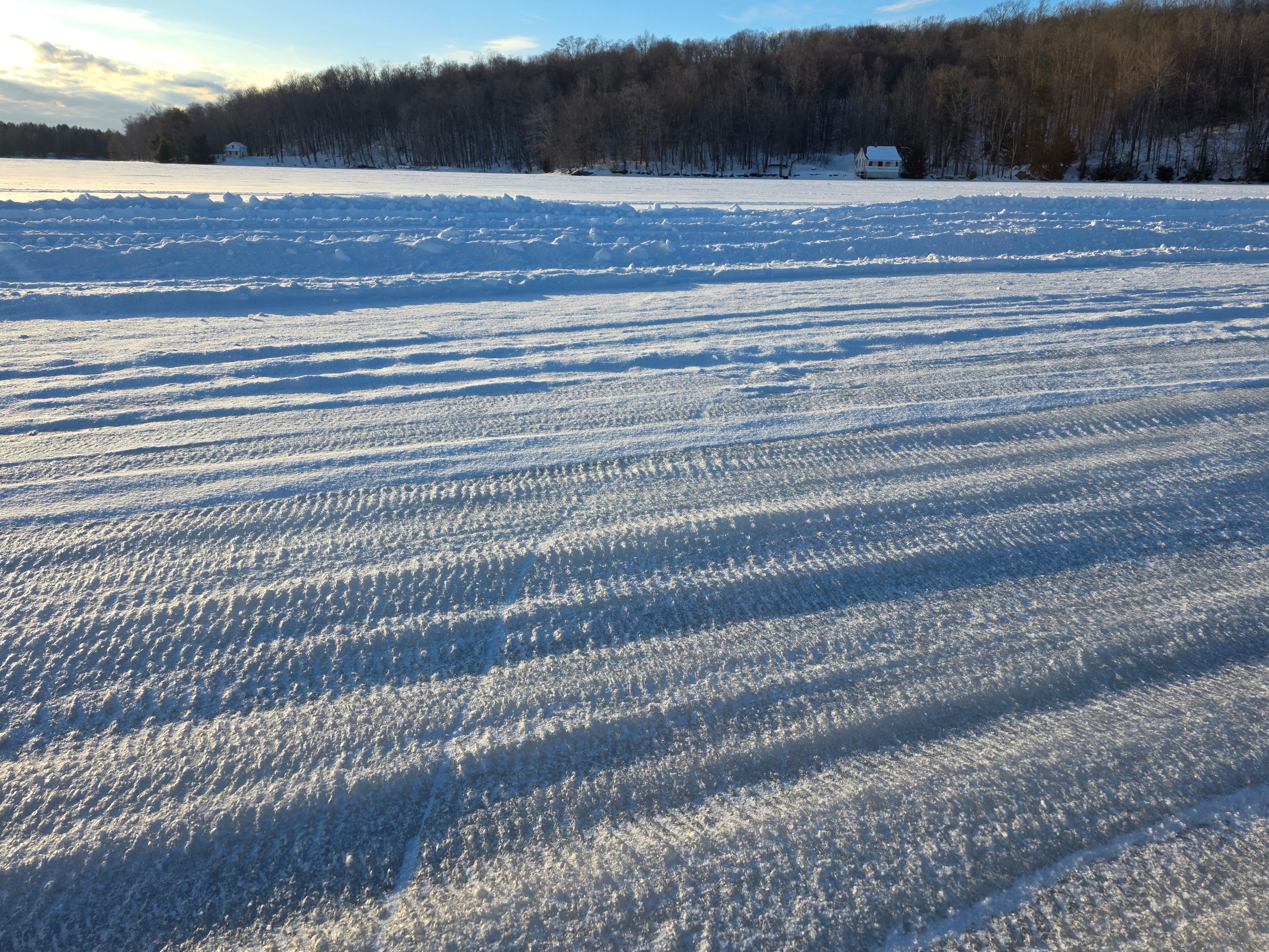
The condition of the track changes constantly.
Credit:
Tim Stevens
Once you figure out how to keep your car going in the right direction, and once you stop making sedan-shaped holes in snowbanks, the next trick is to learn how to read the ice.
The grip level of the ice constantly evolves throughout the day. The street-legal tires tend to polish it off, wearing down rougher sections into smoothly polished patches with extremely low grip. The race studs, on the other hand, chew it up again, creating a heavily textured surface.
If you’re on the less extreme sorts of tires, you’ll find the most grip on that rough, unused ice. In a race stud, you want to seek out smooth, clean ice because it will give your studs better purchase.
If you’re familiar with road racing, it’s a little like running a rain line: not necessarily driving the shortest path around, but instead taking the one that offers the most grip. Imagine a rain line that changes every lap and you start to get the picture.
How can I try it?
Intrigued? The good news is that ice racing is among the most accessible and affordable forms of motorsport on the planet, possibly second only to autocrossing. Costs vary widely, but in my club, AMEC, a full day of racing costs $70. That’s for three heat races and a practice session. Again, all you need is a set of snow tires, which will last the full season if you don’t abuse them.