The helium system on the SLS upper stage—officially known as the Interim Cryogenic Propulsion Stage (ICPS)—performed well during both of the Artemis II countdown rehearsals. “Last evening, the team was unable to get helium flow through the vehicle. This occurred during a routine operation to repressurize the system,” Isaacman wrote.


Credit:
Stephen Clark/Ars Technica
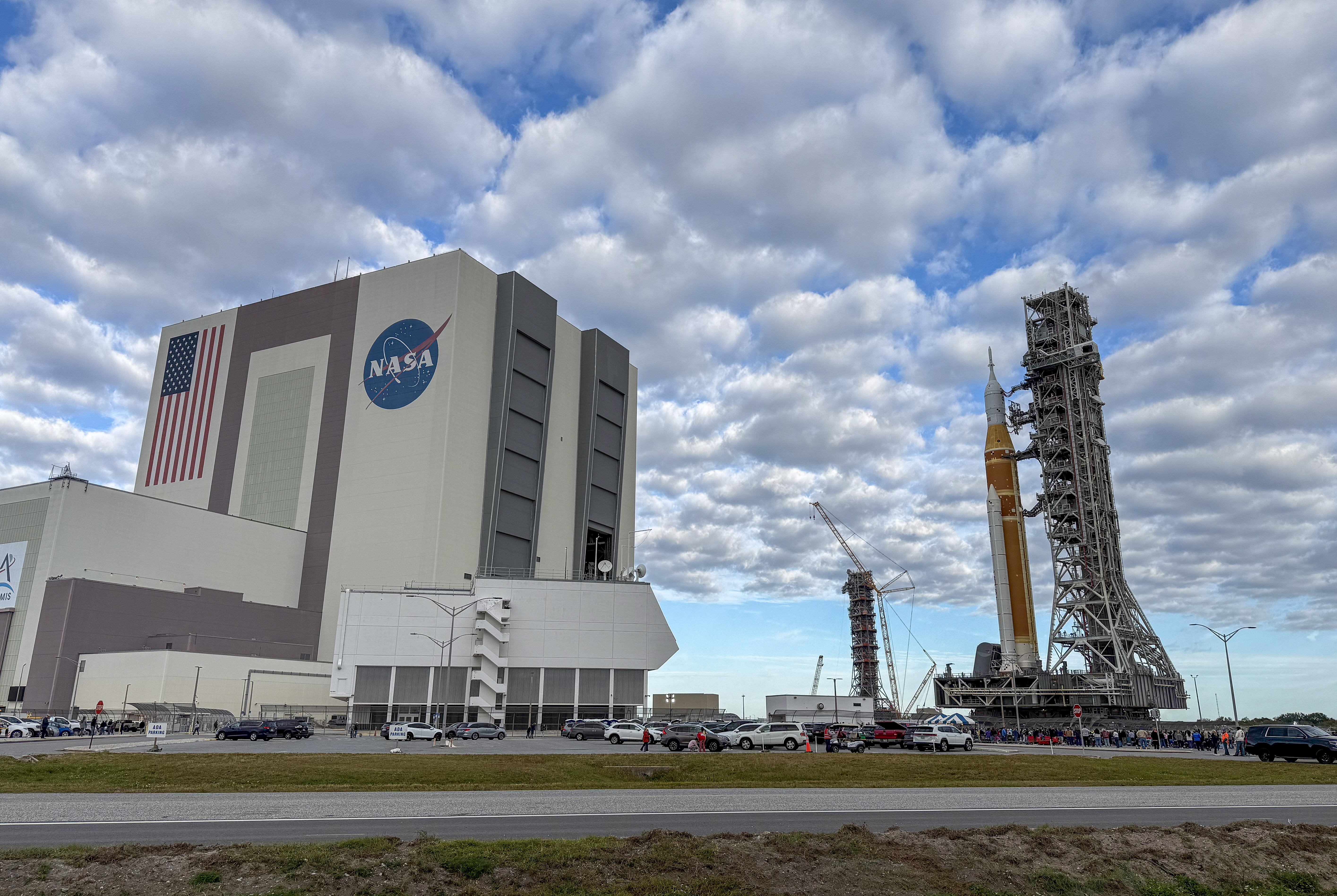
The Space Launch System rocket emerges from the Vehicle Assembly Building to begin the rollout to Launch Pad 39B last month.
Credit:
Stephen Clark/Ars Technica
Another molecule, another problem
Helium is used to purge the upper stage engine and pressurize its propellant tanks. The rocket is in a “safe configuration,” with a backup system providing purge air to the upper stage, NASA said in a statement.
NASA encountered a similar failure signature during preparations for launch of the first SLS rocket on the Artemis I mission in 2022. On Artemis I, engineers traced the problem to a failed check valve on the upper stage that needed replacement. NASA officials are not sure yet whether the helium issue Friday was caused by a similar valve failure, a problem with an umbilical interface between the rocket and the launch tower, or a fault with a filter, according to Isaacman.
In any case, technicians are unable to reach the problem area with the rocket at the launch pad. Inside the VAB, ground teams will extend work platforms around the rocket to provide physical access to the upper stage and its associated umbilical connections.
NASA said moving into preparations for rollback now will allow managers to potentially preserve the April launch window, “pending the outcome of data findings, repair efforts, and how the schedule comes to fruition in the coming days and weeks.”
It’s not clear if NASA will perform another fueling test on the SLS rocket after it returns to Launch Pad 39B, or whether technicians will do any more work on the delicate hydrogen umbilical near the bottom of the rocket responsible for recurring leaks during the Artemis I and Artemis II launch campaigns. Managers were pleased with the performance of newly-installed seals during Thursday’s countdown demonstration, but NASA officials have previously said vibrations from transporting the rocket to and from the pad could damage the seals.