The act gives the administration the ability to “allocate materials, services and facilities” for national defense. The Trump and Biden administrations used the act to address a shortage of medical supplies during the coronavirus pandemic, and Trump has also used the DPA to order an increase in the US’s production of critical minerals.



The Pentagon has pushed for open-ended use of AI technology, aiming to expand the set of tools at its disposal to counter threats and to undertake military operations.
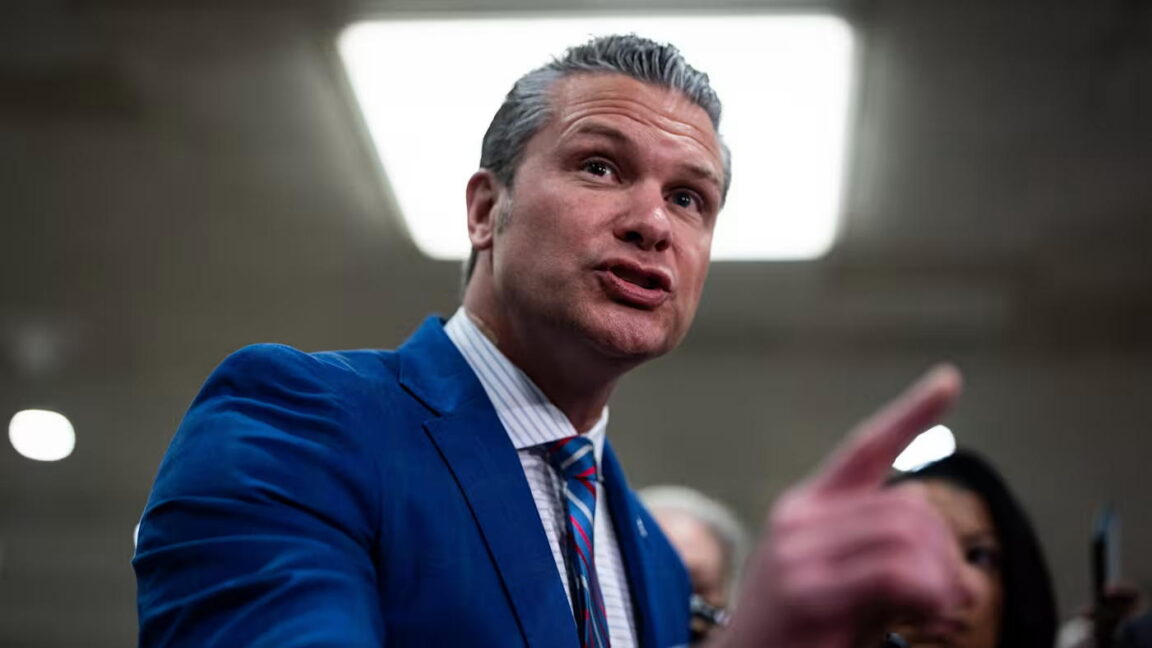
The department released its AI strategy last month, with Hegseth saying in a memo that “AI-enabled warfare and AI-enabled capability development will redefine the character of military affairs over the next decade.”
He added the US military “must build on its lead” over foreign adversaries to make soldiers “more lethal and efficient,” and that the AI race was “fueled by the accelerating pace” of innovation coming from the private sector.
Anthropic has expressed particular concern about its models being used for lethal missions that do not have a human in the loop, arguing that state of the art AI models are not reliable enough to be trusted in those contexts, said people familiar with the negotiations.
It had also pushed for new rules to govern the use of AI models for mass domestic surveillance, even where that was legal under current regulations, they added.
A decision to cut Anthropic from the defense department’s supply chain would have significant ramifications for national security work and the company, which has a $200 million contract with the department.
It would also have an impact on partners, including Palantir, that make use of Anthropic’s models.
Claude was used in the US capture of Venezuelan leader Nicolás Maduro in January. That mission prompted queries from Anthropic about the exact manner in which its model was used, said people familiar with the matter.
A person with knowledge of Tuesday’s meeting said Amodei had stressed to Hegseth that his company had never objected to legitimate military operations.
The defense department declined to comment.
© 2026 The Financial Times Ltd. All rights reserved. Not to be redistributed, copied, or modified in any way.