
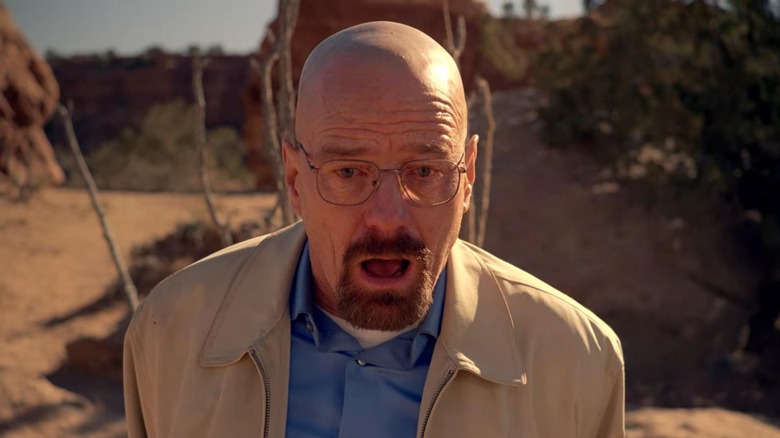
“Breaking Bad” tends to come across as a fairly grounded show, even if it doesn’t always pretend to be a paragon of realism. Sure, there are plenty of unbelievable moments, such as Gus Fring’s (Giancarlo Esposito in his best TV role) eerily composed and grisly death scene or Walter White’s (Bryan Cranston) machine gun antics in the deadly “Breaking Bad” series finale, “Felina.” Even so, the series might feature memorable — and even outlandish — characters, but it retains a gritty overtone that makes it easy for viewers to believe that something like this could plausibly play out in real life.
While some of the show’s more fantastical elements are pretty obviously storytelling choices meant to impress the audience, there are also details that simply can’t appear on screen exactly as they exist in real life. One of them, of course, is the specific way Walt, a genius chemist, cooks his particular blue brand of methamphetamine. In a 2011 interview with NPR, the AMC show’s scientific advisor, organic chemist Donna Nelson, confirmed that creator Vince Gilligan took great pains to remix the process in order to avoid accidentally describing to millions of people how the drug is really made.
“That was actually one of the concerns of a lot of people, but Vince Gilligan has been very clever,” Nelson said. “You know, there are multiple ways to make meth. And so although his scenes are very accurate, he will sort of [combine] together parts of different syntheses, so that if you just simply followed the one synthesis as it’s presented, you wouldn’t come out with methamphetamine.”
Breaking Bad was careful about what scientific details it showed
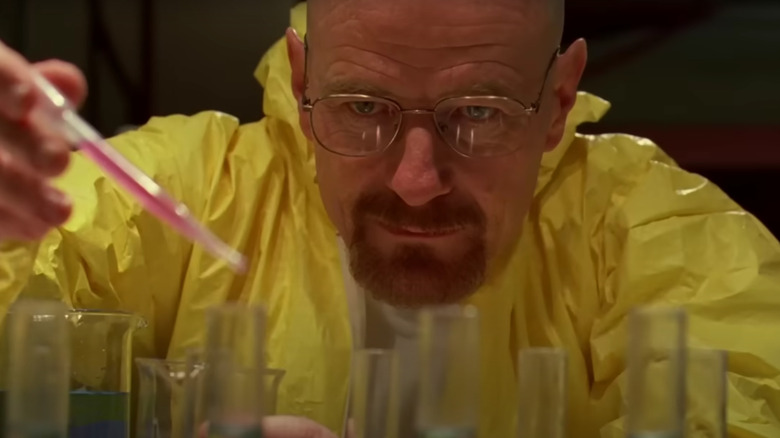
From the outset, Vince Gilligan took steps to avoid giving “Breaking Bad” viewers a ready-made recipe for drug manufacturing. However, even with those precautions in place, the show made sure to do its research. As production designer Robb Wilson King told The Guardian in 2025, he prepared for the series by gaining access to real meth-cooking operations. “It was pretty scary,” he said. “You’re dealing with a real dangerous thing. If it’s done wrong in your presence, you could suffer. But it’s important to feel it and see it — you can translate that to film.”
Beyond studying real drug operations and keeping qualified science advisors on board, “Breaking Bad” also received guidance from the Drug Enforcement Administration. The DEA was keen to advise and supervise production to ensure Gilligan’s vision — particularly his goal of not giving away too much information about meth manufacturing — stayed on course. A DEA consultant also helped the team understand the essentials of how the agency operates and, as King suspects, to make sure the show didn’t get every detail entirely right. “They were also likely there to ensure we didn’t spill too many beans in the show, because there were a lot of secrets involved,” King told The Guardian. “You don’t want ‘the cooking family’ to know what the DEA is doing.”
Both “Breaking Bad” and its spin-off “Better Call Saul” revolve around the drug trade. With that in mind, it’s reassuring to know the people behind this world were careful about what they show — and what they deliberately left out.