With just six rockets and eight drones, Hizbollah this week plunged Lebanon back into a war that most of the country’s people — including some of the militant group’s own base — vehemently oppose.

Since entering the war between Israel, the US and Iran on Monday, the Lebanese group has fired volleys of rockets and explosive-laden drones at northern Israel, triggering a thunderous response.
Almost as soon as the rockets were launched, tens of thousands of Lebanese across the country — already displaced and battered by more than two years of conflict with Israel — fled areas likely to be in the line of fire, in a renewed humanitarian crisis the country can little afford.
To many outside observers, Hizbollah’s decision seemed reckless, particularly in the face of Israel’s publicly stated threat to fully destroy the group. “Pointless. Imprudent. Suicidal,” said one western diplomat.

The decision to support its backer Tehran in its darkest hour also went against a message that Hizbollah recently sent to Lebanon’s government, that it would not take part in such a conflict.
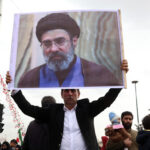
But to experts and people familiar with the group’s thinking, it was anything but baffling, not least because the Shia militant group had consistently said the killing of Iran’s supreme leader Ayatollah Ali Khamenei would be a “red line”.
“For Hizbollah, this was an obvious choice,” said Mohanad Hage Ali of the Carnegie Middle East Center in Beirut. “This is an existential battle for its survival.
“It would be just as suicidal if they didn’t join in and Iran was weakened or obliterated. It would leave them exposed to another Israeli operation and without the Iranian backer.”

Some within Hizbollah also hope it may eventually be included in a regional ceasefire, which could — in a best-case scenario — put a stop to Israeli attacks on the group in Lebanon.
So far that looks a distant prospect. Israel said on Tuesday it had launched ground operations in Lebanon and was “creating a buffer”, raising fears this could lead to a more permanent Israeli presence inside Lebanese territory.
Since the 2024 full-scale war, Israel has maintained troops in at least five positions in southern Lebanon.
Hizbollah has long been viewed as Lebanon’s most potent military and political force, and the crown jewel in Iran’s network of allied proxy forces in the region. But its strength has waned ever since the group started firing into Israel after Hamas’s October 7, 2023 attack, triggering a war with Israel on its own turf.
That war decimated its leadership and greatly reduced its capabilities. Despite a US-brokered ceasefire that nominally ended the full-scale war in 2024, Israel has continued to strike Hizbollah almost daily, killing hundreds of its cadres and trying to stamp out any resurgence.
The 2023 decision to strike Israel — made by veteran leader Hassan Nasrallah, who was subsequently killed by Israel in 2024 — was largely dictated by a policy mandating collective action. Known as the “Unity of Fronts”, the strategy dictated that all allies in Tehran’s axis must intervene against Israel if one member was attacked.

Many, both inside and outside the group, now see that decision as a fatal strategic miscalculation. It left the group in disarray, vulnerable to domestic and international pressures. Iran’s Islamic Revolutionary Guard Corps advisers quickly stepped in to help get the group back on its feet.
But the 2023 decision also ushered in new leadership for the group — now headed by Nasrallah’s less charismatic deputy, Naim Qassem — and triggered fierce internal debates about its future. One crucial question: whether domestic interests should trump a strategic and ideological commitment to Iran.
For months, analysts and people familiar with the group’s thinking have spoken about internal rifts. One camp, thought to be led by Qassem, has pushed to prioritise domestic interests with an eye to a political future.
The other, consisting of hardliners more ideologically committed to Iran’s transnational project, sees the group’s future as inherently tied to the Iranian regime’s survival.
“They know without Iran they are finished,” one of the people said. “They also know they have a debt to repay — they were created for Iran’s survival and it is time to step up.”
Similar debates have plagued other groups in Iran’s regional axis, which are also divided over whether to sacrifice their own political and economic interests. They are wary of being seen as fighting a war for Iran.
“These groups are in survival mode,” said Renad Mansour, an expert on Iraqi militia groups at Chatham House.
Hizbollah, like Iraq’s Shia militias, was having to negotiate conflicting demands, he said: “Some people in these groups know their source of power comes from competing domestically, but others derive their power from affiliation to Iran and Khamenei — so they don’t necessarily agree on what survival looks like.”
In the wake of the Iranian leader’s killing, the source of the group’s power and legitimacy has come into even sharper focus. Khamenei was an important Hizbollah patron and ensured it was well resourced even as Iran’s economy plummeted.
“Naim Qassem takes his authority from the fact that he represents Khamenei, ideologically speaking. Partisans on the ground listen to him on that basis,” said Hage Ali.

“Now that [Khamenei is] dead, the new Iranian leadership could decide that Hizbollah is no longer relevant. That raises questions about what Naim Qassem stands for and if he can keep control without funding, charisma and ideological legitimacy.”
Local media reports in Lebanon suggested some of these hardliners launched the attack on Israel without consulting Qassem, forcing his hand.
When Israel attacked Iran in June 2025, Iran told its regional proxies, including Hizbollah and Iraq’s militias, not to get involved, according to people familiar with the decision. Hizbollah duly sat out that conflict.
There is no indication that they have been asked to hold back this time around. One person familiar with the group’s thinking suggested Hizbollah’s participation might have been invoked by Iran.
“Regardless of how the decision was made, they didn’t say no,” said Hage Ali.
As well as prompting a tough Israeli response, the decision has emboldened Lebanon’s government to ban Hizbollah’s activities despite its fear of triggering civil strife.
The decision was supported by Hizbollah’s longtime ally Nabih Berri, longtime Speaker of Lebanon’s parliament. He reportedly signed off on the government’s actions, angered by Hizbollah’s volte-face on their assurances they would not enter the conflict.
But the group has doubled down. It went on to launch 14 salvos in less than two days, defying some estimates that its military capabilities had been degraded enough to prevent it from attacking Israel, even if it wanted to.
The group has also relied more heavily on drones, whose launch positions are less easily detected and which can skirt some air defences — a critical lesson from the last full-scale confrontation.
Lebanon’s foreign minister previously said the country had “received signs” that Israel could target civilian infrastructure if Hizbollah joined the fight. But a person briefed on the situation said there were no plans to do so.
“The goal is to hit Hizbollah, not the Lebanese government. The Americans also want Israel to avoid that,” the person said.
Still, Israeli leaders hope this war may be Hizbollah’s last stand. Eyal Zamir, chief of staff of Israel’s military, said this week: “We will end this campaign with not just Iran being struck but with Hizbollah suffering a devastating blow.”
Additional reporting by James Shotter in Jerusalem