Much like her childhood identification with communism, her writing began as something of a joke. She was utterly devoted to the Party’s ideals, but she also had a keen eye for grandstanding, and she noticed that some of her comrades seemed more committed to social climbing than to curing society’s ills. As a provocation, she wrote and self-published a satirical pamphlet, “Lifeitselfmanship, Or How to Become a Precisely-Because Man: An Investigation Into Current L (or Left-Wing) Usage,” in which she mocked the posturing lingo that had come to dominate the Party. In place of simple phrases, she argued, members tended toward bloviated, self-serious verbiage. In a letter to her mother, Decca wrote that one of the most amusing outcomes of her stunt was that “the worst offenders love it best.”


This became Decca’s signature: by writing about serious topics with flair, she wooed people into paying attention. The qualities she cultivated during childhood—acid wit, poking playfulness, the blustery confidence of privilege—were enlisted to defend the powerless. “As a writer she could stand on her own,” Kaplan writes, “facing her reader, backed by her prodigious research and self-confidence.”

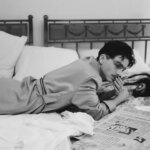
Decca with her husband Bob Treuhaft, in May, 1977.Photograph by Mike Stephens / Stringer / Getty
Decca’s writing career was greased by the publication of “Hons and Rebels,” in 1960. But it was her turn to reportage that made her a star. In 1962, she wrote a piece for Esquire about her travels through the American South, including a night she spent huddled in a Montgomery church with Martin Luther King, Jr., and the Freedom Riders, while an angry mob encircled the building, throwing rocks and stink bombs. The next year, she published “The American Way of Death,” a book about the predations of the funeral business.
Decca researched every possible aspect of the funerary process, from coffin materials to “burial lingerie.” She revelled in infiltrating funeral homes, posing as a potential customer and then allowing her subjects to, as Kaplan writes, “humiliate themselves.” Her book was granular on the subject of embalming, devoting much of her manuscript to the gory particularities of the procedure.
Decca’s inclusion of such details caused a rift with her publisher, who asked her to “cut out the foolishness.” Decca refused. At the last minute, the book was rescued by Robert Gottlieb, a young editor at Simon & Schuster (and, later, the editor of this magazine). “We saw everything the same way,” Gottlieb said—which is to say, they both felt that good journalism should be pesky and unafraid. “The American Way of Death” sold hundreds of thousands of copies, led to a series of congressional hearings, and prompted people around the country to ask for a stripped-down, low-cost memorial, which came to be called a “Mitford service.”
It makes sense that Decca, who as a child felt deprived of knowledge and robbed of agency, would become, as Time dubbed her in 1970, the “Queen of Muckrakers.” Nosy and defiant, she had a need to find things out and to tell everyone what she’d found. In a way, journalism was the ultimate expression of her class treachery. Aristocrats are raised to guard secrets, especially about those in power. She discovered a way to weaponize the lively patois of her youth for more than just banter; her prose was the lure, but the facts were her vindication.
The publication of “The American Way of Death” comes around halfway into Kaplan’s book—Decca lived quite a bit of life after she’d become the reigning expert on what comes after it. She wrote several more books, including “Kind and Usual Punishment” (1973), an exposé about the prison system; “A Fine Old Conflict” (1977), a memoir of her work in the Communist Party, which she left in 1958; and “The American Way of Birth” (1992), in which she attempted to do for the obstetric field what she had done for the funeral trade. None of these works reached the cultural ubiquity of “Death,” but they fed both her curiosity and what she called her “appetite for tracking and destroying the enemy.”
Decca’s writing made her rich—an odd outcome for a woman who had walked away from her family’s wealth—and she often worried about becoming complacent. “She had always disdained,” Kaplan writes, “radicals who mellowed with age, calling them traitors, fools, or worse.” She declined to be governed at every turn, even when it put her career in jeopardy. In 1970, she published an article in The Atlantic titled “Let Us Now Appraise Famous Writers,” which took down a mail-order writing course that she felt exploited the vulnerable; one of the faces of the course was Bennett Cerf, a co-founder of Random House, which had acquired Knopf, Decca’s publisher. The idea of destabilizing her patron did not deter Decca’s pursuit; if anything, it seemed to thrill her. Even after her death, from lung cancer, in 1996, she kept acting up. As one last punkish gesture, Kaplan recounts, Decca directed an assistant to send a posthumous letter to the nation’s most prominent funeral corporation, asking for reimbursement for all the attention she’d brought them.
Decca remained estranged from her sister Diana until the end, but she retained a softness for the other surviving Mitford girls. A particularly painful episode occurred in 1976, when she learned that her sisters were furious at her for assisting one of Unity’s biographers. Pamela and Deborah accused Decca of stealing a family scrapbook to aid the writer, leading to the threat of an irrevocable break. “I’m fearfully sad,” Decca wrote, of the squabble. “It’s sort of an ongoing nightmare.” The scrapbook magically turned up inside Deborah’s mansion, and the parties eventually made up, but Decca wrote that the very idea of never speaking to her siblings again had shaken her deeply, calling the rift “one of the worst things that’s happened.” In the end, her disobedience—forged in tandem with and in opposition to her tribe—felt unmoored without a fellow-Mitford’s pigtail to pull. On the night before she died, Decca could no longer speak, but she still requested to call Deborah on the telephone. “Decca’s words were indecipherable,” Kaplan writes, of that final connection. “But she seemed to hear her sister well.” ♦