Unlock the White House Watch newsletter for free


Your guide to what Trump’s second term means for Washington, business and the world
For a moment this week, Donald Trump hinted that he was preparing for an off-ramp from the US’s war against Iran. The conflict, the US president said, was “very complete”. As intended, his comments had a soothing effect on rattled energy markets. The price of oil dipped below $90 a barrel having earlier soared to nearly $120. But once markets had closed on Monday, Trump was, once again, sending out conflicting signals. The US, he said, would not “relent until the enemy is totally and decisively defeated”, adding: “We haven’t won enough.”
His shifting comments underscored his cavalier attitude towards a devastating war. Since launching the biggest conflict in the Middle East in decades after being spurred on Israeli Prime Minister Benjamin Netanyahu, Trump has been boastful, belligerent and confusing in equal measure. The critical question of how the conflict ends is left unanswered. He has failed to articulate a clear set of goals or a day-after plan. He has spoken about destroying the Islamic republic’s ballistic arsenal and nuclear programme, a Venezuela-style leadership change, and an “unconditional surrender”.
On Monday, he described the war, which involves the biggest US military deployment in the Middle East since the 2003 US-led invasion of Iraq, as a “little excursion”. At the weekend, he dismissed concerns about rising fuel prices as “a little glitch”. His administration appears to have underestimated the repercussions of the conflict it unleashed and failed to understand its enemy.
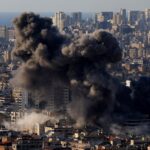
US and Israeli officials say Iran’s ability to launch missiles has been significantly debilitated. Ayatollah Ali Khamenei, the supreme leader, and other senior officials were assassinated on the first day of the war. Tehran and other cities have endured relentless bombardment too.
Yet if Trump expected the regime to capitulate under fire, he is being proven wrong on a daily basis. Cornered and battling for its life, the regime has been lashing out in all directions, fighting an asymmetrical war of attrition that it has long prepared for. It is still firing salvos of missiles and drones at Israel and the US’s Gulf allies, severely disrupting travel and trade. The flow of traffic through the Strait of Hormuz has slowed to a trickle and Gulf states are being forced to halt or reduce oil and gas output.
Gulf leaders had pressed Trump not to strike Iran and warned of the risks of a regional conflict if he did. Now their nations are bearing the brunt. Yet Trump told Fox News on Monday he was surprised that Iran “attacked countries that were not attacking them”.
There are hints that he is indeed seeking an off-ramp. Yet the war he started has no good ending. There are no signs the regime is about to capitulate — it appointed Khamenei’s son, Mojtaba, as successor to his father in an act of defiance. Nor are there indications that it is facing imminent collapse. The Iranians who protested against the regime in their masses, before a brutal crackdown in January killed thousands, are not taking to the streets, no doubt more concerned today about their own safety.
Any chances of a transition to a more moderate, less hostile government appear remote. If the regime were to disintegrate, the more likely outcome is a fragmented, fractured nation. Iranians will suffer and its neighbours will have another failed state in their backyard.
Continuing the war risks triggering a bigger energy crisis that would have consequences for the global economy and, most important for Trump, endanger Republicans ahead of the mid-term elections. Ending it will leave the regime wounded and weakened, yet able to claim its survival as a victory. Whichever path Trump now takes, it will be others who pay the price of his Iran folly.