


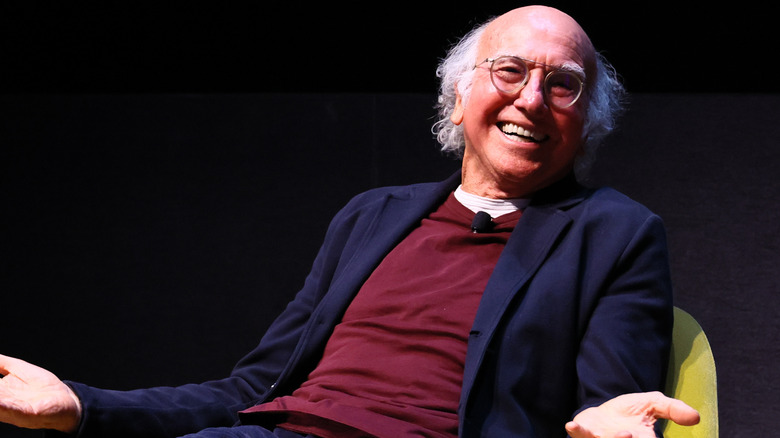
“The Contest” is the best episode of “Seinfeld” ever, according to many fans and critics. But Larry David never actually expected NBC to greenlight its taboo premise — a contest to see who can go the longest without self-pleasuring.
The episode’s central wager was based on a real bet Larry David once made with his friend Frank Piazza. David told Vulture, in an oral history of the episode, “I don’t remember what the bet was. There must have been some money involved. I think it was a small amount. [The contest lasted] two days. Maybe three. I just remember it didn’t last very long. I was surprised at how quickly it ended. I won handily, yes.”
David had the memory of this outrageous wager jotted down in his notebook for years. “I never even mentioned it to Jerry [Seinfeld] because I didn’t think there was any way he’d want to do it, and I didn’t think there was any way the show could get it done on the network,” he explained. “It took me a couple years to even bring it up to Jerry because it didn’t even occur to me it was a possibility. But he was all for it.”
According to Vulture, the executives did not know what “The Contest” was about when they showed up to the table read. David said, “I really had this thing going on in my head where … there’s no way they’re going to do it and I’m just going to quit if they don’t.”
NBC had no notes for the ‘very funny’ episode
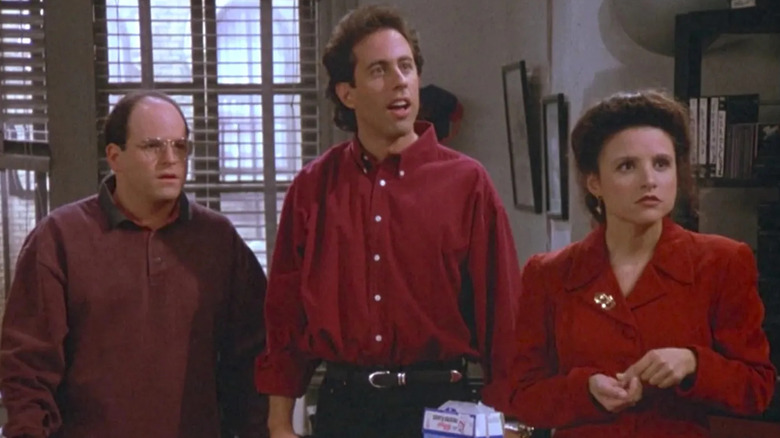
Fortunately, Larry David didn’t have to quit. During the read-through, “the laughs were huge — big, satisfying laughs,” he recalled. “I would glance at [the executives’] faces, and they seemed to be enjoying it. You could sense it was a very special show.” When it was over, all the NBC brass had to say was, “Very funny.”
As executive Warren Littlefield put it, “The series always was completely unpredictable, and Jerry and Larry never followed rules, right? They made up their own rules.” And here was a network sitcom daring to reference something that, just a few decades earlier, would’ve been unthinkable on television.
“The Contest” not only earned David an Emmy for writing but also proved just how indispensable he was to “Seinfeld.” His subversive, neurotic writing is why the final two seasons of “Seinfeld” never quite felt the same after he left.