EXCLUSIVE: The BBC is returning to the subject of Elon Musk, with a sequel documentary four years after 72 Films first profiled the tech billionaire.
Musk: The Next Chapter (working title) follows on from 2022’s The Elon Musk Show, and will track his life since the tumultuous takeover of Twitter, now rebranded as X. This takes in his right-wing political agenda, public backing and falling out with President Donald Trump, and the latest in his complex private life.
The doc is one of three high-profile commissions coming from the UK’s public broadcaster’s BBC Factual division today. The others are Brexit: How Britain Voted Out (working title), a Norma Percy doc from Zinc Media Group’s Brook Lapping, and PBS co-production The Diary of Anne Frank (working title).
Despite Musk’s general wariness of the mainstream media and perceptions he engages in the dissemination of misinformation on his social media platform, his relationship with the BBC has generally been more nuanced – both praising and criticizing the pubcaster’s output.
Musk: The Next Chapter will see Fremantle-owned 72 returning to assess how he has changed and what his beliefs have become since the original doc four years ago through interviews with those close to him and people who have watched him at close quarters, highlighting his decision-making processes.
The doc will also delve back into his past to look for the real motivations that have driven him to become the richest person on the planet and among the most powerful and famous. It will ultimately ask, “Musk a visionary who wants to save free speech, the ultimate humanitarian, or an unelected superpower willing to burn it all down for his own benefit?”
The 60-minute doc is for BBC Two and iPlayer, and was commissioned by Jack Bootle, Head of Commissioning, Specialist Factual. The Commissioning Editor BBC Head of History Simon Young, and the executive producers are John Douglas and Mark Raphael, the producer is Yasmine Permaul and the director is Gussy Sakula-Barry. Fremantle will handle global distribution.
“Elon Musk is exponentially richer than anyone else in the world, with a unique position of power and a huge amount to say about our future,” said Sakula-Barry. “It is essential to explore his motivations and the people we’ve interviewed have given real insight into how Elon Musk became who he is today.”
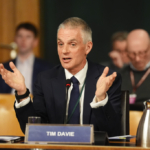
“One of the few things that Elon Musk can’t buy is the BBC,” said Young, the BBC’s Head of History. “That means we can be beholden to absolutely no-one when it comes to pursuing truth with no agenda. I think that understanding the technological age we live in, where it came from, and who is driving it, can help us understand where an AI-powered world is heading.
“The Elon Musk Show was a brilliant iPlayer-first commission, and when the series ended we had no idea how the story would evolve. With Twitter, Trump 2.0 and AI-tech it quickly became clear that not only was the story not over – but there was an even better opportunity to understand one of the most consequential personalities on the planet.”
Brexit: How Britain Voted Out (w/t) will broadcast on BBC and BBC iPlayer later this year to mark the tenth anniversary of the Brexit vote, which led to the UK leaving the European Union, and tell the story of the year that changed the course of British history.
In “classic Norma Percy style,” the doc will be told only by those who were on the frontline of the campaign and inside the room when key decisions were taken. Percy is known for seminal docs such as Watergate, The Death of Yugoslavia and Putin, Russia and the West.
Per the synopsis: “On the morning after the 2015 general election David Cameron emerged victorious after winning a surprise majority, and Nigel Farage, having failed to win a seat, resigned as UKIP leader. 13 months later the tables had turned. Britain’s vote to leave the EU had shocked the world, and it was David Cameron’s turn to throw in the towel. This series tells the story of how it happened.”
The two-parter features interviews with British political figures David Cameron, Boris Johnson, Nigel Farage, Michael Gove, George Osborne, Gordon Brown, Marina Wheeler, Bob Geldof and Seumas Milne among others. It aims to explore the rivalries, conflicts and betrayals that tore both the Remain and Leav campaigns apart.
“As the ten-year anniversary of the referendum approaches, it’s a wonderful opportunity to tell the story of the campaign,” said Percy. “We’re lucky to have assembled an amazing cast of characters, some speaking publicly for the very first time, who tell us what it was like during this extraordinary period in British politics.”
Coming from Percy’s long-term collaborator Brook Lapping, the doc was commissioned by Bootle and the Commissioning Editor is Young. The executive producer is Angus Macqueen, the series producer is Norma Percy and the Series Director is Max Stern. The series is being distributed by Zinc Distribution.
“There is simply no-one you’d want more than Norma Percy and her extraordinary team to create the first historical take such a fundamental turning point in Britain relationship with Europe and the world,” said Young.
“There is historical documentary as analysis, and then there is historical documentary as an unrivalled source of eyewitness testimony. Both are important, but perhaps this kind of source material, on a trusted platform like the BBC, becomes more important in a world where you can’t vouch for the authenticity of so much content out there.
“What Norma does so brilliantly is to give viewers a peak inside the room where key decisions were made, and then to show dual – and often duelling – perspectives on those key moments. It’s immediate, it can be complex, but it gets us closer to the truth.”
The Diary of Anne Frank (working title) is another look at the wartime story of the titular Anne Frank, a 13-year-old Jewish girl who went into hiding with her family in Nazi-occupied Amsterdam on July 6, 1942, and for the next two years kept an extraordinary and intimate diary of their lives inside their ‘Secret Annexe.’ She died in early 1945 after being discovered and transferred to a concentration camp.
Producers have been working in association with the Anne Frank Fonds, which was founded by Anne’s father Otto Frank, and gained exclusive access to her diary and family archive. The series will use her personal first-person testimony to tell the story of how 75% of the Dutch Jewish population was murdered by the Nazis.
The Diary of Anne Frank executive producer James House said: “Many of us think we know Anne Frank but I’m not sure we do. She’s funny, mischievous, whip-smart and resilient even in the darkest of circumstances. The words and experiences of a child are a particularly sobering reminder of what can happen when a dangerous ideology takes hold.”
The doc series comes from BBC Studios Specialist Factual Productions for BBC Two and iPlayer and PBS in association with Skai Greece. Bootle was the commissioner and the Commissioning Editor for the BBC is Young and Zara Frankel at PBS. House is the exec producer, series producer is Helen Sage, and consulting executive producer for BBC Studios is Andrew Cohen. BBC Studios is handling global sales.
Young told Deadline impactful co-production remains a central pillar for the BBC’s factual team, not least as a means of answering global streaming commissions.
“Scale is more important than ever when the competition for eyeballs is so fierce, and in a world where streamers can take all the rights, co-productions are not just one of the best ways that public service broadcasters can build big, ambitious ideas, but also a great way to create further revenue streams for production companies from the residual rights.
“After the huge success of our series Titanic Sinks Tonight, which has been sold all over the world, we’ve been looking for ways to bring new audiences to new takes on some of the most iconic stories in history and we believe that our upcoming Anne Frank series will do just that.”
With misinformation rife and many turning to alternative sources for their news, politics and history fixes, the BBC is faced with a significant challenge, and big ticket swings such as today’s commissions are what the broadcaster considers its answer.
“We want BBC History to reach the widest possible audience, from those seeking deep specialist expertise and insight, to those curious about the events of the recent past that are shaping the modern world,” said Young.
“The programmes we are announcing today do just that – whether it is understanding the specific brutality of the Holocaust in Nazi-occupied Holland during WW2, the tectonic forces that led to Brexit, or the very recent historical shifts shaping modern America. In a world where misinformation is on the rise, and viewer trust is fundamental, this slate of programmes demonstrates that the BBC’s dedication to inform and educate is second to none.”
He added that BBC History was hunting “ideas of all shapes and sizes,” pointing to Simon Schama’s Holocaust documentary Simon Schama: The Road to Auschwitz and a film about the Bradford City fire by first-time director Andy Worboys landing RTS nominations this week.
“With these sorts of ideas what matters more than scale is relevance and resonance – will an idea change the way we perceive a moment in time, will it surprise our viewers, and will it show us new and innovative ways to explore, digest and reframe our understanding of history,” said Young.