US business activity slowed in March, and the new PMI data delivered a warning that markets are starting to price in: growth is losing momentum just as price pressures pick up again.



That creates a pretty tough backdrop for Bitcoin to trade in. When the economy cools while inflation stays elevated, traders expect the Federal Reserve to keep interest rates higher for longer, which is a setup that usually negatively affects risk assets.
S&P Global’s flash composite PMI slipped to 51.4 in March, from 51.9 in February.
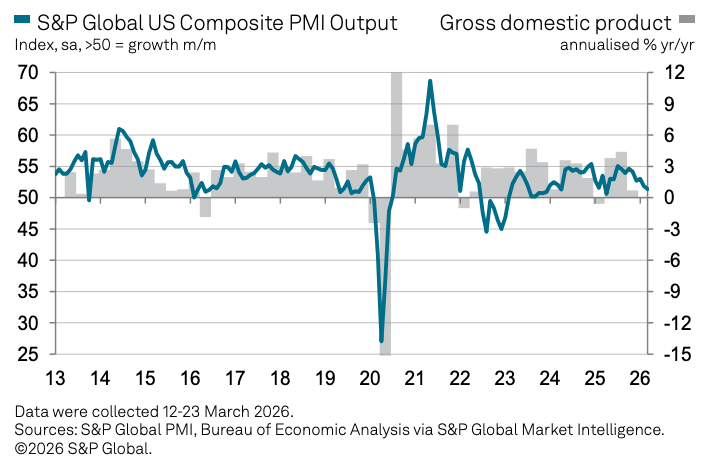
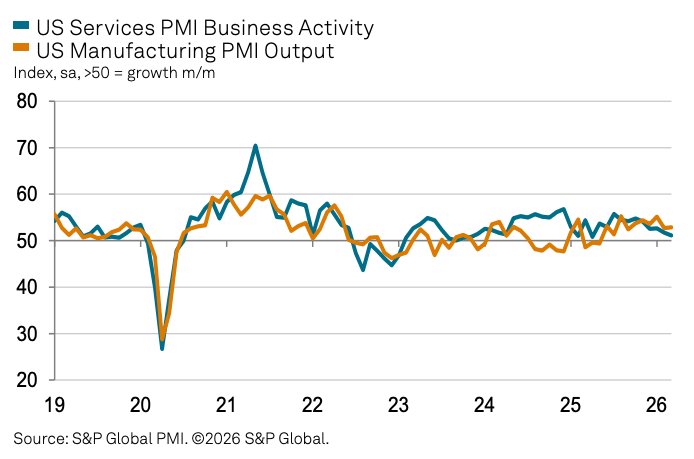
Services, which make up the larger share of the US economy, slowed to 51.1 from 51.7. Manufacturing moved the other way, rising to 52.4 from 51.6. At the same time, companies reported the fastest increase in input costs in 10 months, while employment fell for the first time in more than a year.
While the headline figure shows slower growth, the most important message from this release is much deeper and more unsettling than that.
The parts of the economy tied to consumer demand are starting to soften, while manufacturers are pushing ahead as companies try to secure supplies and shield themselves from rising costs and higher energy prices due to war.
That split helps explain why investors reacted so uneasily. The report showed an economy that’s trying to prepare for disruption.
Bitcoin dipped slightly after the release, losing its footing at $70,000, as traders absorbed the news.
The broader market reaction was almost the same. Oil remained elevated, Treasury yields moved higher, and DXY remained virtually unchanged as investors adjusted to the possibility that inflation could stay sticky even as growth slows. The fact that we still haven’t seen an aggressive market reaction doesn’t mean that this is now an easy setup for Bitcoin.
A warning inside the PMI report
The most important piece of information in the report is the widening gap between manufacturing and services.
In theory, stronger factory activity sounds encouraging. But here, it’s an obvious sign of strain, because it shows companies increased purchases and built inventories as they tried to get ahead of supply problems and rising costs. Supplier delivery times also lengthened, reinforcing the sense that businesses were reacting to stress rather than a fresh burst of demand.
Then services painted a weaker picture. New business growth slowed, exports fell, and confidence among service providers dropped. Companies pointed to higher living costs, elevated borrowing costs, and war-related uncertainty as factors weighing on activity.
S&P Global said the survey was consistent with the US economy growing at roughly a 1% annualized rate in March, while price trends in the report suggested inflation could be moving back toward 4%. That combination is what brings stagflation fears back into the spotlight: weaker growth paired with firmer inflation.
And that’s what’s going to affect crypto.
Bitcoin has historically benefited when traders expected looser monetary policy and stronger liquidity conditions.
But this report points the other way. It suggested the Fed may have less room to cut rates than many investors had hoped, because inflation pressure is not easing fast enough even as the economy starts to lose speed.
The report also arrived at a pretty tense moment for global markets. Energy prices have skyrocketed because of the war in Iran, which made the inflation side of the equation harder to ignore. When oil climbs, and companies start warning about higher costs and supply delays, markets become more sensitive to any sign that the Fed could stay restrictive, no matter how small or vague it is.
That leaves Bitcoin in a tougher macro trade. Like it or not, it’s still considered by the majority as a high-risk asset, which means it can struggle when yields rise and the dollar strengthens.
Some crypto bulls still argue that Bitcoin could eventually benefit if confidence in the broader policy mix starts to erode, but Tuesday’s PMI data offered little support for that case. The immediate message was that markets are still focused on rates staying higher for longer.
The next test will come from the upcoming inflation and labor data. If those reports confirm what the PMI is starting to show, that the economy is cooling while price pressure stays stubborn, Bitcoin may keep trading under pressure from a macro backdrop that’s impossible to ignore.