



The seemingly outlandish storyline of “Breaking Bad” — about a cancer-stricken chemistry teacher who turns to crime to pay for his treatment — has some basis in reality.
A study published in the American Economic Journal indicates that a cancer diagnosis increases the likelihood of a person committing crime by 14%. The experts — Steffen Andersen, Elin Colmsjö, Gianpaolo Parise, and Kim Peijnenburg — examined data covering the Danish population between 1980 and 2018.
According to the study, cancer patients are less likely to turn to a life of crime as quickly as Walter White (Bryan Cranston) does on “Breaking Bad.” It’s more likely to occur after the affected parties have received their treatment. Like Walt, however, making money is the main reason why people turn to crime following a cancer diagnosis. This is due to a combination of making up for lost earnings due to the inability to work, and reduced fear of legal consequences — a lengthy prison sentence may not sound as threatening to someone who doesn’t expect to live much longer.
Breaking Bad can help people affected by cancer, actually
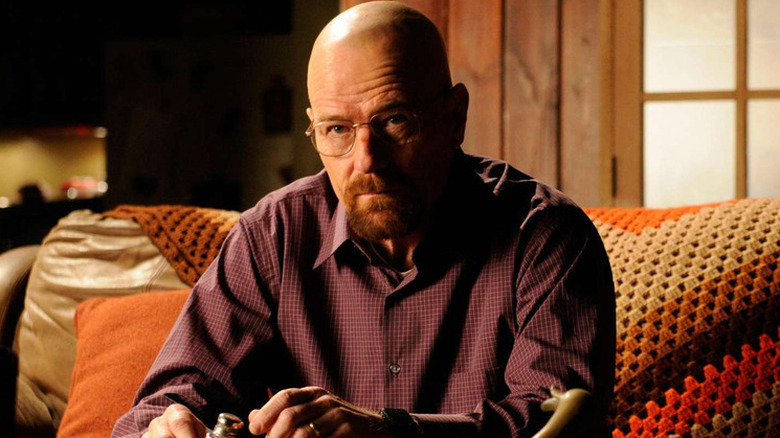
“Breaking Bad” depicts an extreme case of someone turning to crime following a cancer diagnosis. That said, some researchers recommend that real-life people affected by the disease should watch Vince Gilligan’s acclaimed crime drama to reshape negative thinking.
A study by Ewan Bowlby, which can be found on Sage Journals, documented reactions from patients who watched “Breaking Bad.” The study highlights how people affected by cancer can become isolated and more focused on themselves, rather than seeking emotional support from positive role models. Bowlby noted that real people related to Walter White’s situation but ultimately viewed him as an example of how not to react to a diagnosis.
“Breaking Bad” went to great lengths to discourage people from committing crime, and Walter White can be viewed as a cautionary tale — what could happen if a cancer patient allows their “diagnosis to be dictated by pride and fear,” in Bowlby’s words. Bowlby refers to Walter White’s egotism as an example of “misplaced energy” allowing his most negative impulses to dictate his actions.