Unlock the Editor’s Digest for free

Roula Khalaf, Editor of the FT, selects her favourite stories in this weekly newsletter.
Danish Prime Minister Mette Frederiksen’s Social Democrat party had its worst election result since 1903 as the Scandinavian country’s parliamentary vote ended without a clear-cut winner.
Frederiksen’s leftwing bloc won 84 seats in the Danish legislature, ahead of the rightwing grouping with 77 seats, according to results with almost all votes counted on Tuesday night.
The centrist party of former rightwing premier Lars Løkke Rasmussen appeared well placed to hold the balance of power, with 14 seats.
A total of 90 seats are needed for a majority in Denmark’s parliament, with some previous governments having relied on support from lawmakers representing the semi-autonomous territories of Greenland and the Faroe Islands.
“It’s a catastrophic election for the Social Democrats. Mette Frederiksen may have a very high profile on the European stage but in Denmark she is in deep crisis,” said Noa Redington, a political commentator and former Social Democrat spin-doctor.
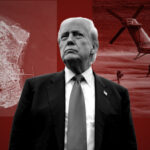
US President Donald Trump’s repeated statements about taking control of Greenland from Copenhagen, potentially by force, put Denmark in the geopolitical spotlight before the election and boosted Frederiksen after a disastrous showing in local polls in November.
Rasmussen, who as foreign minister was pictured smoking outside the White House after a meeting with US vice-president JD Vance and secretary of state Marco Rubio in January, looks to have gained the role of kingmaker in any coalition discussions involving the 12 parties set to enter parliament.
Frederiksen has been credited by some with crushing Denmark’s far-right by adopting their anti-immigration policies, but Tuesday’s election showed a resurgence of support for such parties. Three anti-immigration groups secured 17 per cent of the vote.
The Social Democrat party scored 21.9 per cent, well below the 24.8 per cent it recorded in 2011, which was its worst performance over the past century. One of the most dominant political forces in western Europe, the party last scored worse with 20.4 per cent in 1903.
Meanwhile the main party on the right was braced for its worst ever result, with the Liberals led by defence minister Troels Lund Poulsen taking 10 per cent of the vote.
It managed to remain the largest party on the right, finishing just ahead of Liberal Alliance, a libertarian group which courted controversy after its leader admitted during the election campaign to having used cocaine.
The biggest gainers appeared to be the Green Left and the anti-immigration Danish People’s Party, which both recorded significant surges in support. The Green Left secured 11.6 per cent of the vote, with the Danish People’s Party on 9.1 per cent.
Analysts expect a long period of horse-trading to secure a viable coalition, but many believe Frederiksen holds the better cards to win a third successive term in office as the right is more fragmented and lacks a strong candidate for prime minister.
Frederiksen and Rasmussen have also struck up a good rapport in the current centrist coalition.