


We may receive a commission on purchases made from links.
The “Star Trek” franchise owes a debt to some of the great Western TV shows of yesteryear. When Gene Roddenberry pitched the O.G. series in the 1960s, he described it as “Wagon Train” set beyond the stars, as both series essentially explore great frontiers. The must-watch “Star Trek: Deep Space Nine” also turned to small-screen horse operas for inspiration, with the ’50s hit “The Rifleman” providing a blueprint to expand upon.
In a 2011 interview with StarTrek.com, co-creator Rick Berman explained how “DS9” came to be. “One of the things that Brandon Tartikoff, who was the head of the studio at the time, suggested was ‘The Rifleman,’ which was a show that he loved when he was a kid,” he said. “Roddenberry evidently had talked about ‘Wagon Train in space’ 20 years before and ‘DS9’ was ‘The Rifleman’ in space. I think what [Michael Piller] and I ended up pulling from that was the idea of a father and a son, and we chose to do the story of a man who had recently lost his wife, who was very bitter, and was sent to a very distant space station that was not a Federation facility.”
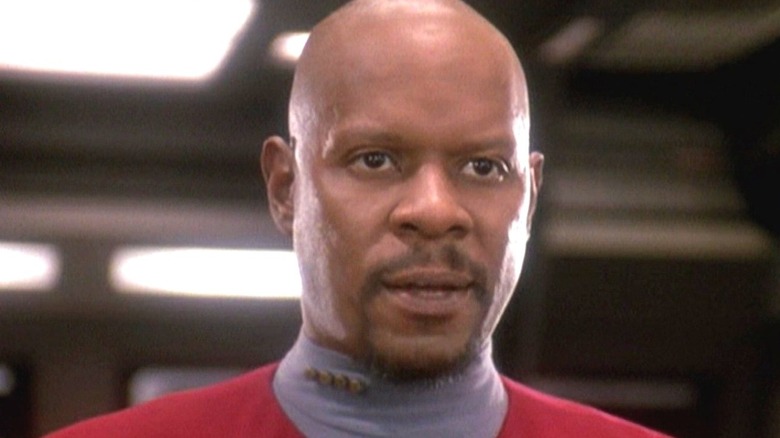
“The Rifleman” tells the story of Lucas McCain (Chuck Connors), a widowed rancher who often has to defend and help the good people of North Fork while raising his son. “Deep Space Nine” centers around the widowed Benjamin Sisko (Avery Brooks) while he, his son, and crew hang out in the eponymous space station. The similarities are obvious, but riffing on “The Rifleman” enables “Deep Space Nine” to stand out from the “Star Trek” shows that preceded it.
Deep Space Nine is Star Trek’s complex, isolated Western
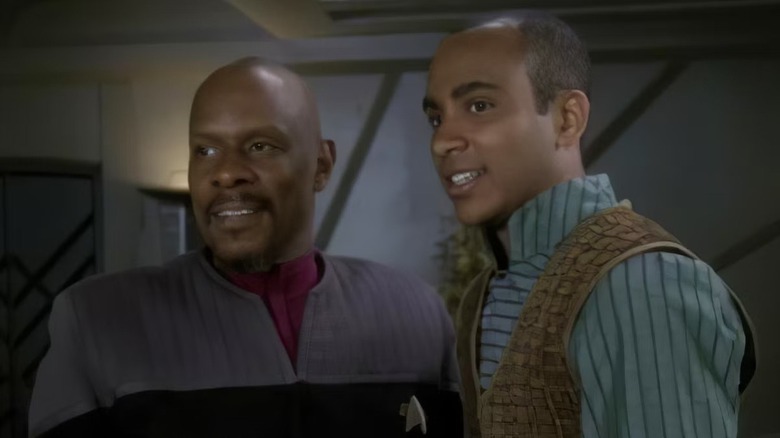
“Star Trek: The Original Series” and “Star Trek: The Next Generation” are all about boldly going where no humans have gone before. Both shows also contain optimistic and egalitarian themes that preach good values. “Star Trek: Deep Space Nine,” meanwhile, is more morally grey and complex — not unlike “The Rifleman” and other Westerns about flawed gunslingers.
“We didn’t want to do the same thing again,” Michael Piller revealed in “Star Trek: Deep Space Nine Companion” by Terry J. Erdmann and Paula M. Block. “We didn’t want to have another series of shows about space travel. We felt there was an opportunity to look deeper, more closely at the working of the Federation and ‘Star Trek’ universe by standing still.”
Piller added that by forcing the characters to stay in a space station, they’d have to contend with issues that their Federation counterparts didn’t have to deal with while in their spaceships. These themes include grief, parenthood, and isolation — all things that Lucas McCain can relate to.