15 percent better efficiency
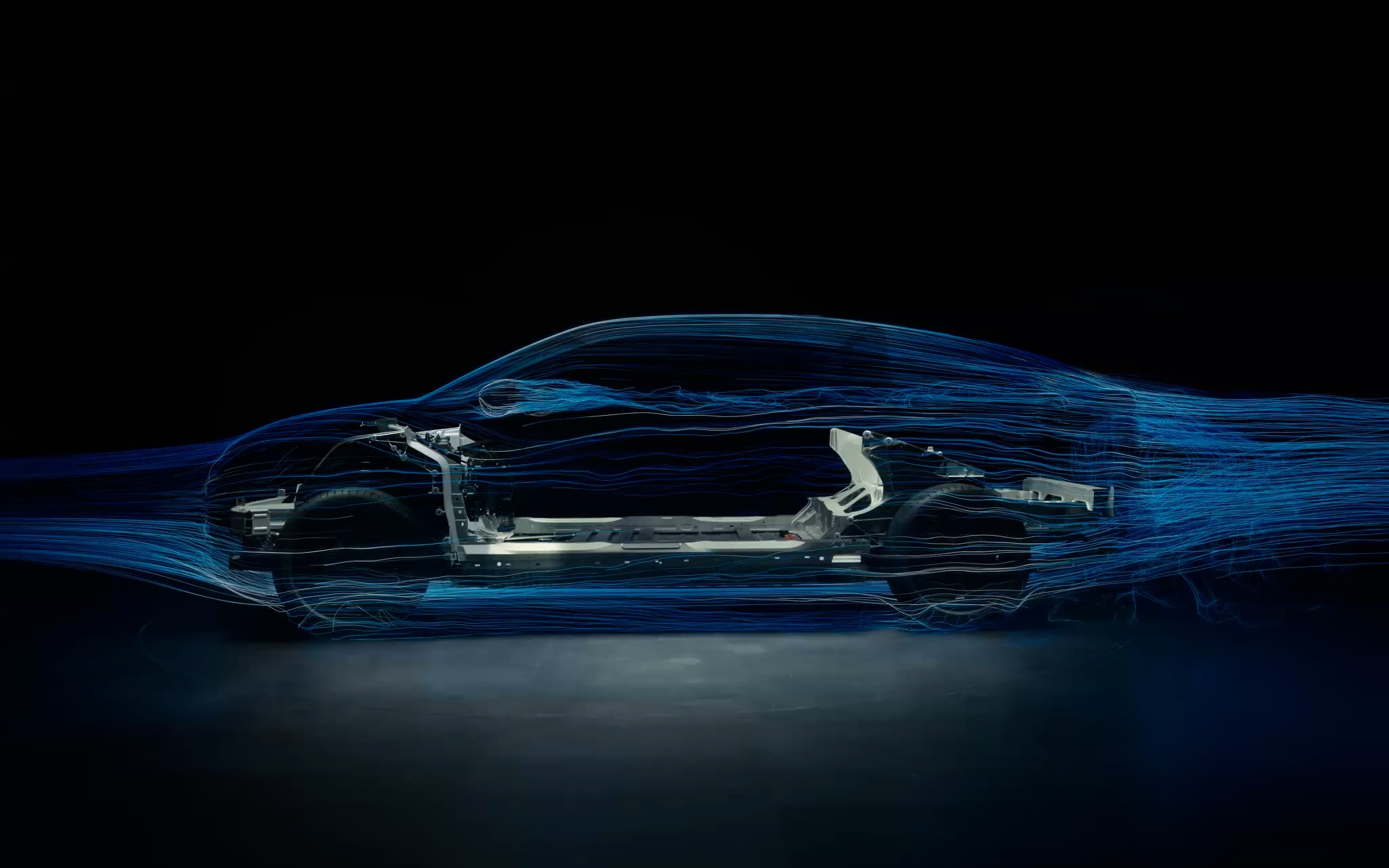
The wake from the front wheels helps prevent the rear wheels from creating even more drag as they rotate. The underside of the drive units have been aero-optimized, with the driveshafts angled to minimize friction. The traditional pickup truck shape isn’t the ideal starting point for an extremely low-drag vehicle, but Ford has shaped the cab to help airflow continue over the back in a teardrop shape, ignoring the bed, until it meets the top of the tailgate. “To the air, it’s no longer a truck,” said Saleem Merkt, head of aerodynamics for Ford’s advanced EV development.



Credit:
Ford
A prototype illustration of the aerodynamic efficiency of Ford’s mid-size electric truck.
Credit:
Ford
Like Merkt, many of the aerodynamicists working on the EV platform have a background in Formula 1, and Ford says it used their “fail fast, learn faster” mentality to good effect. They introduced the wind tunnel early in the truck’s development, using a modular approach that allowed them to swap 3D-printed or machined parts in and out to test new configurations quickly.
“[F]rom under-body shields to front fascia to suspension—in as little as minutes. We tested thousands of 3D-printed components, including versions of the suspension and drive units that didn’t even exist as functional prototypes yet,” Merkt said. “Since these 3D-printed parts were accurate within fractions of a millimeter of our simulations, it allowed us to develop a deeper, data-driven understanding of how every single detail impacts range and efficiency in the real world.”
In addition to the wind-shaping roof, Merkt’s team redesigned the side mirrors to use a single actuator for both adjusting the glass and folding the mirror. “Now that the mirror body no longer needs internal ‘wiggle room’ for the glass to move independently, we were able to shrink the entire housing by over 20 percent. This reduction in frontal area and mass unlocks a more aerodynamic shape, adding an estimated 1.5 miles of range,” Merkt said.