Elena Bonvicini is the name behind Los Angeles-based denim brand EB Denim. She’s not an influencer; she doesn’t have followers in the millions, nor in the tens of thousands. But when Everlane approached her for a partnership, she agreed to do so under her own name, rather than her label’s.
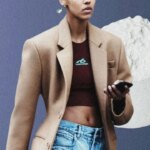


The founder didn’t feel her brand was ready for a collaboration, but was keen to flex her design chops in a new context, and build out her personal profile as a designer in the process. “What if I took my design lens and built out my essentials capsule for the Everlane customer?” she says. “I felt like that would be a really amazing opportunity for me to introduce myself as a designer to an audience outside of EB Denim.”
“From our early conversations together, it felt important that this be about Elena — not just a brand-to-brand collaboration,” says Everlane CEO Alfred Chang. “What we were drawn to was her creative eye and the way she thinks about denim. Positioning it under her name keeps the focus on that perspective; it makes the collaboration more personal.”
The result is an eight-piece capsule collection, including seven pairs of jeans and a tee modeled off a style from the EB Denim line. “I stole some [styles] from myself,” Bonvicini jokes, including EB Denim’s bestselling baggy low-rise jean, reworking them in Everlane’s fabrics, with the US retailer’s factories.
Everlane and Bonvicini hosted an event in LA on February 19 to celebrate the collaboration, ahead of the release. The next day, Everlane, which has a million Instagram followers, posted a string of stories, tagging Bonvicini’s personal account, which had under 10,000 followers at the time (EB Denim, by contrast, has around 77,000). It’ll be Bonvicini’s face on the Everlane website, and on the billboards in Everlane’s store windows.

As social media has evolved into a necessary brand-building tool, the personal brand is a way for founders to boost their own profiles — and, in turn, sell more clothes and accessories. The pressure has been mounting in the years since Covid; in 2024, 91% of 101 fashion industry professionals surveyed by Vogue Business said that they felt at least some pressure to have a presence on social media, due to the tightening link between personal branding and business.
In recent years, under-the-radar designers have lost sales to influencer-founded brands, which appeared thick and fast in the post-Covid boom. Since, their power has waned as the influencer landscape has shifted, opening space for brand founders to find success by establishing relationships with their followers and promoting their products via personal profiles. At a recent Vogue Business Gen Z event in Los Angeles, founders across fashion and beauty emphasized the impact of utilizing social media to connect with followers and boost their brands — with one caveat: the product has to be good. But in an increasingly crowded brand landscape, a solid product can’t always speak for itself. Brand founders need to speak for it.