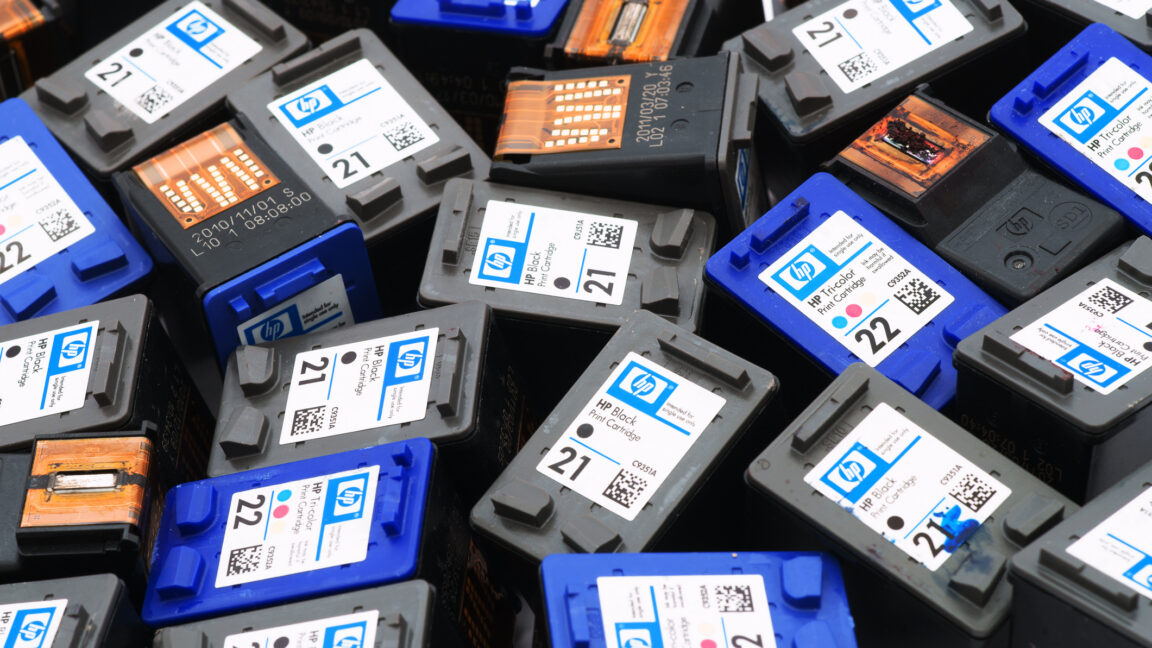
The third option is for manufacturers to make available, such as via the manufacturer’s website, “to purchasers remanufactured cartridges, either manufacturer or nonmanufacturer branded, for, at minimum, registered products.”



As of this writing, 38,291 devices are under the EPEAT 1.0 registry. There are 163 products registered under EPEAT 2.0, but none are printers. This all underscores how new the EPEAT 2.0 registry is and the likelihood that the GEC is still working to register more devices, like printers.
Still, the Int’l ITC is skeptical about HP ever following EPEAT 2.0’s criteria, especially considering that “HP released firmware 2602A/B on January 29, 2026 across eleven printer models,” the trade group said in a press release last week. (At least some of the firmware updates, including for the nearly 9-year-old OfficeJet Pro 7720, appear to have come out in February.)
“HP’s recent behavior is emblematic of a larger pattern,” the Int’l ITC’s release said. “HP positions itself as a leader in sustainability, circular business models, and responsible product design, but instead of proactively aligning its products and practices with the highest environmental standards, such as EPEAT 2.0, HP puts profits first and waits until external scrutiny or the threat of non-compliance forces change.”
In an email discussion with Ars Technica, Tricia Judge, the Int’l ITC’s executive director and general counsel, pointed out that HP’s firmware update succeeded the launch of the EPEAT 2.0 registry. She explained why the Int’l ITC’s press release called out HP but no other printer manufacturers:
HP is the only one with lockout chips that are triggered using firmware “upgrades” that claim “security” as a justification for their existence. HP is the only one that misleads and frustrates its own customers when locking out the environmentally superior competition. The others have made some interesting attempts in the past to create a competitive advantage.
In 2023, the Int’l ITC wrote a letter to the GEC requesting that the GEC revoke at least 101 of HP’s printers from the (original) EPEAT registry, largely due to Dynamic Security. GEC denied the Int’l ITC’s request.
“EPEAT 1.0 was very basic (no interference with the use of remanufactured cartridges), and HP claimed that its statements (buried in its marketing materials and/or on its website) that it didn’t interfere with the use of remanufactured cartridges was a loophole that the GEC decided was acceptable,” Judge said. “We were trying to close that loophole with EPEAT 2.0. We didn’t get it as airtight as we hoped, but it is better.
HP didn’t respond to Ars Technica’s request for comment for this story.