


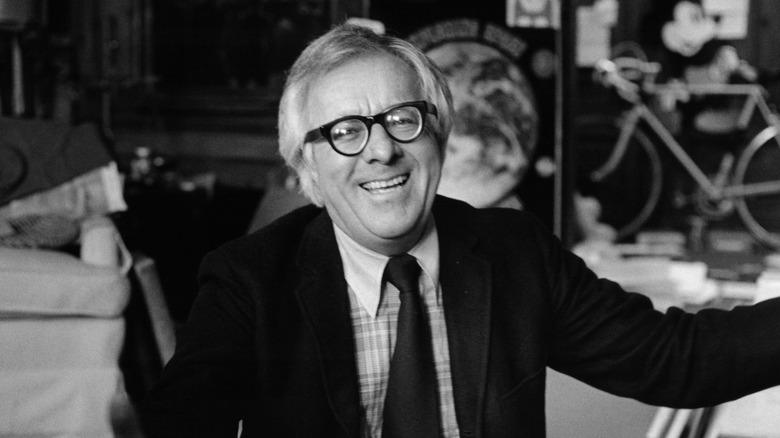
It’s no surprise that NBC wanted a slice of the Ray Bradbury pie. Television has always been chock-full of literary adaptations, and Bradbury was absurdly prolific when it came to his cultural contributions. The network was interested in bringing tales such as the dystopian science fiction novel “Fahrenheit 451” (1953) and the stories found in “The Martian Chronicles” (1950) and “The Illustrated Man” (1951) to life. The author even took a meeting with NBC executives before rejecting their proposal altogether.
In the March 1986 edition of Starlog Magazine, Bradbury recalled how he was, as he put it, “very close to signing a contract for a series,” despite his doubts. At one point during the meeting, the executives got serious about what they wanted from the author. “One of these NBC gentlemen, a vice-president, leaned forward and said, ‘Now, Mr. Bradbury, what we don’t want from you is anything too high-falutin’,'” Bradbury recalled. When the author pushed back, reminding the suits about his “pulp writer” status, the executive “realized he had made a terrible mistake in using that word.”
Possibly in a clumsy act of overcompensation, the same NBC executive said what they really wanted was, according to Bradbury’s recollections, “something like Franz Kafka.” At that point the author got up, shook everyone’s hands, and walked out of the room. “That was the end of my affiliation with NBC,” he stated. “They didn’t know what they were talking about. I knew it was hopeless.”
Ray Bradbury had more Hollywood difficulties on The Twilight Zone
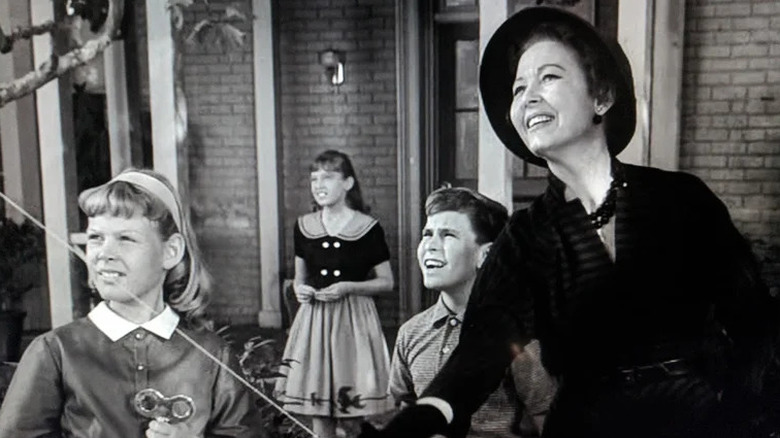
Despite being one of the most respected science fiction novelists of his time, perhaps the most difficult experience of Bradbury’s Hollywood career was his foray into writing for Rod Serling’s “The Twilight Zone” — arguably the best show of the 1960s. In his book, “The Twilight Zone Companion,” Marc Scott Zicree recounted how Bradbury came on board to pen the show’s 100th episode “I Sing the Body Electric,” which aired during the third season.
According to Serling, Bradbury was “a very difficult guy to dramatize, because that which reads so beautifully on the printed page doesn’t fit in the mouth — it fits in the head.” No wonder it’s not counted among the best episodes of “The Twilight Zone.” That, combined with the difficulty of bringing his vivid imagination to life on a TV budget, led Serling to make a series of changes that frustrated Bradbury.
Over the years, the author became concerned that “The Twilight Zone” creator was continuing to borrow (or steal, depending on your point of view) ideas from his stories without offering any credit in return. As Jonathan R. Eller records in his book, “Ray Bradbury Unbound,” the author once called Serling a “Johnny-Come-Lately, who will come and go and be forgotten in the [sci-fi] field.” While that particular prediction may not have come to pass, Bradbury’s work lives on to this day, though no thanks to Hollywood.