One of Lenovo’s big laptop concepts for MWC 2026 is a modular ThinkBook with two screens. Officially called the ThinkBook Modular AI PC Concept, the proof-of-concept is a 14-inch productivity machine with two plug-and-play interchangeable ports and a second 14-inch display magnetically attached to the rear of its lid. The second display is removable, and can be propped up on a magnetic kickstand (stored under the laptop) and plugged in via USB-C.

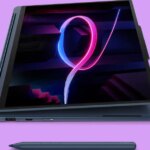
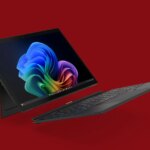
But this concept PC has one more trick: removing the keyboard / trackpad deck and replacing it with the second screen, turning the whole thing into a dual-screen laptop you use with the keyboard and trackpad connected via Bluetooth — like the Asus Zenbook Duo.
This whole concept had me at modular ports. The options Lenovo showed off for this concept included USB-C, USB-A, and HDMI options — not nearly the expansive ecosystem that Framework has established. But, if this ever comes to market, it’s at least a start. Unlike Framework, the hotswap ports use an M.2 interface to connect to the laptop, instead of USB-C. But they were super easy to pull out and pop back in, and Lenovo also showed a cute little carry case to bring a couple ports with you. Aside from the two modular ports, the ThinkBook concept has one permanent USB-C for charging or plugging in the second monitor.
The ports seemed cool enough, but Lenovo pulled a Lenovo and got wacky with all these second-screen theatrics too. Those screens are both touch-compatible OLEDs with 16:10 4K (3840 x 2400) resolution, 120Hz refresh rate, and 500 nits of brightness. Other prospective specs include an Intel Core Ultra 7 255H Arrow Lake processor, 32GB of RAM, and a 1TB SSD.
Who knows if this will ever get made, but I have one inkling of why it might not: the battery. The ThinkBook Modular has just a 33Wh battery to power all this hardware. That’s significantly smaller than even a 13-inch MacBook Air, and it’s got not one but two high-res power hungry OLEDs. I’m concerned this laptop would have anemic battery life, at least in this current thin-and-light incarnation (it weighs just 2.54 pounds / 1.15kg with one display, and 3.11 pounds / 1.41kg with both screens). But maybe Lenovo could surprise us in another year or so, and release one of these with a bigger battery or a chip that sips power.
Even if it ditched the second OLED, it’d still be intriguing — because who wouldn’t want to pick their own ports?
Photography by Antonio G. Di Benedetto / The Verge