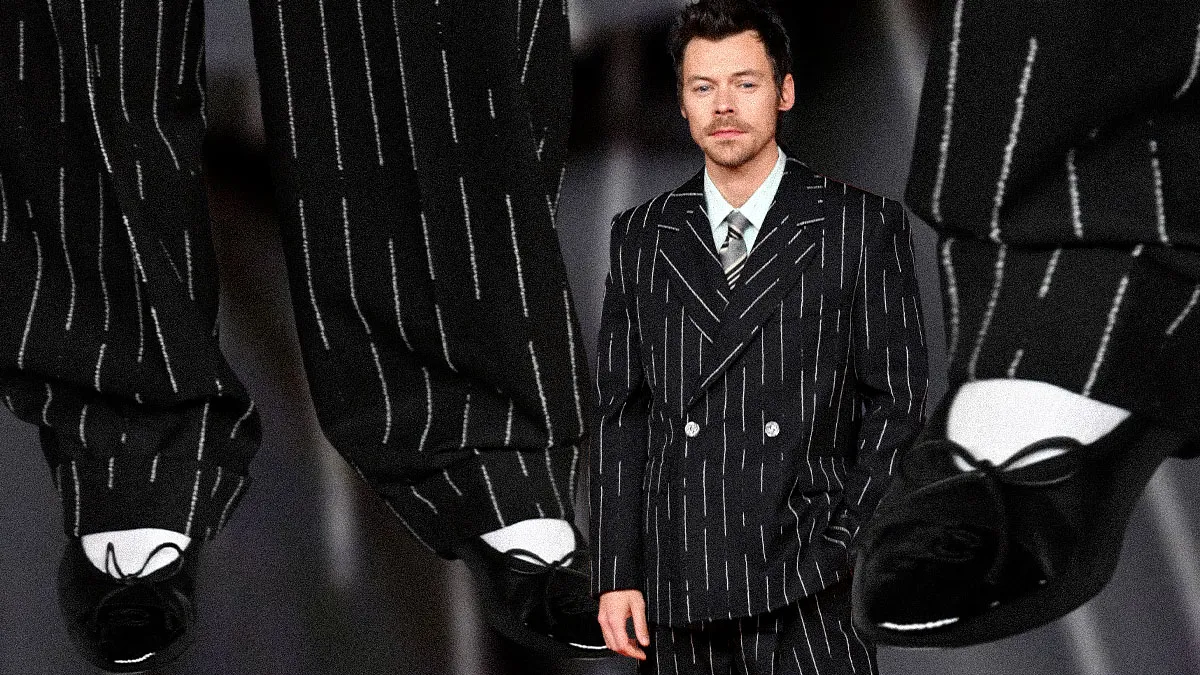
The data backs up the trend. Frida Tordhag, fashion analyst at Heuritech, points to the company’s research on “men’s pumps”, which are growing in popularity among the 16 to 25 demographic. “In Europe, this shoe model is favored, with 23% year-on-year growth in [social media] visibility over the past month,” she says. “Looking at our forecasted data, the shoe is estimated to grow 8% [in Europe], with peak months in June and September. In the US, it has seen growth of 11%, and is also a consistent riser, especially among trendsetters; it is forecasted to grow 4% over the next 12 months.”



Brands and retailers should focus ballet flat offerings on the fashion-forward customer, and adapt styles to boost adoption with a broader shopper, experts agree. “The more fashion-conscious customer will pick it up early, but for most men it’ll come through in a more diluted way,” says Benedict Browne, style director at Mr Porter. There are now various sneakers that build on the ultra-thin design of a ballet flat, repackaging its construction for performance reasons, for example. By combining elements of traditional masculine dressing with the traditionally feminine ballet flat, brands are participating in the trend without alienating shoppers.
Slim and thin footwear continues to reign
The recent surge in ballet flats reflects a broader shift in men’s footwear, as the hype-driven sneaker years fade into memory. “Moving from chunky sneakers to loafers was already a step toward something more polished,” Browne says. “From there, it makes sense that things would keep refining. The ballet shoe is quite an extreme version of that, but it points to where things are heading more broadly.” EDITED’s research supports this: men’s sneaker options are down year-on-year by 3 percentage points, while shoe styles are up by 7 points.
“Across footwear more broadly, men are moving toward slimmer, lower-profile shapes,” Browne continues. “There’s been a shift over the past few years toward dressing in a more considered, elegant way — and ballet flats tap into that. They’re light, pared-back, and quite refined.”
For Tordhag, the move toward loafers has helped create a menswear consumer who is primed to adopt ballet flats. “Because of that shift, I think ballet flats have real potential to resonate with men as well,” she says. “They tap into the same appeal: ease, versatility, and a certain understated elegance. In a way, they could become an evolution of the loafer, offering a slightly more daring yet still grounded sense of sophistication.”
Maybe the ballet flat is more of a direction of travel than a final destination. It might be relatively rare for men to fully embrace the silhouette as it is, but many of its characteristics — the low, almost-flat sole and thin leather upper — are being combined with more traditional forms. “While literal interpretations of the ballet flat remain minimal in the market,” says Munday, “their influence is beginning to take shape in the form of thin soles and soft leather uppers on shoes.” For Mr Porter, this is coming through in “hybrid styles that sit somewhere between a loafer and a slipper, with that same pared-back feel”, says Browne. At the start of the year, Jacob Elordi sat on the Jimmy Kimmel sofa to promote Wuthering Heights, wearing a pair of off-white Bottega Veneta loafers that were not quite ballet flats, but ascribed to this hybrid style (though many users compared them to ballet flats online).