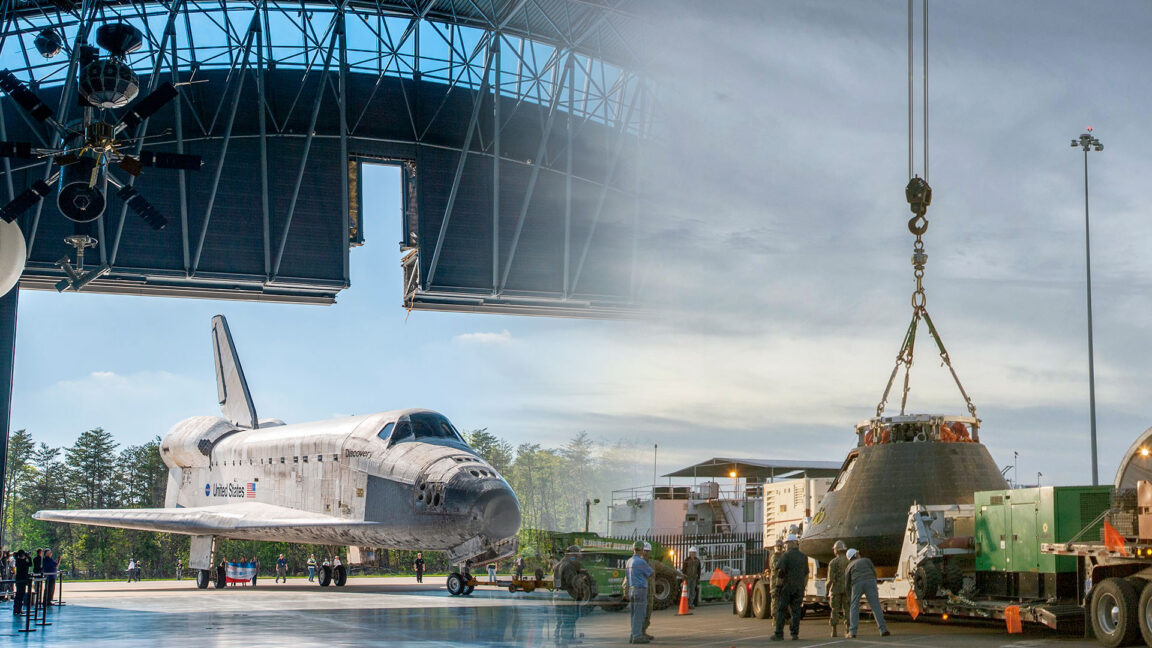
“My job now is to make sure that we can undertake such a transportation [of Discovery] within the budget dollars that we have available. And of course, most importantly, ensuring the safety of the vehicle,” said Isaacman in an interview with CNBC. “If we can’t do that, you know what? We’ve got spacecraft that are going around the moon with Artemis II, III, IV, and V.”



“Illustrative examples”
If NASA has a preference as to the two outcomes, the draft RFP does not say. Instead, it sets up both possibilities as “illustrative examples” and requests in-depth replies (no longer than 40 pages) on what it would take to accomplish each, including engineering analyses, transportation planning, preservation measures, specialized rigging systems, infrastructure coordination, regulatory compliance, and “coordinated multimodal transportation execution.”
“One example addresses the conceptual relocation of a large aerospace vehicle comparable in size and complexity to a space shuttle orbiter or solid rocket booster. The second example addresses the transportation of a smaller spacecraft capsule comparable to an Orion crew module or Mercury capsule,” reads the draft request. “These examples are intended to represent the range of transportation scenarios that NASA may need to support under this contract vehicle.”
NASA is also seeking cost estimates (though not binding price proposals) to plan and achieve each of the moves within a five-year period.
As noted by “multimodal” in the title, NASA expects the deliveries to use multiple types of transportation. It leaves those choices up to each respondent, but identifies possibilities to include “airlift, sealift, rail transport, overland heavy haul transport and barge transport,” among other specialized means of conveyance.