If only Aston Martin or its engine partner, Honda, could say the same. The team’s Canadian billionaire owner, Lawrence Stroll, has invested hundreds of millions into the UK-based team, building a state-of-the-art factory and wind tunnel and recently hiring Adrian Newey, the megastar designer and aerodynamicist whose cars have been responsible for 12 championships so far (Newey even has a stake in the team).


2026 is Aston Martin’s first year with a works engine supply, provided by Honda. The Japanese OEM has an on-off relationship with the sport, most recently deciding in 2020 to leave, then changing its mind again in 2024 due to the new rules. That four-year gap meant that the current program at Honda was effectively started from scratch, and it has been hard going.
In fact, as early as January last year, the head of Honda Motorsport, Koji Watanbe, told me that Honda was having problems. “Everything is new. [The] motor is new, [developing] 350 kW—it’s a very compact one that we need. And also the lightweight battery is not so easy to develop. Also the small engine with big power. So everything is very difficult, but we try our best,” Watanbe said.
Once the power unit was fitted to the car, things got much worse. Aston Martin was late to the Barcelona shakedown, and its drivers posted the slowest lap times in both the first and second Bahrain tests. The team also completed fewer laps than any other—just 206 during the first three-day test and a mere 128 laps during the second test. (For comparison, Mercedes, McLaren, and Ferrari each did more than 420 laps during the first test, and Mercedes, Racing Bulls, and Haas did more than 400 laps during the second test.)
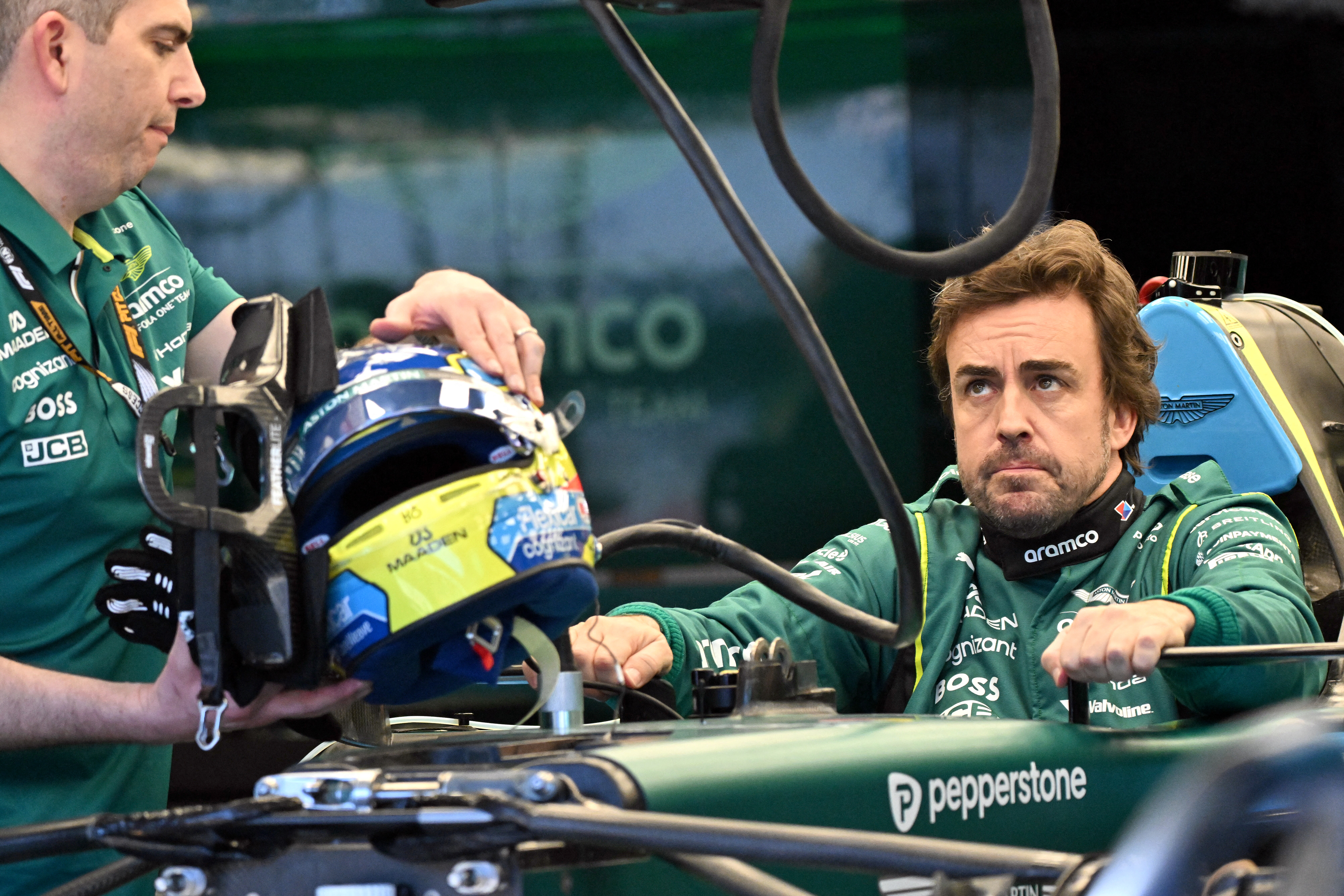
Credit:
Paul Crock / AFP via Getty Images
Alonso has already fallen out with Honda once during his career over engine problems.
Credit:
Paul Crock / AFP via Getty Images
The problems were myriad, affecting both the gearbox and the power unit. Chief among the issues was a vibration that shook apart components like the battery pack, destroying spares. So on the final day of testing, the team was limited to a mere six laps of the Bahrain circuit. With so little testing and so much to debug, the prospect of Aston Martin finishing in Australia—or any of the first few races—seems doubtful.