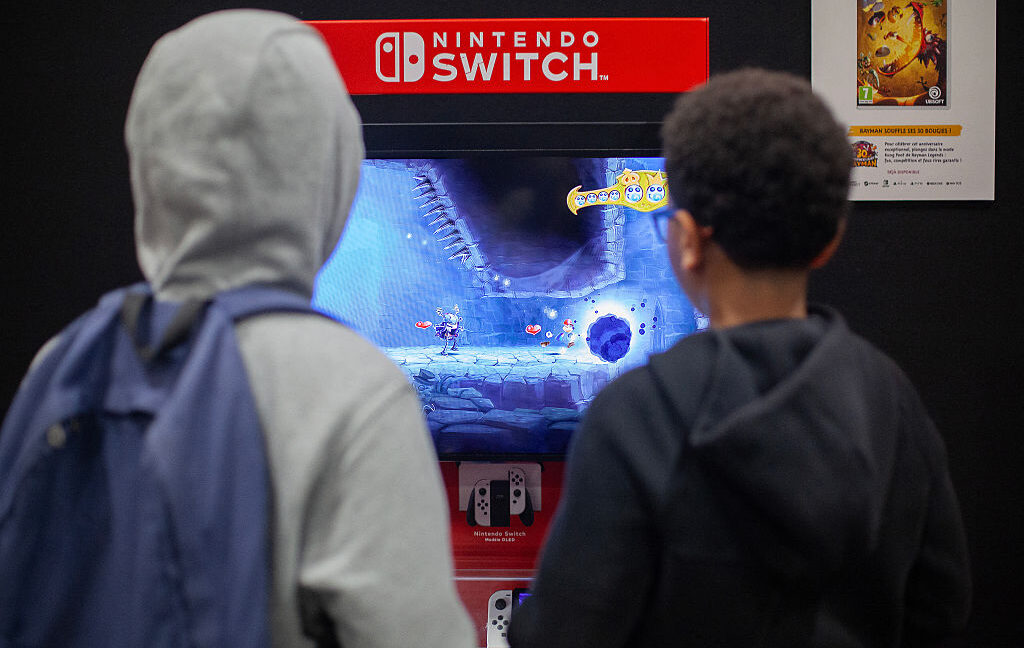
For gamers, the Switch 2 already had a higher price tag than expected, at $450. Lashing out over the sticker shock, a swarm of disgruntled online protesters urged Nintendo to “drop the price.”

There was speculation that the price hike was linked to tariffs. But Nintendo of America President Doug Bowser told The Verge that the jump from Switch’s debut price, $299.99, was not directly due to tariffs. Instead, it seemed that Nintendo had joined other game companies in raising console prices to historic highs, an Ars’ review found. But Bowser acknowledged that Trump’s IEEPA tariffs were still “fresh” at that moment, telling The Verge that, “like many companies right now,” Nintendo was “actively assessing what the impact may be.” Understandably, gamers braced for more price increases.
It only took a month before Nintendo President Shuntaro Furukawa foreshadowed tariff-linked price increases, a game industry news site closely monitoring Nintendo’s tariff moves reported. In May, Furukawa conceded that software wasn’t as impacted, but “hardware involves special factors such as tariffs,” which Nintendo must take into account, “while conducting careful and repeated deliberations when determining price.”
However, Furukawa said that the overall calculus for Nintendo weighed against increasing the Switch 2 price even more to cover tariffs, because seemingly Nintendo feared a higher price point would rob Switch 2 of sales and its games of exposure. As he explained:
Our basic policy is that for any country or region, if tariffs are imposed, we recognize them as part of the cost and incorporate them into the price. However, this year marks our first new dedicated video game system launch in eight years, so given our unique situation, our priority is to maintain the momentum of our platforms, which is extremely important for our dedicated video game platform business. Consequently, if the assumptions on tariffs change, we will consider what kind of price adjustments would be appropriate, taking into account various factors such as the market conditions.
By August, the Switch 2 price remained stable, but Nintendo had increased prices on the original Switch, as well as Switch 2 accessories, citing “market conditions.”