Unlock the Editor’s Digest for free


Roula Khalaf, Editor of the FT, selects her favourite stories in this weekly newsletter.
London’s police chief has hit back at critics who claim the UK capital has become dangerously crime ridden, declaring it an “extraordinarily safe global city” as data revealed its murder rate has fallen to a historic low.
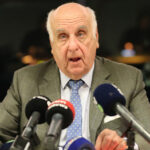
Sir Mark Rowley said the evidence that London was becoming safer was “brutally clear” and that he was frustrated with a “crazily polarised debate” in which London has been in the crosshairs of a culture war.
US President Donald Trump and billionaire Elon Musk have been among those suggesting the capital has descended into lawlessness, while Reform UK’s candidate for the London mayoralty said people now “pity” Londoners.
The Metropolitan Police commissioner said in an interview that the reality was very different, as he heralded new data showing London’s homicide rate at the lowest on record.
Ninety-seven people were murdered in 2025, according to Met data, the lowest level since 2014 when London’s population was smaller. The homicide rate of 1.1 per 100,000 was the lowest since comparable records began in 1997, he told the Financial Times.
“We are going to make sure everyone, Londoners and visitors, know this is an extraordinarily safe global city,” he said. “London is safer than every US state, or thereabouts, let alone the big cities.”
Rowley pointed to homicide rates of 2.8 in New York and 11.7 in Chicago, while saying London also compared well with European cities such as Berlin at 3.2 and Milan at 1.6.

Yet he admitted a global perception persisted, including among the world’s business elite, that London was dangerous. “You only have to look online to see some of that’s out there,” he said.
“There is a crazily polarised public debate,” he added. “I find that quite sad and quite frustrating.”
Rowley said: “I think people have a whole load of different reasons for ignoring facts. I think some people just want online clicks, some people are angry with the world generally.”
Laila Cunningham, Reform’s candidate for the London mayoralty in 2028, said on Friday that people used to envy Londoners but added: “Now, they pity us. They say: ‘London’s a bit too dangerous for me’.”
Trump has spoken of “no-go zones” and suggested parts of the capital are under sharia law.

Rowley’s reassurances were part of a comprehensive defence of his force, which has faced scandals over its officers’ conduct and vetting standards, as well as criticism of the city’s safety.
“Whatever your business in London is, we’re creating a safe environment for you to thrive,” Rowley said. He said his advice to a foreign business person worried about the safety of coming to London would be that it was “completely safe to go.”
He attributed the success to both a “more relentless bearing down on criminals” and better use of technology such as facial recognition cameras, which the force is increasingly deploying in busy areas of the capital.
“When we put our facial recognition kit and teams in a high-footfall, high-crime area, we’ll have 15 serious arrests in a couple of hours,” Rowley said.
Rowley rejected suggestions the force had brought down levels of serious and violent crime while neglecting antisocial behaviour such as the theft of mobile phones and the widespread use of illegal electric motorbikes.
“We’re bearing down on all of these issues and you can see the effect of it,” Rowley said. “There’s some data out there which shows that compared to some other places that’s going in the right direction as well.”

The commissioner also insisted that the force had dealt with most of the consequences of a period between 2018 and 2023 when it loosened vetting standards as part of the then Conservative government’s effort to boost police numbers.
The Home Office said last week that the force estimated that more than 5,000 officers had been let in without full checks and that there was no certainty about the standard of checks on another 17,000 of the Met’s 45,000 personnel.
The force has dismissed 1,500 staff in the past three years, either because they were accused of criminal offences or had breached police rules. The Home Office has asked HM Chief Inspector of Constabulary to investigate vetting standards at the force.
The issue is particularly sensitive following the 2021 abduction, rape and murder in south London of Sarah Everard by Wayne Couzens, then a serving Met officer.
There have been other scandals, including multiple instances of racist, misogynistic and homophobic conduct by officers at Charing Cross police station in central London. Rowley admitted that some officers had “done ghastly things”.
He defended the decision, announced on December 17, that the force would “recalibrate” its standards for arresting people at pro-Palestinian protests for shouting slogans that had previously not met the Crown Prosecution Service’s standard for counting as a hate crime.
Rowley argued that recent antisemitic terror attacks in Manchester and Australia had made the chants more offensive. The force has arrested people at recent protests over the chants.
In a joint statement on the issue with Greater Manchester Police, the Met cited the chant “globalise the intifada” — a reference to sometimes violent protests by Palestinians against Israeli military actions — as one of the terms causing particular concern to Jewish communities.