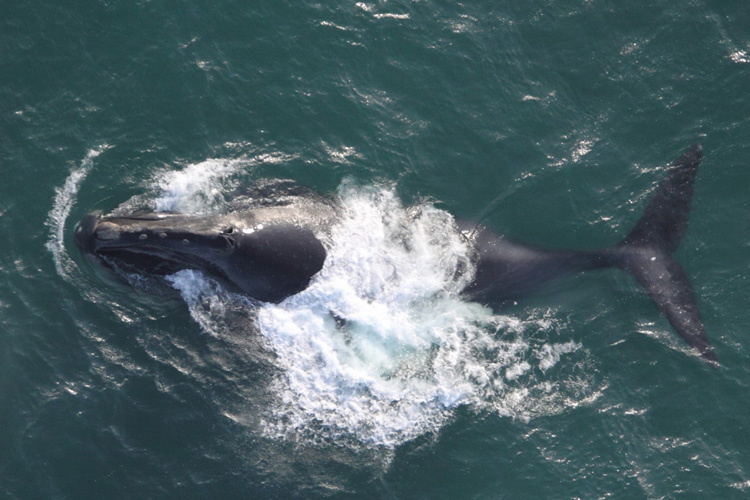
“That two individual whales of different species have made this improbable journey, died naturally, and left behind the very same skeletal element is not reasonable in our estimate,” wrote Wooller and his colleagues.


That left carnivores or people. No species of carnivore, past or present, was likely to have dragged bones hundreds of kilometers. People, on the other hand, transport all sorts of things over vast distances. And vertebral growth plates are surprisingly useful as plates, trays, or cutting boards. The only problem is that archaeologists haven’t found whale bones at any other sites in inland Alaska, meaning that they apparently weren’t a very common trading item. File that under “possible but not likely.”
Somehow, the best explanation is that the whale bones weren’t even from Dome Creek in the first place.
Lost and found at the museum
Paleontologist Otto Geist gathered a truly staggering number of Pleistocene bones from sites all over Alaska, and 1951 was an especially busy year for him. Besides the 181 specimens from Dome Creek, Geist also returned to the museum with bones he had unearthed at several sites on the western coast of Alaska. It turned out that on the very same day the museum took in the Dome Creek specimens, they also accepted a collection of bones from a site called Dexter Point, on the coast of Norton Bay.
“It is possible that the two whale bones examined in the current study derived from this Norton Bay locale and were inadvertently included with the Dome Creek assemblage,” wrote Wooller and his colleagues, although they acknowledge, “Ultimately, this may never be completely resolved.”
Meanwhile, the Adopt-a-Mammoth project continues, having provided an object lesson in the importance of “fully investigating anomalous radiocarbon results,” as the researchers put it. In other words, if your data looks fishy, it might actually be a whale.
Journal of Quaternary Science, 2026 DOI: 10.1002/jqs.70040