


Before “Breaking Bad” led to “Better Call Saul,” one of the best go-to examples of a show that spawned a comparable, long-running spin-off was “Buffy the Vampire Slayer.” The WB’s supernatural teen drama (which itself was based on the 1992 movie of the same name) premiered in 1997 and ran for seven seasons. Soon into its run, however, it became evident that the show had interesting characters to burn, and in 1999, a few of them emigrated to Los Angeles for the darker and grittier spin-off: “Angel.”
Throughout its five seasons, “Angel” hit the sweet spot of “something old, something new” so well that it actually got slightly better reviews than the already very well-received “Buffy” and has established a legacy as one of TV’s best spin-offs. Apart from all of this, “Angel” also gave its showrunners, Joss Whedon and David Greenwalt, an opportunity to do something they never could on “Buffy,” since Buffy Summers starts the show as a fully formed vampire hunter: write an arc about a vain and self-obsessed character’s path into a hero.
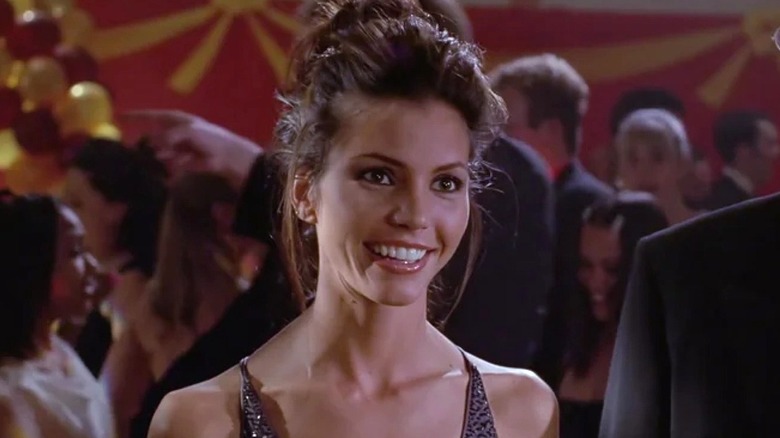
The opportunity came courtesy of Charisma Carpenter, whose Cordelia Chase is introduced as a queen bee-style cheerleader character on “Buffy” before growing into a full-on hero during her tenure on “Angel.” As Whedon told Entertainment Weekly in 2019, “You get to watch her go from somebody who is completely shallow and self-involved to somebody who is a hero.”
Cordelia’s heroic arc is a difficult but fascinating one
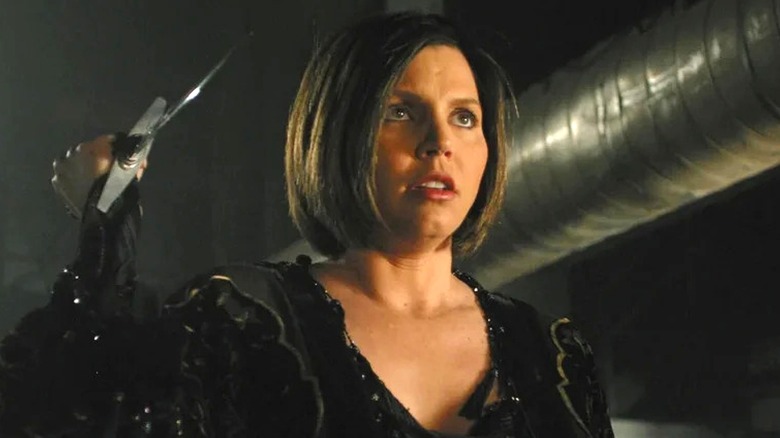
Since “Angel” is a noticeably darker series than “Buffy the Vampire Slayer,” the characters who move from the original show are forced to adapt to their new environment. While Angel (David Boreanaz) is originally established as a vampire with an adequately shady past to match the world of his titular series, the spin-off’s other key Season 1 “Buffy” veterans – Cordelia and Wesley Wyndam-Pryce (Alexis Denisof) — are haughty comic relief types who suddenly find themselves in a far more mature, noir-style environment than they’re used to.
Cordelia’s “Angel” arc makes it easy to see how the showrunners might have handled Buffy’s origin in other circumstances. After all, just like Buffy — who finds out she’s the latest in a long line of legendary slayers — Cordelia eventually acquires supernatural powers and becomes an important person in the fight against the forces of evil. Along with a string of personal difficulties that leave her borderline destitute, the demonic visions Doyle (Glenn Quinn) gift her are a heavy load to bear, but they also serve as fertile ground for serious personal growth.
“Angel” puts Cordelia through a lot, and the character’s heroic arc is so well executed that the Cordelia Chase in the later seasons of the spin-off is virtually unrecognizable from the younger version audiences met years earlier on “Buffy.” The creators of The WB’s Buffy-verse might have opted not to give the titular vampire slayer a heroic origin story, but they more than made up for it with Cordelia’s whopper of a character arc.