


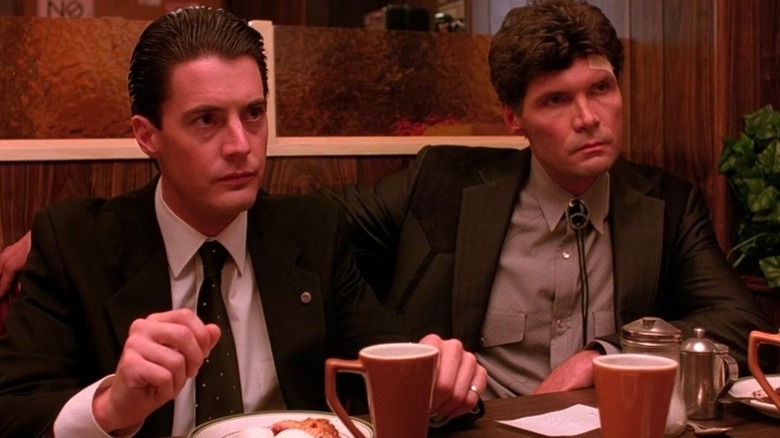
“Twin Peaks” establishes its unique tone right from the pilot episode, which introduces the show’s central mystery — Laura Palmer’s (Sheryl Lee) murder — as well as the town and its many strange residents. Its ending also offers one of the show’s many shock moments, as Laura’s grieving mother Sarah (Grace Zabriskie) has a startling vision of a hand digging up Laura’s necklace.
A different, TV movie cut of the “Twin Peaks” pilot was made, intended for the European market in case ABC passed on making more episodes. This version is otherwise similar to the pilot episode, but its ending is much stranger. Here, Sarah’s vision features Bob eerily crouching at the foot of Laura’s bed, and the plot moves to Special Agent Dale Cooper (Kyle MacLachlan), Sheriff Harry S. Truman (Michael Ontkean), and Mike the One-Armed Man (Al Strobel) locating and confronting Bob.
The international ending is effectively a sped-up version of the key supernatural elements on “Twin Peaks.” Sarah’s vision leads to Deputy Hawk (Michael Horse) making a sketch of Bob, which Mike recognizes. Mike reveals that he’s Bob’s former accomplice and reveals the killer’s hideout at the hospital basement. There, Cooper and Harry intercept a strange candle ritual, and the tense confrontation ends with Mike arriving on the scene and shooting Bob dead before dying of a heart attack himself.
The closed ending is a crash course in classic Twin Peaks mythology
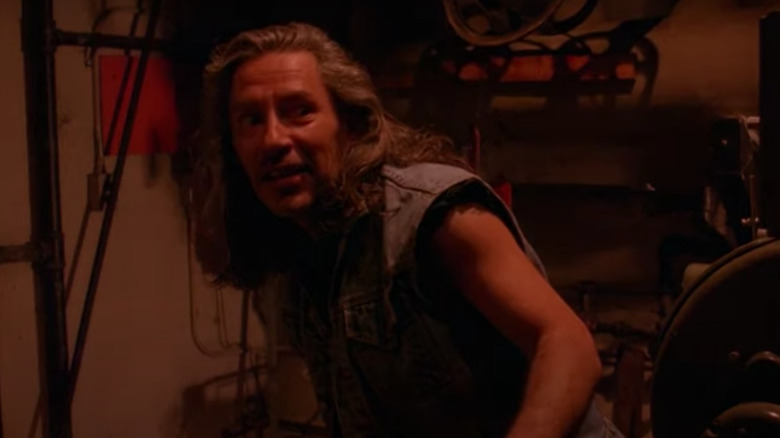
The ending establishes several important aspects of the “Twin Peaks” mythology. Apart from Bob and Mike, the international ending introduces concepts like the supernatural convenience store (which several of the show’s spirits use as a base). Stripped of context, the most baffling thing about the ending are its final moments, when an abrupt time skip takes us 25 years forward. Here, we see Cooper sitting in the show’s infamous red room with Laura Palmer and the Man from Another Place (Michael J. Anderson), before the latter starts dancing wildly and the credits roll with zero explanation. Incidentally, it’s worth noting that Showtime’s equally outlandish “Twin Peaks: The Return” revival season premiered a quarter of a century after Season 2 ended.
The international ending that was so instrumental in shaping “Twin Peaks” may be comparatively little known, but even after David Lynch’s death in 2025, it remains a stellar example of his willingness to embrace inspiration. After all, the many mysterious elements this ending introduced went on to form the backbone of what makes “Twin Peaks” so intriguing and baffling.