US diesel prices have jumped more than a third over the past month to almost $5 a gallon as the war in Iran pinches global supplies, pushing up costs of everything from transporting goods to planting crops.

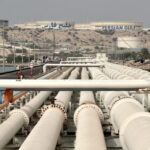

Average diesel prices at the pump rose to $4.99 on Monday, a 37 per cent increase on a month ago as the blockage of the Strait of Hormuz chokes energy supplies, according to motor club AAA.
It marks the highest price for diesel, a fuel that is vital for industry, since the aftermath of Russia’s full-scale invasion of Ukraine in 2022. Analysts say the sudden rise, which comes after US-Israeli strikes on Iran plunged the Middle East into turmoil, is unlikely to reverse soon.
“Diesel costs rocket up and float back down,” said Ed Hirs, an energy economist at the University of Houston. “The only thing the [Donald Trump] administration can do is finish this war.”
The diesel surge is pushing up costs for motorists and farmers, threatening to trigger spiralling costs for consumers across the world’s largest economy at a time when the president is battling an affordability crisis.
Kareem Miller, chief executive of Strong Pact Trucking, said the rise in diesel prices is already stinging.
“This is horrible because everyone is going to be affected by higher costs. It will push up the price of groceries, construction products and everything else,” he said.
Miller, whose company owns three trucks, said larger transport companies could automatically add surcharges to their fees but this was not always possible for smaller trucking companies.
“We were doing around 100 gallons of diesel a day and the price rises will cost us about $750 per week. It’s really an extra burden,” he said.
The crisis comes as farmers across the western hemisphere begin the spring planting season, when they are reliant on diesel to fuel heavy machinery such as tractors, combines and pumps. Livestock farms are particularly exposed through vehicles used to transport animals.
US farmers spent almost $10bn on diesel in 2024, accounting for 2 per cent of total spending, according to the US Department of Agriculture.
While the trade war has led to surplus supplies of some agricultural commodities, the diesel price squeeze is a factor, alongside high fertiliser and seed costs and low commodity prices, which will lead to “more farmers going broke”, said Walter Schweitzer, a cattle rancher near Geyser, Montana.
Farmers were under pressure since before the crisis, with input costs rising and tariffs affecting their export markets. Bankruptcies rose 46 per cent in 2025, according to the American Farm Bureau Federation.
“Farmers and ranchers are trying to figure out which crops to plant, and picking ones that will lose the least amount of money,” Schweitzer said.
Jed Bower, president of the National Corn Growers Association, also noted rising fuel costs have a knock-on effect on the price of fertiliser, which in turn is likely to impact corn farmers’ decisions on how much to plant and grow.
“Farmers have navigated extremely high fertiliser prices for several years, and have faced sustained expensive input prices for the past four years,” Bower said. “The uncertainty in the Middle East complicates this situation as farmers will soon be planting the second most expensive corn crop on record.”
The American Soybean Association said in a letter on Monday to Trump that “farmers are paying more than ever to grow their crops”.
“Prior to the closure of the Strait of Hormuz, the average price for inputs over the past five years increased from between 15 per cent to as high as 95 per cent depending on the input . . . Following the closure of the Strait of Hormuz, prices have risen even further,” the organisation added.
Experts say the diesel price rise is being compounded by the US suffering from a lack of refining capacity. The US’s 132 refineries are old and better equipped to handle the kind of heavy crude common in Venezuela and Canada rather than oil produced in the US.
Last week, Trump announced the first new major refining project in the US since 1977, to be built in Brownsville, Texas.
But refineries are closing in states such as California. Phillips 66 recently closed a Los Angeles refinery while Valero Energy intends to shutter its Benicia Refinery next month.
“Our infrastructure is old and we’re not set up to produce the mix of downstream products to meet our domestic needs,” said Alex Jacquez, chief of policy and advocacy at Groundwork Collaborative and a former adviser to then president Joe Biden.