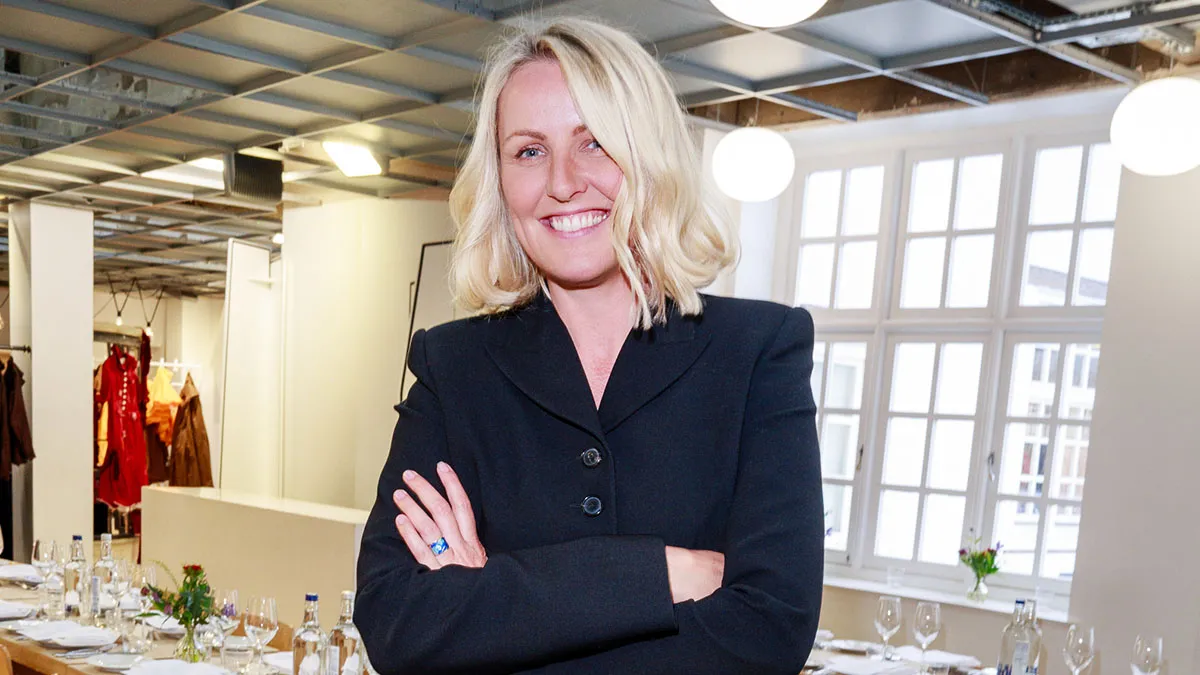
It’s a rare occurrence to be interviewing your former boss, but this is what I found myself doing back in February, a few days ahead of London Fashion Week and in the offices of the British Fashion Council (BFC). Before taking the helm as BFC chief executive in April 2025, Laura Weir served as the executive creative director of Selfridges, where I also worked. And before that, Weir was a journalist and editor — most notably having led the London Evening Standard’s weekly supplement, ES Magazine, between 2015 and 2020.



Weir brings that editorial lens to everything she does. At Selfridges, she encouraged the creative teams to think reactively and respond to cultural news stories on traditionally editorial channels like socials, but also on all visual merchandising touchpoints within the store, including its famous windows.
She is doing the same with the BFC. Her 2030 strategy is being unveiled today, though I had the chance to study the 64 slides ahead of this interview. The thing that stands out the most throughout is an intention to label and explain things clearly, while also reangling certain narratives. One such example is London’s role as a talent incubator, which has historically been perceived as less than positive, with designers often flying the coop for the bright lights of Milan or Paris (see: Jonathan Anderson, Grace Wales Bonner, Kim Jones, Louise Trotter, John Galliano, and the list goes on).
Below is part of the conversation Weir and I had about her BFC 2030: Access, Creativity, Growth strategy, edited for clarity.
Vogue: Your experience of the British fashion industry is multifaceted, having held media roles in both consumer and B2B titles as well as two years at a retailer. What were the pain points you had already identified when you began your role at the BFC?
When I joined the British Fashion Council, I came as a stakeholder. I had been a member of the press that dealt with the British Fashion Council, and I had worked at Selfridges as a patron of the British Fashion Council. I had seen the greatness of the organization, and I’d heard and experienced the frustrations.
Caroline Rush, who was the leader for 16 years, built incredible foundations and a really resilient personnel. As an organization, the BFC was in a good position. But I felt there needed to be greater clarity around its purpose. What is it here to do? And is the activity meeting the needs of the market? Because it’s changed so dramatically in the last five years: wholesale has completely shifted since Covid, Brexit, tariffs… I think now is a really good time to get the BFC fit for the future.
