


When the Fox network first came on the air in October 1986, the “big three” networks of CBS, NBC, and ABC had ruled broadcast television for decades with minimal competition from independent channels and PBS. Early Fox hits like “Married… with Children” and “The Simpsons” eventually helped Rupert Murdoch and Barry Diller’s experiment become a success, but the older networks didn’t have much respect for their new challenger.
In 2021, Diller — who was CEO of 20th Century Fox when the studio launched its TV network – told the Los Angeles Times that NBC programming head Brandon Tartikoff and other big three execs referred to Fox as the “wire hanger network.” This implied that Fox affiliates might not be able to maintain a consistently strong signal from their transmitters, and anyone who wanted to watch Fox shows would have to attach a wire coat-hanger to the antenna on their TV. The execs weren’t entirely wrong — at the outset many Fox affiliates were on the UHF (Ultra-High Frequency) band. UHF waves don’t travel very far, and many of these independent stations couldn’t match the resources of larger big three affiliates.
Fox now reaches many millions of homes across the globe, although over-the-air TV has largely given way to cable and satellite services. A shift to digital broadcasting in the United States in 2009 has driven some viewers back to watching free over-the-air TV, but back-of-TV metal antennas are hardly ever used today.
Fox started out with just six affiliate stations
Just getting stations on board was a challenge as well. At first, Fox programming went out on just six transmitters and more than three-quarters of the country was out of range. Fox painted outside the lines early on with some of its programming, and soon enough, the buzz around those first shows and the acquisition of National Football League game broadcast rights put Fox on the broadcast map in many new places.
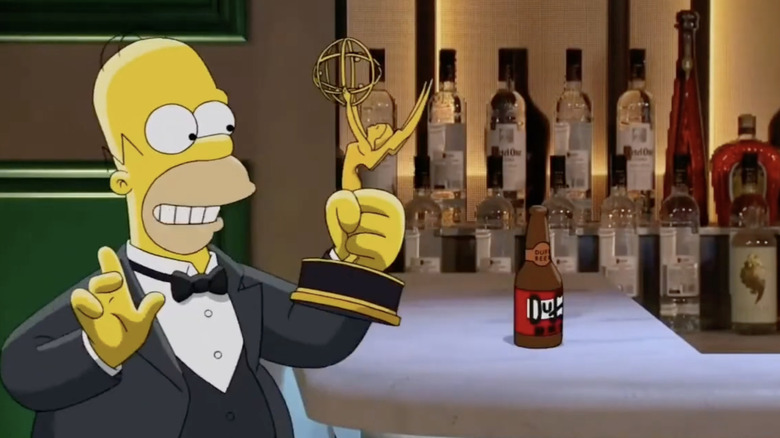
Fox also drew in viewers on Sunday nights with “Married… with Children,” which debuted in 1987 and prompted a boycott by conservative activist Terry Rakolta. Katey Sagal — who starred as Peg Bundy — said Rakolta’s boycott actually helped the show’s popularity. On a 2021 episode of “WTF with Marc Maron,” Sagal said “We sent her flowers every year. She tried to get us off the air and all it did was get us on the front of The New York Times. And it doubled our audience.” Fox paid over $1 million a year to broadcast the Emmy Awards in 1987 and 1988, which helped expand its orbit of affiliates and viewers.
What were the earliest Fox shows?
Fox’s “The Late Show” premiered on October 9, 1986, with Joan Rivers hosting what was meant to be a challenger to NBC’s “The Tonight Show” with Johnny Carson. In its earliest days, Fox only broadcast on the weekends, but a technicality allowed for some flexibility on Sunday nights. While the big three were obligated to show educational programming or news from 7 p.m. to 8 p.m. Sundays, Fox was exempt because it didn’t have the 15 hours of weekly programming to qualify it as a network with the FCC.
Fox put on “21 Jump Street” in 1987 against the likes of CBS’ “60 Minutes.” “The Tracey Ullman Show” also debuted in 1987, introducing America to the animated Simpson family. “America’s Most Wanted” was an inexpensive hit almost from debut the following year, and “The Simpsons” — which is still on the air today — premiered in 1989.