


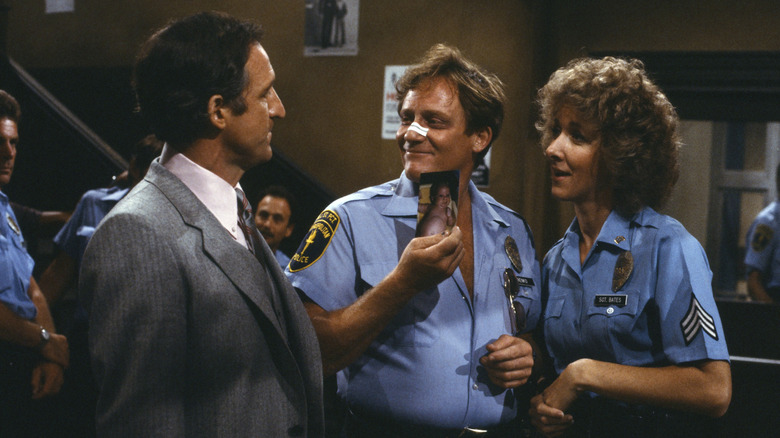
Before there was “The Wire,” before there was “The Shield,” before there was even “Law & Order,” there was “Hill Street Blues.” While it may not be as well remembered in the 21st century as other series, this “granddaddy of modern TV cop dramas” remains TV’s first prestige drama, winning eight Emmys in its very first season before going on a four-year streak of winning the Emmy for best drama series. This was a groundbreaking moment in TV history, signaling the potential of the medium to tell more involved, complex stories. And like many of the prestige dramas that fill our streaming services today, “Hill Street Blues” was able to close out its story on its own terms, coming to an end with its seventh season in 1987.
While “Hill Street Blues” was never a ratings juggernaut, MTM Enterprises President Arthur Price, who produced the series, insisted that the creative team had “enjoyed seven very satisfying years making ‘Hill Street Blues.’ It seems appropriate to close this happy venture on a high note and to permit the show’s vastly talented staff of writers and actors to pursue other projects.”
With 26 Emmys under their belt, co-executive producer Jeffrey Lewis explained that he and fellow writer/producer David Milch were prepared to leave a season earlier but were convinced to stay for one more year to help close out the story of the Metropolitan Police Department. “I’m gratified that the show is ending on a high note,” he said. “And I’m gratified if my participation had any part in that.”
Many of the greatest TV shows of all time followed in Hill Street Blues’ footsteps
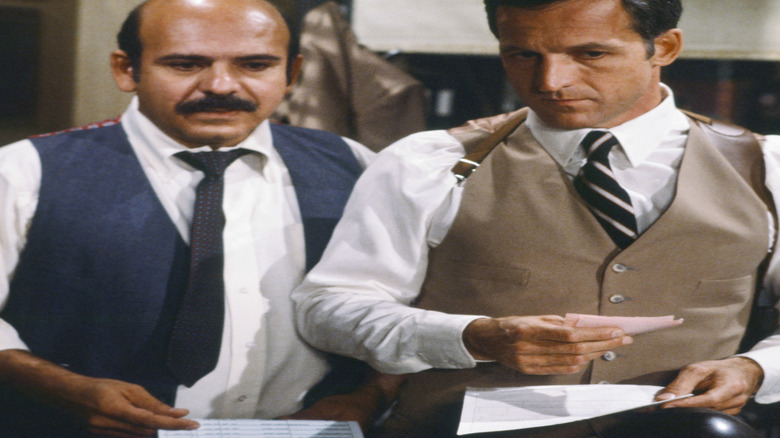
Lewis alluded to the fact that “a handful of the producers, writers and cast members are anxious to move on to new projects,” and that bears fruit in the legacy of the show’s creative team. “Blue” creator Steven Bochco went on to create new cop shows, including “LA Law” and “NYPD Blue,” where he continued the grounded realism of the series. Meanwhile, writer Anthony Yerkovich went in the other direction, creating the vibes-soaked “Miami Vice” with Michael Mann. But perhaps the show’s most notable alumni used what they learned from “Hill Street Blues” to push the boundaries of the medium beyond what anyone thought was possible.
At first glance, “Twin Peaks” looks like it is everything “Hill Street Blues” was not; it’s moody and dreamlike, whereas “Blues” was doggedly realistic. And yet they share the talents of writer Mark Frost, who co-created “Twin Peaks” with visionary director David Lynch after spending years as a part of the “Hill Street Blues” writers’ room. And then there’s David Milch, who stayed in the orbit of “Blues” creator Steven Bochco for years, joining him to write “LA Law” and co-creating “NYPD Blue” before striking out on his own with HBO’s seminal Western drama, “Deadwood.”
Looking back on his time with the show in a CNN oral history of the show, Bochco declared that “it just changed the rules of TV.” And looking at the list of works that followed directly in the show’s wake, it’s hard to think he’s overstating it.