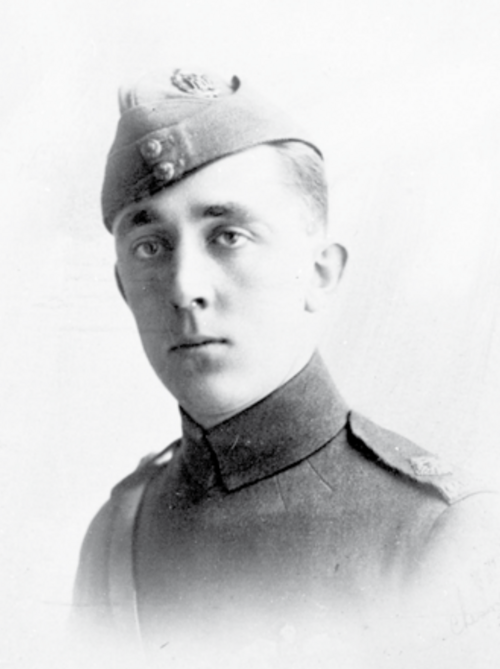
A Decorated Pilot With a Fearless Reputation
Captain Mansell Richard James was born in Canada in 1893 and went on to become one of the pilots whose name became associated with the dangerous skies of the First World War.
While serving with the Royal Flying Corps, James was assigned to No. 45 Squadron in Italy, where he flew the Sopwith Camel. Between June and August 1918, he recorded a series of aerial victories against enemy aircraft.
By the end of the war, James had been credited with 11 confirmed victories.
His courage and ability as a fighter pilot earned him the Distinguished Flying Cross. The award recognized him as a highly skilled pilot who repeatedly demonstrated determination while attacking enemy aircraft.
But the war ended, and James’ life entered a completely different chapter.
He left military service in May 1919 and traveled to the United States. There, only weeks later, he would embark on a flight that became the final journey of his life.
The Flight That Changed Everything
On May 28, 1919, James flew a Sopwith Camel from Atlantic City, New Jersey, toward Boston, Massachusetts.
The flight was part of a competition offering a $1,000 prize for the fastest journey between the two cities. James completed the trip at an impressive speed despite facing headwinds, reportedly averaging around 115 miles per hour.
After landing north of Boston, he took off again that evening.
James intended to return toward Atlantic City, reportedly using railroad tracks as a navigational guide. But somewhere along the journey, things did not go according to plan.
Instead of heading in the expected direction, he eventually landed at Tyringham, Massachusetts, roughly 100 miles west of Boston by air. His aircraft needed servicing, and James remained in the area.
The following days produced conflicting reports about where he had been seen.
One account placed him over Connecticut on May 29, flying southeast at an altitude of about 5,000 feet. But another account, considered more reliable, placed his final confirmed departure much later.
On the morning of June 2, 1919, James took off from Tyringham.
He headed south before turning west.
People gathered to watch the unusual sight of an aircraft taking off from their small community. Some spectators apparently assumed James was simply returning to the same field.
He never came back.
The Search for a Missing Flying Ace
When James failed to return, searches began.
The mystery quickly attracted attention because this was not an inexperienced pilot who had simply disappeared into the countryside. James was an experienced wartime aviator, and his aircraft was relatively distinctive.
Reports began appearing about possible sightings and possible wreckage.
Only two days after his disappearance, there was a report from near Millerton, New York, about an aircraft apparently heard with its engine running. Months later, a berry picker discovered aircraft wreckage in a ravine near Mount Riga. Some wondered whether it might belong to James.
But there was never enough evidence to prove it.
Years later, another possible lead emerged. In 1925, a hunting party reportedly encountered what appeared to be aircraft wreckage in the woods around Tyringham. They did not initially realize what they might have found. By the time they understood its possible significance and returned to search for it, they could no longer locate the site.
Then, in 1927, the Coast Guard recovered an aircraft wing floating in Fort Pond Bay near Long Island. James’ brother even contacted authorities in hopes that the piece might help identify what had happened to him.
Again, there was no definitive answer.
Other reports placed the possible crash site near the Hudson River around Poughkeepsie. Searches produced nothing conclusive.
A Mystery That Refused to End
James’ family did not simply give up.
A reward had reportedly been offered for information leading to the recovery of his remains, and possible sightings and wreckage reports continued to generate searches long after his disappearance.
But none of the aircraft debris discovered over the years was ever positively established as belonging to James’ Sopwith Camel.
And no confirmed remains of the pilot were ever recovered.
That left investigators and his family with a frustrating possibility: perhaps James and his aircraft had crashed somewhere in the remote countryside, hidden beneath trees or difficult terrain. But without finding the wreckage, there was no way to know whether that was actually what happened.
There were also multiple reported sightings and possible crash locations, making the search even more difficult.
The Final Flight
Captain Mansell Richard James disappeared in June 1919, only a few weeks after the end of his military career.
He had survived the First World War and become a decorated flying ace. He had faced enemy aircraft in combat and returned home alive.
Yet during a flight across the northeastern United States, he simply vanished.
More than a century later, there is still no confirmed wreckage, no recovered remains, and no definitive explanation for where his final flight ended.
The reports left behind over the years tell a story of aircraft debris in remote places, mysterious sightings, unsuccessful searches, and family members who continued hoping that one of those clues would finally lead to James.
None did.
And so the question remains:
Where did Captain Mansell Richard James and his Sopwith Camel disappear on that June morning in 1919?
A decorated war pilot who had survived the skies of World War I vanished during peacetime—and despite more than a century of searching, the final destination of his last flight remains unknown.
This story is based on publicly available information and reported facts. It has been independently written and presented for informational purposes. Images, if any, belong to their respective owners.