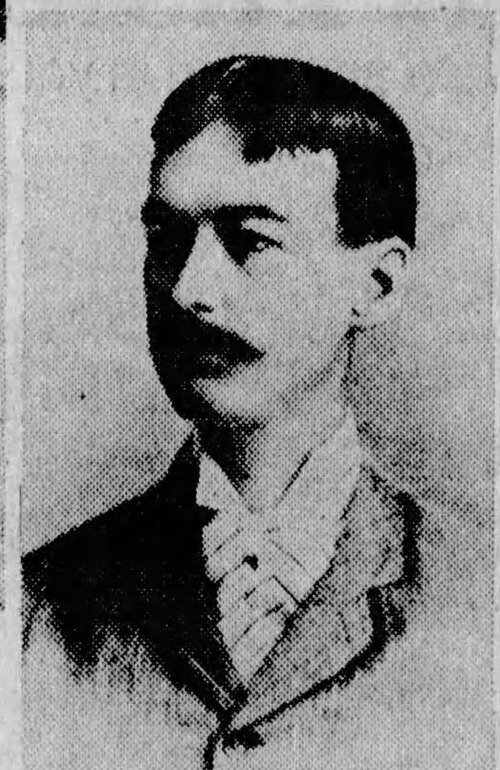
A Man Who Had Built an Empire
Francis Lewis Clark was born on June 21, 1861, and went on to become one of the most prominent businessmen in the American Northwest. His career was marked by enormous wealth, ambitious projects, and a reputation that placed him among the region’s influential industrialists.
In 1885, Clark established the C. & C. Mill and Elevator, which became one of the largest flour mills in the Pacific Northwest. His business interests extended far beyond the milling industry. He was also associated with the early development of the America’s Cup racing tradition and played a role in the development of what would eventually become Spokane’s famous Davenport Hotel.
Clark’s wealth allowed him and his wife, Winifred, to live on an extraordinary scale.
In 1898, the couple commissioned architect Kirtland Cutter to design an enormous residence on Seventh Avenue in Spokane, Washington. The resulting mansion covered approximately 14,400 square feet and featured elaborate woodwork and other original details that have survived.
Years later, Clark built another spectacular property on Hayden Lake in Idaho. Known as Honeysuckle Lodge, the summer residence was reportedly the most expensive home in the state at the time. Designed by Boston architect George Canning Wales, the estate reflected the fortune Clark had accumulated during his years in business.
By the early twentieth century, F. Lewis Clark appeared to have everything that wealth and status could provide.
Then, in January 1914, he disappeared.
The Last Night
On January 16, 1914, Clark accompanied his wife to the railway station in Santa Barbara, California.
Mrs. Clark was preparing to leave by train, and the departure was scheduled for 11:30 that night. Clark arrived at the station with his chauffeur and valet, seeing his wife off before she boarded.
He kissed Winifred goodbye.
But instead of getting back into the limousine, Clark made an unexpected decision.
He dismissed both his chauffeur and valet.
Then he walked away alone into the night.
That was the last confirmed sighting of F. Lewis Clark.
There was no farewell message, no confirmed destination, and no explanation for why a wealthy and apparently established man would suddenly abandon his transportation and disappear on foot.
A Hat in the Water
The disappearance immediately raised questions.
According to contemporary newspaper reporting, police considered the possibility that Clark had taken his own life. His hat had reportedly been discovered in the water near one of Santa Barbara’s piers, leading investigators to suspect that he may have jumped into the sea.
But suspicion was not proof.
Clark’s body was never recovered.
Without remains or a confirmed witness to his final moments, the circumstances surrounding his disappearance could not be conclusively established.
Did he deliberately walk toward the waterfront intending never to return? Did something happen after he left the station? Or was the discovery of his hat simply misleading?
More than a century later, those questions remain unanswered.
The Life He Left Behind
For Winifred Clark, her husband’s disappearance meant more than losing the person she loved. She was also left to deal with the enormous financial and practical responsibilities that came with his estate.
She attempted to manage their affairs after Clark vanished, but the family’s financial position apparently deteriorated over the following years.
By 1922, Winifred was forced to sell her possessions.
The man who had once built mansions, invested in major businesses, and lived among the wealthiest people of his region had disappeared without leaving behind the one thing that could have brought certainty to his story: an answer.
A Disappearance Without a Body
F. Lewis Clark vanished on a cold January night after saying goodbye to his wife at a California train station.
A hat was found in the water.
Police suspected suicide.
But no body was ever found, and there was never definitive evidence establishing what happened after Clark walked away from the station.
His disappearance therefore remains one of those historical mysteries in which the most important piece of the story is still missing.
F. Lewis Clark had spent decades building things that could be seen and remembered—businesses, homes, and a fortune.
But on January 16, 1914, he simply walked into the night.
And whatever happened afterward has never been conclusively discovered.
This story is based on publicly available information and reported facts. It has been independently written and presented for informational purposes. Images, if any, belong to their respective owners.