Hickory, North Carolina — September–November 2010
Zahra Clare Baker had already endured more than most children her age.
She had survived cancer.
She had lost part of one leg.
She needed hearing aids.
And after moving thousands of miles from Australia to North Carolina with her father and stepmother, she was supposed to be starting a new chapter in her life.
Instead, at just ten years old, Zahra was murdered.
When police were first told she had disappeared, the story involved a fire, a ransom demand, and an alleged kidnapping.
But investigators soon began finding evidence that pointed somewhere much closer to home.
What followed was a massive search through Caldwell and Catawba counties, the discovery of Zahra’s scattered remains, and a case that would eventually lead to her stepmother, Elisa Baker.
Elisa ultimately pleaded guilty to Zahra’s murder.
But questions about what happened inside the Baker household—and the role, if any, of Zahra’s father—continued to surround the case.
A CHILD WHO HAD ALREADY FOUGHT CANCER
Zahra Baker was born on November 16, 1999, in New South Wales, Australia.
Her parents were Emily Dietrich and Adam Baker.
After Zahra’s parents separated, her father eventually took her to Queensland, where he worked at a sugar mill.
Then, in 2005, Zahra was diagnosed with bone cancer.
The illness changed her childhood.
She later developed lung cancer as well, and doctors eventually had to amputate the lower portion of one of her legs.
Zahra also relied on hearing aids.
But in 2008, her cancer went into remission.
That same year, she moved to the United States with her father and his new wife, Elisa Baker.
The family settled in Hickory, North Carolina.
Zahra was ten years old when her life came to its tragic end.
LIFE IN NORTH CAROLINA
After arriving in North Carolina, Zahra attended public school.
Eventually, she was removed from school and was reportedly supposed to be homeschooled.
Whether that homeschooling actually took place remained unclear.
There were already concerns about Zahra’s welfare.
According to the source material, reports of possible abuse had been made to the school. Neighbors also alleged that Elisa had been physically and emotionally abusive toward Zahra and had neglected her.
At one point, Zahra reportedly arrived at school with a black eye.
Two teachers subsequently visited the family home.
Child Protective Services agencies in Caldwell and Catawba counties also visited residences connected to the family multiple times.
The concerns surrounding Elisa were not entirely new. Reports involving alleged abusive behavior toward her own children had also been investigated years earlier.
Yet Zahra remained in the household.
And eventually, something happened that would expose what had been hidden behind the family’s doors.
THE 911 CALL
Early on the morning of October 9, 2010, Elisa Baker called 911.
It was around 5:30 a.m.
She reported a fire behind the family’s Hickory residence.
When police arrived, they discovered something else that immediately raised questions.
There was a ransom note.
Investigators also noticed the smell of gasoline coming from Adam Baker’s company Chevrolet Tahoe.
Hours later, at approximately 2 p.m., another 911 call was made—this time reporting Zahra missing.
Adam told authorities that a ransom note demanding one million dollars had been found on his company truck.
According to his account, the person responsible for the fire had supposedly intended to abduct the daughter of his boss and landlord, Mark Coffey.
But the alleged kidnapper had supposedly taken Zahra by mistake.
Adam said the last time he had seen his daughter was around 2:30 that morning.
The kidnapping story would not survive the investigation.
POLICE BEGIN TO QUESTION THE STORY
Investigators quickly began looking more closely at Elisa.
She took a polygraph examination and failed it.
Police questioned her about whether she had harmed Zahra, whether she knew who had harmed her, and whether she knew who had written the ransom note.
Then, on October 10, search-and-rescue dogs were brought to the Baker home and vehicles.
The dogs alerted to the possible scent of human remains in both the Chevrolet Tahoe and another car.
Investigators collected material they believed could be blood.
Elisa was subsequently arrested on several unrelated charges, including communicating threats, writing bad checks, larceny, and driving with a revoked license.
While in jail, she admitted something important:
She had written the ransom note herself.
The note that had sent investigators toward a supposed kidnapping was a fabrication.
Elisa was then charged with obstruction of justice.
The investigation was now moving in a completely different direction.
THE SEARCH FOR ZAHRA
As investigators continued digging into the case, information began emerging about what may have happened to Zahra.
Elisa’s aunt, Bonzetta Winkler, told reporters that Elisa had said Zahra had been sick for approximately two weeks before her death.
According to the aunt’s account, Elisa said Zahra’s remains had been dismembered and hidden.
Elisa reportedly told police that Zahra had died on September 24—more than two weeks before she was officially reported missing.
Those statements became part of a much larger investigation into the child’s disappearance and death.
Then investigators received information about Zahra’s prosthetic leg.
Elisa reportedly told her attorney that the prosthesis had been thrown away with other belongings.
Police searched for it.
A prosthetic leg was eventually discovered beside a road in Caldwell County.
Medical records from Australia provided a way to confirm its identity.
It belonged to Zahra.
HER REMAINS WERE SCATTERED
In November 2010, Elisa began directing investigators toward different locations in Caldwell and Catawba counties.
Police searched the areas she identified.
They began finding Zahra’s remains.
The discoveries were scattered across multiple locations, making the search a grim and painstaking process.
Her head was not recovered at the same time as the other remains and was found only later.
Investigators also followed leads involving Zahra’s mattress and other objects allegedly used to conceal or transport her remains.
A mattress matching Elisa’s description was reportedly located at a landfill.
She also directed police toward a dumpster behind a grocery store in Hudson, where she said items including a car cover and bed cover had been discarded.
According to her account, those items had been used to conceal and move Zahra.
She also told investigators about other possible evidence inside the home.
Piece by piece, the kidnapping story was disappearing.
In its place was evidence of a murder committed within the family environment.
WHAT WAS HAPPENING INSIDE THE HOUSE?
As investigators reconstructed Zahra’s final weeks, they also examined Elisa’s history and relationships.
Elisa had maintained several marriages and relationships, some overlapping.
She was also facing allegations and investigations unrelated to Zahra’s death.
Investigators examined online activity involving Elisa and people connected to her.
There were also allegations made against two men associated with Elisa’s previous husband.
Those men were investigated over claims that they had assaulted Zahra and caused her death.
According to the source material, both men passed polygraph examinations and were never charged.
These allegations were investigated but did not result in murder charges against them.
The prosecution ultimately focused on Elisa.
THE MURDER CHARGE
Because Zahra’s body had been severely dismembered, investigators could not establish a precise cause of death.
Her death was classified as an undetermined violent homicide.
Investigators nevertheless came to believe that Elisa had killed Zahra on September 24, 2010, and disposed of her remains afterward.
Elisa was indicted for second-degree murder with aggravating circumstances in February 2011.
The aggravating circumstances cited by prosecutors included allegations of a history of abuse, taking Zahra away from her family, concealing and desecrating her remains, Zahra’s young age and physical disability, and Elisa’s position of trust as her stepmother.
Elisa faced the possibility of a more serious murder charge had she not helped investigators locate Zahra’s remains.
Adam Baker, meanwhile, denied involvement in Zahra’s death.
According to the source material, investigators found no credible evidence connecting him to the murder.
ADAM BAKER’S OWN LEGAL TROUBLES
The investigation into Zahra’s death was not the only legal trouble facing the Baker family.
In April 2011, Adam Baker was charged with identity theft and obtaining property under false pretenses.
The allegations involved the use of another man’s identity and Social Security number to obtain utilities.
Adam had also previously faced other unrelated charges.
Because of the new allegations, he was ordered to remain in North Carolina unless he notified prosecutors, wear an electronic monitoring device, and maintain regular contact with immigration authorities.
He had reportedly hoped to return to Australia.
Meanwhile, Elisa was facing her own unrelated identity-theft charges.
THE DRUG CHARGES
Elisa’s legal problems continued to grow.
In May 2011, she was indicted on seven federal drug charges involving prescription medications.
The allegations covered a period stretching from 2006 through 2010 and involved drugs including oxycodone, hydrocodone, and alprazolam.
She pleaded not guilty to the federal charges.
In March 2013, a federal judge sentenced Elisa to 120 months in prison for conspiracy involving the distribution of prescription drugs.
But by then, she had already been convicted of the crime that had shocked the nation: the murder of her ten-year-old stepdaughter.
THE GUILTY PLEA
Because of the enormous publicity surrounding Zahra’s death, Elisa’s attorney requested that the murder trial be moved out of Catawba County.
A change of venue was approved in August 2011.
But the case never went to a full murder trial.
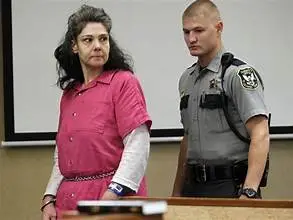
On September 15, 2011, Elisa Baker pleaded guilty to second-degree murder.
She was sentenced to 15 to 18 years in prison.
Her guilty plea brought a legal conclusion to the murder case.
But for Zahra’s family, there were still questions.
Why had a child who had already survived cancer and serious medical problems been subjected to years of alleged mistreatment?
What exactly happened inside the Baker home?
And what role, if any, did other people play?
WHAT HAPPENED TO ZAHRA?
Zahra was only ten years old.
She had spent much of her short life fighting illness.
She had survived cancer and adapted to life after losing part of her leg.
She moved from Australia to the United States believing she was beginning another chapter.
Instead, her final days became the subject of an investigation that involved a fabricated ransom note, a staged fire, multiple searches, scattered remains, and a stepmother who ultimately admitted responsibility for her murder.
Elisa Baker pleaded guilty.
She was sentenced to prison.
But Zahra’s story is bigger than the courtroom.
It is also about the warning signs that reportedly existed before her death.
Teachers had concerns.
Neighbors had concerns.
Authorities had reportedly received earlier reports.
And yet Zahra never made it out of that home alive.
ZAHRA’S STORY
The case received international attention because of the horrifying circumstances surrounding Zahra’s death.
But beneath the headlines was a ten-year-old girl who had already survived experiences no child should have had to endure.
Zahra Clare Baker should be remembered not simply as the victim at the center of a notorious murder investigation.
She was a child from Australia who loved her family, survived cancer, adapted to profound physical challenges, and crossed the world with hopes of a new beginning.
That beginning never came.
Her remains were eventually found scattered across North Carolina.
Her stepmother pleaded guilty to killing her.
And the unanswered questions surrounding Zahra’s final days remain part of the story of a child whose life ended far too soon.
This story is based on publicly available information and reported facts. It has been independently written and presented for informational purposes. Images, if any, belong to their respective owners.