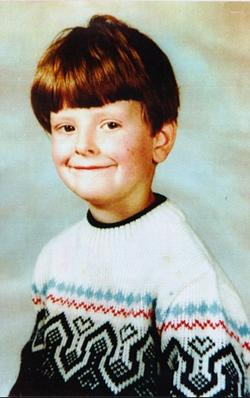
The Disappearance of Mark Tildesley: The Seven-Year-Old Boy Who Never Came Home
On the evening of June 1, 1984, seven-year-old Mark Anthony Tildesley left his home in Wokingham, Berkshire, excited to spend the evening at a travelling funfair.
He never returned.
What began as a parent’s desperate search for a missing child would eventually become one of the most disturbing and long-running criminal investigations in the area. Mark’s disappearance triggered huge police searches, national appeals and one of the earliest episodes of Crimewatch UK. Thousands of people contacted investigators with possible information.
Yet Mark’s whereabouts remained unknown for decades.
Eventually, investigators concluded that he had been abducted and murdered by members of a group of men connected to convicted child sex offenders. One man was eventually prosecuted in connection with Mark’s death, but the location of Mark’s remains has never been established.
A Seven-Year-Old Who Loved the Fair
Mark was born on August 31, 1976, in Berkshire to John and Lavinia Tildesley.
He lived with his parents at Rose Court in Wokingham and attended Palmer C of E Junior School. His two older siblings were already adults and had moved away from the family home.
In late May 1984, Mark began his school half-term holiday. A travelling fair had arrived at Carnival Field near Wellington Road, and Mark was eager to visit it.
Money was a problem.
Mark received only a small weekly allowance, so he sometimes collected abandoned shopping-trolley deposits from a Tesco store in Denmark Street. By returning the trolleys, he could recover the small deposits customers had left behind.
For Mark, the effort was worth it because he wanted to spend his money at the fair.
The Stranger Outside the Sweet Shop
On the afternoon of June 1, Mark encountered a man outside a sweet shop on Denmark Street.
The stranger gave him 50 pence to buy sweets and told him that he would also be at the funfair later. According to the account later given to investigators, the man promised to pay for Mark to ride the dodgems, which was one of the boy’s favourite attractions.
That evening, shortly after 5:30 p.m., Mark left home on his bicycle.
The fair was only about half a mile away, and it was expected to open at 6 p.m. Mark told his parents that he would be home by 7:30.
On the way, he encountered two friends. They planned to return home before going to the fair themselves.
Mark continued alone.
Those friends were the last people who knew Mark personally to see him alive.
When Mark Didn’t Come Home
7:30 p.m. came and went.
Mark was not home.
At about 8 p.m., his parents went to the fair to look for him. They found his bicycle chained to railings close to the entrance.
But Mark was nowhere to be seen.
The family returned home, hoping that he might have gone somewhere else or would appear later. By 10 p.m., however, his mother contacted the police and formally reported him missing.
A major search began almost immediately.
An Enormous Search
Thames Valley Police launched an intensive operation throughout Wokingham.
Officers searched the fairground and surrounding area, questioned fairground workers and stallholders, examined nearby waterways and carried out extensive door-to-door enquiries.
A helicopter was used in the search, and specialist equipment capable of detecting human remains was obtained from the Metropolitan Police.
The scale of the operation quickly became enormous.
Police officers went through dozens of streets and hundreds of homes, shops and businesses in Wokingham town centre.
Army personnel were eventually brought in to help.
On June 9 and 10, around 100 soldiers from a Royal Electrical and Mechanical Engineers training battalion at Arborfield Garrison joined police officers and tracker dogs in searches south of Wokingham.
Nothing was found.
Two weeks after Mark disappeared, Detective Superintendent Roger Nicklin admitted that investigators still had no clear explanation for what had happened to the boy.
Witnesses Remember a “Stooping Man”
As the investigation continued, witnesses began coming forward.
Several people reported seeing a child resembling Mark being forcibly taken away from the fairground during the evening. The man accompanying him was described as being stooped.
Other possible sightings were reported around Langborough Road.
Police appealed nationally for information, and Mark’s photograph appeared on posters displayed across the country.
His disappearance also received extensive television and newspaper coverage.
On June 7, 1984, Mark’s case appeared on the very first episode of Crimewatch UK.
The response was extraordinary.
Hundreds of people contacted police after the broadcast.
A later reconstruction was filmed using another local seven-year-old boy wearing clothing similar to what Mark had been wearing. When another reconstruction was broadcast the following year, more than 1,000 calls were reportedly received.
Overall, investigators received information from more than 1,200 individuals, producing around 2,500 possible leads.
Despite all of those calls, Mark remained missing.
The Investigation Struggles to Keep Up
The investigation faced enormous practical difficulties.
Wokingham Police Station was too small to accommodate the expanding operation. An attic storeroom was initially turned into an incident room, while a temporary office was established at the fairground.
A nearby Baptist church was also used as a meeting space.
Only a handful of officers were initially assigned to the investigation, partly because Thames Valley Police were dealing with other major demands during the miners’ strike of 1984–85.
As the case expanded, the operation eventually had to be moved to a larger facility near Reading.
Mark’s older brother was initially considered a possible suspect because the two had argued earlier on the day Mark disappeared. Investigators quickly ruled him out.
Then came another disturbing development.
A False Confession
During the first Crimewatch appeal, anonymous callers told police that a particular fairground worker might be responsible.
The man had worked with the fair for years and had been present in Wokingham on the night Mark disappeared.
He was arrested and confessed to abducting and killing the boy.
But investigators became increasingly concerned about his changing versions of events. His account repeatedly shifted, and detectives eventually concluded that his confession could not be relied upon.
He was not the person responsible.
Another fairground worker soon attracted police attention.
His name was Sidney Cooke.
In August 1984, Metropolitan Police officers questioned Cooke at his London home. Investigators had already received information about his inappropriate interest in young boys.
Cooke claimed that he had been working at another fair in London on the night Mark disappeared, and the owner of that fair supported his account.
For the time being, Cooke was eliminated as a suspect.
The case eventually began to lose momentum.
By October 1984, the main investigation was being scaled back.
Operation Orchid Changes Everything
Years passed.
Then, in 1989, the Metropolitan Police launched Operation Orchid, an investigation into the disappearance and abuse of children.
The inquiry eventually brought detectives back to Mark’s case.
In December 1990, investigators interviewed Leslie Bailey, a convicted offender who was already serving a sentence for another killing.
Bailey provided information that dramatically changed the investigation.
Police obtained a handwritten map and information concerning Mark’s death. Bailey eventually claimed that Mark had been abducted by a group of men associated with Cooke.
Investigators came to believe that the “stooping man” witnesses had described was Sidney Cooke.
The investigation now had a very different picture of what had happened to Mark.
The Night They Called “Mark’s Party”
According to Bailey’s later account, he had been asked by Lennie Smith to drive from London to Wokingham because a gathering was planned at a caravan near the fairground.
Smith went into the funfair and returned with Mark.
The child had reportedly been persuaded to leave on the promise of sweets, but once outside the fairground he was forced into a vehicle.
Bailey said that several men were involved.
They took Mark to a caravan located in an area known as The Moors, near Evendons Lane.
There, Mark was sexually assaulted and killed.
Bailey later said that after dropping Smith back in London, he left the disposal of Mark’s body to Cooke.
For investigators, this confession finally provided an explanation for the disappearance that had remained a mystery for years.
But one crucial question remained unanswered:
Where was Mark?
The Search for His Remains
After Bailey’s confession, police searched The Moors in March 1991.
They found nothing.
Bailey claimed that he did not know where Cooke had ultimately taken the body.
Cooke himself never publicly admitted responsibility for Mark’s murder. Investigators believed he knew where the remains had been placed, but he refused to reveal the location.
Other searches were later considered.
In 1998, police declined to excavate a nearby golf course despite continuing questions about whether Mark could have been buried there.
In 2012, a piece of human skull discovered near Evendons Lane was examined. It was eventually determined not to belong to Mark.
His body has never been recovered.
The Men Connected to the Case
Sidney Cooke
Cooke became one of the central figures in the investigation, although he was never convicted of Mark’s murder.
A key ring reportedly resembling one belonging to Mark was later discovered in Cooke’s repossessed Jaguar.
Despite this and other information gathered by investigators, prosecutors decided that the available evidence was not strong enough to secure a conviction.
Cooke maintained that he had no role in Mark’s killing.
Leslie Bailey
Bailey was eventually charged in connection with Mark’s death.
On October 22, 1992, he pleaded guilty to the lesser offence of manslaughter, along with a sexual offence, at Reading Crown Court.
He received two life sentences in December of that year.
Bailey was later murdered in prison in October 1993 after being strangled by fellow inmates.
Lennie Smith
Leonard William Gilchrist, known as Lennie Smith, was also named in Bailey’s account.
Smith never admitted involvement in Mark’s death, and prosecutors did not bring charges against him because they considered Bailey’s evidence insufficient for a successful conviction.
Smith died in prison in 2006.
“Odd Bod”
Bailey also identified another relative who was referred to during the investigation by the nickname “Odd Bod.”
Because of his severe intellectual limitations and very young level of mental functioning, prosecutors determined that he could not be prosecuted in connection with the killing.
An Unusual Trial
Bailey’s legal proceedings were highly unusual.
Although Cooke and Smith had never been formally charged in connection with Mark’s murder, their alleged involvement became part of the evidence discussed in court.
Bailey reportedly told his barrister that he wanted the harshest punishment available and expressed frustration that the other men were not facing trial alongside him.
Eventually, he pleaded guilty to manslaughter rather than murder.
The court imposed two life sentences.
For Mark’s mother, the outcome was deeply painful. After the sentencing, she publicly expressed her belief that Bailey deserved the death penalty.
A Case That Was Never Truly Finished
The police investigation eventually received official recognition for the persistence that had helped uncover what happened to Mark.
But there was still no body.
And without Mark’s remains, the case could never provide his family with the final piece of information they had spent years searching for.
Thames Valley Police later established a specialist review team to reconsider unsolved murders and serious sexual offences. Mark’s case was among those examined.
Still, no breakthrough led investigators to his remains.
In later years, attention also turned toward another unsolved killing: the 1981 disappearance and death of seven-year-old Vishal Mehrotra in London.
Investigators examined possible links between that case and the same group of offenders associated with Mark’s murder.
Former Detective Chief Superintendent Roger Stoodley, who had played a major role in Operation Orchid, later raised concerns about the handling of the investigation and argued that there had been enough evidence to prosecute Cooke.
Cooke was never convicted in relation to Mark’s death.
The Final Search for Answers
In 2019, Mark’s family made another emotional appeal to Cooke.
By then, decades had passed since the seven-year-old vanished from the Wokingham fairground.
His parents had spent years living with the uncertainty of not knowing exactly where their son had been taken.
They wanted only one thing:
to bring Mark home.
But the location of his remains has never been revealed.
Remembering Mark
Mark’s family never simply forgot the little boy who left home that evening.
His parents kept his bedroom largely untouched for many years, preserving the room as it had been when he disappeared.
A memorial bench was eventually installed near the entrance to the fairground site where Mark was last seen.
A memorial service was held in Wokingham in January 1993.
A headstone was also placed at the Free Church Burial Ground on Reading Road. It bears Mark’s name and date of birth.
The memorials cannot answer the question that has haunted the case for more than four decades.
Where is Mark Tildesley?
His disappearance began with a seven-year-old boy going to a funfair during his school holiday.
It ended with a criminal investigation spanning decades, convictions for other crimes, allegations involving multiple offenders—and a family still without the one thing they have always wanted.
Mark’s remains have never been found.
And after more than forty years, the mystery of where he was buried remains unresolved.
This story is based on publicly available information and reported facts. It has been independently written and presented for informational purposes. Images, if any, belong to their respective owners.