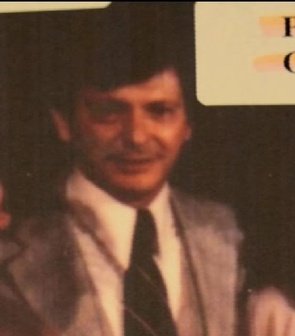
Philip Giaccone, better known as “Philly Lucky,” was a longtime capo in New York’s Bonanno crime family. Born on July 12, 1932, in Ridgewood, Queens, he grew up during the difficult years of the Great Depression and eventually became a respected figure within organized crime.
But in the spring of 1981, Giaccone found himself on the wrong side of a dangerous power struggle inside the Bonanno family. Along with Alphonse “Sonny Red” Indelicato and Dominick “Big Trin” Trinchera, he was accused of planning to remove Bonanno boss Philip Rastelli.
On May 5, 1981, all three men were invited to what appeared to be a peace meeting at a Brooklyn nightclub. It was actually a carefully planned ambush.
From a Difficult Childhood to the Mafia
Giaccone was born into a working-class family in Queens. His father died during the 1930s, leaving his mother to raise Philip and his siblings during one of the hardest economic periods in American history.
Despite the circumstances, Giaccone reportedly did well in school and graduated from high school. He was also raised as a strict Catholic and spent part of his youth serving as an altar boy.
As a young man, however, his life took a very different direction. He became a protégé of Bonanno underboss Giovanni Bonventre and eventually established himself within the crime family.
Giaccone married Annette and had a daughter, Corinne, and a son, Phillip Jr. He also had family connections to the Gambino crime family through marriage.
Unlike many mobsters of his era, Giaccone had a legitimate business as well. He owned Pinto Trucking, a trucking company based in South Ozone Park, Queens. The business also reportedly served as a base of operations for his crew.
Interestingly, despite his position in organized crime, Giaccone was never convicted of a criminal offense during his lifetime.
The Bonanno Family Falls Into Chaos
By the middle of the 1970s, the Bonanno family was going through a major internal crisis.
Philip Rastelli was the official boss, but in 1975 he was sent to prison. With Rastelli behind bars, Carmine Galante became the dominant force within the family.
Galante’s growing power and ambitions eventually alarmed other Mafia leaders in New York. On July 12, 1979, Galante was shot and killed while eating at Joe & Mary’s Italian-American Restaurant in Bushwick, Brooklyn.
One of the men suspected of taking part in the murder was Anthony Indelicato, the son of fellow Bonanno capo Alphonse “Sonny Red” Indelicato.
Galante’s death created a power vacuum.
Different factions inside the Bonanno organization began competing for control, and Joseph Massino emerged as one of the men fighting to strengthen the Rastelli loyalist faction. Another important figure on that side was Dominick “Sonny Black” Napolitano.
But they faced a serious challenge.
Three powerful capos—Sonny Red Indelicato, Dominick Trinchera, and Philip Giaccone—were reportedly working together against the existing leadership.
The Decision to Strike
According to later accounts, the three capos were considering a move against Rastelli and his supporters.
The situation became so serious that the Mafia’s Commission became involved. Massino reportedly received information that the three men were gathering automatic weapons and preparing to eliminate Rastelli loyalists.
Massino decided he couldn’t afford to wait.
He sought advice from other powerful New York Mafia bosses, including Colombo boss Carmine Persico and Gambino boss Paul Castellano. The advice he received was reportedly clear: act before the opposing faction could act first.
So Massino began planning a meeting that would have nothing to do with peace.
The 20/20 Night Club
On May 5, 1981, Giaccone, Trinchera, and Indelicato were invited to the 20/20 Night Club in Clinton Hill, Brooklyn.
The men were supposedly going there to discuss a settlement and find a way to end the conflict.
Instead, Massino and his allies had prepared an ambush.
Several gunmen were waiting inside a storage room. Salvatore Vitale and other men were positioned nearby, while Montreal mobster Vito Rizzuto had traveled to New York to assist Massino.
The attackers reportedly had even prepared ropes and drop cloths, suggesting that the plan had been carefully organized before the victims arrived.
When the three capos entered the storage room, Bonanno members Gerlando Sciascia and Frank Lino were with them.
Then came the signal.
Sciascia made the prearranged gesture, and the hidden gunmen suddenly emerged.
Rizzuto reportedly shouted that it was a robbery, creating confusion for a moment.
Massino immediately struck Giaccone, knocking him down and preventing the men from escaping. Giaccone managed to get back up and attempted to flee, but the escape route was blocked.
The gunmen opened fire.
Giaccone, Trinchera, and Indelicato were killed.
The three men had entered the room expecting a meeting. They had walked into a trap.
One important detail was that the victims were unarmed, reportedly because carrying weapons was against the practice for a supposed peace meeting.
The Bodies Disappeared
After the killings, the attackers transported the bodies to an isolated area in Lindenwood, Queens.
The location was known as “The Hole” and had reportedly been used as a Mafia burial ground.
John Gotti, then a Gambino capo, reportedly helped arrange for the bodies to be buried there as a favor to Massino.
For a time, the plan appeared to have worked.
Then authorities discovered Sonny Red Indelicato’s body on May 28, 1981.
Giaccone and Trinchera, however, remained hidden underground.
Their remains would not be recovered for more than two decades.
Twenty-Three Years Later
In October 2004, reports surfaced that children had discovered what appeared to be human remains in the same Lindenwood area.
The FBI investigated and began excavating the property.
The search eventually uncovered the remains of Philip Giaccone and Dominick Trinchera.
Investigators also recovered personal belongings from the site. Among them was a Piaget watch that had belonged to Giaccone’s wife.
By December 2004, the remains were positively identified as those of Giaccone and Trinchera.
After identification, Giaccone was reburied at Saint Charles Cemetery in East Farmingdale, New York.
The Truth Finally Came From Inside the Mafia
The murders eventually became part of a major criminal case against Joseph Massino.
By then, Massino himself was facing the possibility of the death penalty. In 2005, he pleaded guilty to multiple murders and other crimes, including the killings of Giaccone, Trinchera, and Indelicato.
Massino later became a government witness and received two life sentences.
Vito Rizzuto, who had traveled from Montreal to participate in the murders, also faced prosecution. In 2007, after being extradited to the United States, he pleaded guilty to reduced charges related to the killings and received a ten-year state prison sentence.
A Meeting That Never Had a Chance
Philip “Philly Lucky” Giaccone had spent decades building his position inside the Bonanno family.
He had survived the family’s internal conflicts, established a legitimate business, and risen to the rank of capo.
But the power struggle that followed Carmine Galante’s death changed everything.
On May 5, 1981, Giaccone believed he was walking into a meeting that could help settle a Mafia dispute.
Instead, the meeting had already been turned into a death sentence.
His body remained hidden for more than 20 years before investigators finally recovered it from the Queens burial site.
The story of Giaccone, Sonny Red, and Big Trin became one of the most notorious examples of how Mafia power struggles could turn deadly—even when the men involved believed they were sitting down to negotiate peace.
This story is based on publicly available information and reported facts. It has been independently written and presented for informational purposes. Images, if any, belong to their respective owners.