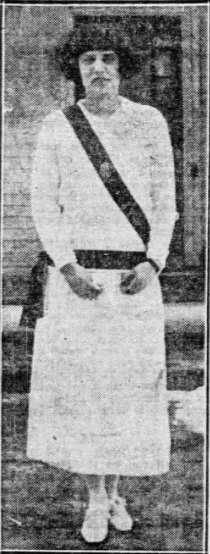
Alice M. Corbett was a 20-year-old American college student whose disappearance in November 1925 became one of the enduring mysteries associated with Smith College in Northampton, Massachusetts. Born on March 3, 1905, and raised in Utica, New York, Corbett was a junior at Smith College and was considered to be doing well academically when she vanished.
The Morning She Disappeared
Friday, November 13, 1925, began with a disturbing event on the Smith College campus. Early that morning, Corbett’s friend and fellow student, Jean M. Robeson, was discovered dead inside the kitchen of Park House dormitory. Her death was determined to have resulted from accidental asphyxiation caused by cooking gas.
Later that morning, at approximately 8 a.m., Corbett was seen leaving her room in Clark House. She did not return that afternoon.
Concerned friends eventually entered her room and found a handwritten note. College officials examined it and reported that it included the words, “Mother, I am going home.” They also believed the contents suggested that Corbett had been in a confused mental state.
Her father, James Corbett, took the note to a physician, who believed Alice may have been experiencing mental illness around the time she disappeared.
There was another troubling detail. Alice was dating Thomas Sterling, a student at nearby Amherst College. Sterling told police that about a week before her disappearance, Alice had asked him to obtain poison for her. He refused. Investigators also found letters between the two indicating that they had recently argued. Sterling was eventually cleared of involvement in Alice’s disappearance in December.
At the time she was last seen, Corbett was wearing a dark dress, a hat, and a distinctive yellow raincoat. She was believed to have approximately $75 with her.
She was described as about 5 feet 7 inches tall and weighing between 111 and 112 pounds. Her hair was brown or dark, and her eyes were described as gray or blue.
The Search Begins
The search started immediately after Alice was reported missing. Smith College students and staff searched the campus, while the following day Massachusetts State Police and local Boy Scouts joined the effort.
One of the main areas searched was Mount Tom near Holyoke, Massachusetts, a location where Alice reportedly enjoyed hiking.
Her father offered a $500 reward for information that could lead to finding her. Radio stations in Springfield, Massachusetts, and Schenectady, New York, also broadcast descriptions of the missing student.
As days passed, investigators received a growing number of reports from people who believed they had seen Alice.
A druggist said he had encountered a young woman he believed was Corbett on the morning of November 13. According to his account, she had asked about the local trolley schedule. Trolley workers, however, said they had not seen anyone matching her description riding the line that day.
Other possible sightings came from Easthampton and Westfield, where witnesses described seeing a young woman resembling Alice who was wearing a yellow rain slicker.
A week after Mount Tom had initially been searched, another witness claimed to have seen Corbett hiking there. Authorities responded by searching the area again.
Reports in the Wilderness
On November 20, telephone linemen working near Whiting Peak on Mount Tom reported an extraordinary encounter. They said a young woman resembling Corbett confronted them at gunpoint, demanded food, and then disappeared into the woods.
The following weeks brought still more reports.
In early December, a Hadley resident told authorities that around the time Alice vanished, they had seen a girl wearing a yellow slicker walking down an embankment toward the Connecticut River.
Police connected that account with an earlier report involving a yellow slicker seen floating in the same general area of the river.
By December 13, State Police Detective Joseph V. Daley expressed the belief that Alice had wandered away and was probably dead.
But the investigation continued.
Hoaxes and False Leads
The publicity surrounding Alice’s disappearance also generated false claims and hoaxes. Police and newspapers reported receiving numerous crank letters in December 1925.
Several months later, in March 1926, a man in Troy, New York, attempted twice to claim the reward by saying that a housemaid working at his boarding house was actually Alice Corbett.
In April, a middle-aged woman went to police in Cheshire, Massachusetts, and claimed that she herself was Corbett.
Then came one of the more unusual developments.
In May, authorities recovered a message in a bottle from the Connecticut River near Northampton. The message was supposedly written by Alice and claimed that she was being held prisoner inside caves near Smith’s Ferry.
Police believed the message was a hoax, but they nevertheless searched the area. Nothing connected to Alice was discovered.
Years of Searching
The search for Alice did not end quickly. Investigators and volunteers continued looking through towns, wooded areas, and waterways across western Massachusetts during 1926.
In January, James Corbett hired a boatman to help search the Connecticut River. Later, in July, canals around Northampton were drained for their annual maintenance, providing another opportunity to search for Alice’s body or clothing.
The family continued to pursue leads even after these efforts produced nothing.
In October 1927, James Corbett renewed public attention to the case by announcing a $1,000 reward as the hunting season began, hoping that people searching wilderness areas might discover something that earlier investigations had missed.
Later Developments
Alice’s disappearance gained renewed attention in 1928 when another Smith College student, Frances Smith, disappeared from her campus residence on January 13.
In March 1929, Smith’s body was recovered from the Connecticut River near Longmeadow. However, no official cause of death was reported.
The Corbett case also produced a confession years later.
In 1933, a man from New York City claimed that he had killed Alice while living in Hadley in 1925. He eventually withdrew the confession. After investigating his statement, police concluded that it was false.
Another possible lead surfaced in 1936, when human bones were discovered in a shallow grave in Northampton. They were initially suspected of belonging to Alice, but examination determined that the remains were historic Native American remains.
No discovery ever established what happened to Alice M. Corbett.
Her disappearance remains unsolved, leaving behind a case marked by uncertain sightings, false claims, searches across Massachusetts, and unanswered questions about what happened after she walked out of her Smith College residence on that November morning.
This story is based on publicly available information and reported facts. It has been independently written and presented for informational purposes. Images, if any, belong to their respective owners.