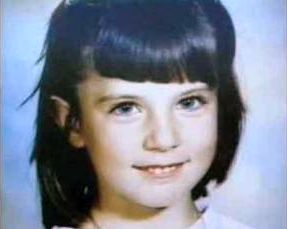
On a September morning in 1988, a Midlothian, Illinois, family woke to a nightmare no parent should ever have to face.
Seven-year-old Jaclyn Marie Dowaliby was gone from her bedroom.
What followed was an enormous search, a murder investigation, a controversial prosecution of Jaclyn’s parents, and a conviction that was eventually thrown out. More than three decades later, the person responsible for Jaclyn’s death has never been definitively identified.
A childhood cut short
Jaclyn was born on May 17, 1981, in Chicago. Her biological parents, James “Jimmy” Guess and Cynthia, separated before her birth and later became involved in a bitter custody dispute. Cynthia ultimately received custody.
When Jaclyn was two, her mother married David Dowaliby. David later legally adopted Jaclyn, and she regarded him as her father. The couple eventually had another child, David Jr.
Those who knew the family described them as close and affectionate. Jaclyn herself was remembered as a cheerful, outgoing child who enjoyed dolls and was well-liked by classmates at Central Park Elementary School.
By 1988, the family lived in a one-story ranch-style house on 148th Street in Midlothian. David’s mother, Anna, also lived there.
Nothing about the family’s ordinary routine suggested that tragedy was about to strike.
The night Jaclyn disappeared
On the evening of September 9, Cynthia took Jaclyn and her younger brother to Kentucky Fried Chicken while David spent part of the evening bowling with friends.
David returned home around 9:20 p.m. Later that night, Jaclyn changed into her nightgown, said goodnight to her mother, and went to her bedroom. She was reportedly reading a Sears catalog before falling asleep.
Around 11 p.m., Cynthia checked on her daughter and found her sleeping.
The children’s bedroom doors were left slightly open. David and Cynthia later maintained that they slept through the night and heard nothing unusual.
But sometime during the early morning hours, Jaclyn vanished.
A disturbing discovery inside the house
David woke around 8 a.m. on September 10 and immediately noticed something unusual: Jaclyn was not in the living room, where he expected to find her watching cartoons.
Her bedroom was empty.
An open suitcase was sitting on the bed, and some dresser drawers had been disturbed. Yet almost none of Jaclyn’s belongings were missing.
At first, David thought she might simply be outside playing.
That changed when Cynthia was awakened and realized their daughter was nowhere to be found.
The family searched the house and surrounding area. They also noticed that the normally locked kitchen door was partly open.
Then investigators found something even more troubling.
A basement window had been broken, and its screen appeared to have been damaged. It initially looked as though someone might have entered the home through that window.
Jaclyn was reported missing to Midlothian police.
The search expands
Authorities immediately began searching for the little girl.
Police officers, firefighters, volunteers, search dogs and all-terrain vehicles were used. A nearby swamp was searched by an underwater recovery team, while the U.S. Coast Guard conducted an aerial search.
Missing-person flyers spread throughout Cook County.
Neighbors tied yellow ribbons to trees around the neighborhood, hoping Jaclyn would somehow be found alive.
But the investigation soon raised difficult questions.
Forensic examination of the broken basement window found an undisturbed layer of dust on the inside sill. Investigators did not find the hairs or fibers they might have expected if someone had recently climbed through it.
The floorboards inside the house were also known to squeak.
If someone had entered through the basement and walked toward Jaclyn’s bedroom, they would have had to pass through areas of the home where noise could potentially have alerted the adults.
Investigators began considering whether whoever took Jaclyn already knew the layout of the house.
Suspicion turns toward the family
Jaclyn’s biological father, James Guess, initially became a person of interest because of his troubled history and a previous attempt to take Jaclyn after losing the custody battle.
But police soon ruled him out because he had been imprisoned in Florida since May 1988.
With no ransom demand and no clear motive, investigators focused on two broad possibilities: an outside abduction or involvement by one or both parents.
David and Cynthia continued cooperating with investigators.
On September 13, David took a polygraph examination in Chicago. He later said FBI agents told him that his answers appeared truthful.
The following day, everything changed.
Jaclyn is found
On September 14, about four days after she disappeared, Michael Chatman was near the Islander Apartments in Blue Island when he noticed a terrible odor.
He investigated and discovered the body of a child concealed beneath a purple-and-white blanket.
It was Jaclyn.
The location was roughly six miles from her home.
Her identity was formally confirmed through dental records.
An autopsy determined that Jaclyn had been strangled with a length of twine that remained tied around her neck. Her body was still dressed in her purple nightgown.
Because of decomposition, investigators could not determine with certainty whether she had been sexually assaulted.
The medical examiner estimated that Jaclyn most likely died during the morning of September 10—the same morning she disappeared.
A witness points toward David
Investigators soon received a potentially important eyewitness account.
Everett Mann, who lived near where Jaclyn’s body was discovered, told police that around 2 a.m. on September 10 he had seen a dark-colored Chevrolet Malibu near the garbage area.
He noticed the vehicle when its headlights came on.
Mann later selected David Dowaliby from a police lineup, saying the man’s distinctive facial features resembled the driver he had seen.
That identification became one of the central pieces of the prosecution’s case.
But there were problems.
Mann had initially described the vehicle as a late-1970s Chevrolet Malibu, possibly dark blue. The Dowalibys owned a light-blue 1980 Malibu, which differed significantly from the vehicle Mann had originally described.
Mann also acknowledged that lighting conditions had made his view difficult and that he could not confidently determine the driver’s race or even whether the person was male or female.
Other witnesses claimed they had seen Cynthia’s car near the location where Jaclyn’s body was found. However, neighbors later testified that her vehicle had actually been at the family home at the relevant time.
The parents are charged
Investigators continued examining the Dowaliby home and family vehicle.
Human hair was recovered from the family’s car, but it did not conclusively establish that Jaclyn’s body had been transported in the vehicle.
A rope similar to the one used to kill Jaclyn also became part of the prosecution’s evidence.
By November 1988, prosecutors had charged both David and Cynthia Dowaliby with their daughter’s murder.
The case against them rested heavily on circumstantial evidence, including the damaged basement window, the eyewitness identification, the alleged connection to the rope, and questions surrounding the family’s account of what happened that night.
Both parents maintained their innocence.
The trial
David and Cynthia went on trial together in Cook County in April 1990.
The prosecution argued that the kidnapping had been staged and that Jaclyn had been killed by her parents before her body was taken to Blue Island.
The defense strongly disputed that theory.
More than forty witnesses testified and nearly two hundred exhibits were introduced.
The eyewitness identification of David became particularly important, but the defense highlighted the inconsistencies in Mann’s original description of the car and the limitations of his view that night.
The rope evidence was also challenged. Even if the rope had come from the Dowaliby home, the defense argued, that did not prove who had used it or how it had reached the crime scene.
Cynthia is acquitted
As the trial approached its conclusion, Judge Richard E. Neville determined that the evidence against Cynthia was insufficient.
On May 2, 1990, Cynthia Dowaliby was acquitted.
David’s case continued.
The following day, the jury found him guilty of Jaclyn’s murder.
He was later sentenced to a total of 45 years—40 years for murder and another five years for concealing a homicide.
David continued to insist that he had not killed his daughter.
The conviction collapses
David Dowaliby did not remain convicted for long.
In October 1991, an appellate court unanimously overturned his conviction.
The court concluded that the evidence was not strong enough to sustain the guilty verdict. Simply being one of the adults present in the home did not establish that David was responsible for Jaclyn’s murder.
The Illinois Supreme Court subsequently refused to reinstate the conviction, and David was released from prison in November 1991 after posting bond.
The man who had once been convicted of killing Jaclyn was now legally free.
And the murder remained unsolved.
Another suspect emerges
In 1993, prosecutors announced that they were reviewing information involving Timothy Randall Guess, Jaclyn’s paternal uncle.
Investigators considered whether he might have been involved in the child’s disappearance and murder.
No significant breakthrough came from that investigation.
Timothy Guess died of bladder cancer in December 2002 at the age of 41.
No one else has ever been convicted of Jaclyn’s murder.
A mystery that never received its final answer
After David’s release, he and Cynthia eventually changed their names and largely withdrew from public attention.
Jaclyn’s surviving family members were left to live with a painful reality: the original conviction had been overturned, her mother had been acquitted, and the person who actually abducted and killed the seven-year-old girl was never established in court.
The case remains one of the most enduring unsolved child-murder cases in the Chicago area.
Jaclyn was only seven years old when she went to bed that September night.
By morning, she was gone.
Four days later, her family learned the devastating truth.
More than three decades afterward, the central question remains unanswered:
Who took Jaclyn Dowaliby from her home—and who was responsible for her death?
This story is based on publicly available information and reported facts. It has been independently written and presented for informational purposes. Images, if any, belong to their respective owners.