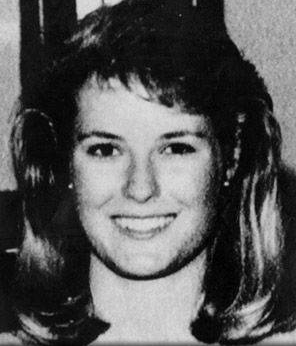
On the night of December 27, 1986, 20-year-old Cara Evelyn Knott was making what should have been an ordinary drive through San Diego County.
She had been visiting her boyfriend in Escondido and was heading toward her parents’ home in El Cajon. Instead of reaching her destination, Cara encountered a California Highway Patrol officer who ordered her off Interstate 15.
That traffic stop would become the beginning of a murder investigation that exposed deeply disturbing allegations about an officer who had used his authority to approach and isolate women traveling alone.
The officer was Craig Alan Peyer, a veteran California Highway Patrol officer who had been with the agency for 13 years.
Cara disappeared that night.
The next day, investigators found her abandoned vehicle near the Mercy Road offramp. Her body was discovered at the bottom of a roughly 65-foot ravine nearby.
What followed was an investigation that uncovered a pattern of troubling encounters between Peyer and female motorists—and eventually led to his conviction for Cara’s murder.
The Last Drive Home
Cara was driving south on Interstate 15 after leaving her boyfriend’s home.
While she was traveling along the freeway, Peyer, who was working his shift in a marked CHP patrol vehicle, directed her to leave the highway and pull onto an isolated, unfinished offramp.
The location was quiet and separated from the main flow of traffic.
Investigators later learned that this particular offramp was not unfamiliar to Peyer. Other women reported that he had stopped them there as well.
According to testimony and evidence presented during the investigation, Peyer had sometimes used traffic stops as opportunities to make personal and inappropriate advances toward women driving alone.
Cara’s encounter apparently became much more serious.
Investigators believed she resisted Peyer’s behavior and threatened to report him. During the confrontation, Cara fought back, scratching and slashing at his face.
Peyer then attacked her with his flashlight and strangled her with a rope.
Afterward, her body was taken to the nearby bridge area and thrown into the ravine below.
Cara’s family, however, did not yet know what had happened to her.
A Strange Twist in the Investigation
One of the most remarkable moments in the early investigation occurred just two days after Cara’s disappearance.
A television reporter from San Diego station KCST-TV was riding with Peyer for a segment about protecting women while driving.
Peyer appeared on camera as a highway patrol officer discussing safety.
But there was something investigators would soon find extremely important: scratches were visible on his face.
Peyer claimed that he had received the injuries after accidentally falling against a fence at the CHP parking lot.
Investigators later examined that explanation and concluded that the fence was not capable of producing the injuries in the way he described.
The scratches appeared increasingly significant as investigators reconstructed Cara’s final moments.
Witnesses also reported seeing Peyer behaving unusually around the time of the murder. A gas station witness reportedly saw him arrive at high speed, appearing disheveled, within approximately an hour of the suspected time of Cara’s death.
The officer who had appeared on television discussing protection for female motorists was beginning to look very different to investigators.
Women Began Coming Forward
The television broadcast had an unexpected consequence.
After seeing Peyer on television, nearly two dozen people contacted authorities. Most were women who said they had previously been stopped by the same officer.
Their stories did not necessarily describe violent encounters.
Some women said Peyer had been friendly or polite.
But several described behavior that made them uncomfortable. Some recalled him touching their hair or shoulders during traffic stops.
The reports helped investigators understand that Cara’s encounter might not have been an isolated incident.
Earlier complaints about Peyer’s conduct had also existed, although his reputation within the CHP had reportedly helped prevent those concerns from receiving serious attention.
Investigators eventually discovered another troubling pattern: Peyer had stopped many motorists for legitimate traffic violations, but a disproportionate number of those motorists were women traveling alone who fell within a similar age and physical range as Cara.
That pattern became an important part of the prosecution’s case.
Evidence Along the Highway
Investigators began piecing together Cara’s final movements.
She had been seen alive at a Chevron gas station approximately two miles from the eventual crime scene.
The station attendant remembered seeing a marked CHP patrol vehicle make a U-turn shortly after Cara drove away.
Peyer’s official records also came under scrutiny.
His patrol log contained a suspicious alteration concerning the time of the incident. Investigators also found changes involving traffic citations that had been issued later, with motorists disputing the information recorded in the documents.
Then came physical evidence.
A rope recovered from Peyer’s patrol vehicle was examined because marks around Cara’s neck appeared potentially consistent with it. A forensic dentist, Norman Sperber, reached conclusions linking the rope to the injuries, although he was ultimately prevented from presenting those findings to the jury in the manner prosecutors had hoped.
Another clue was even more distinctive.
Investigators discovered a small gold-colored rayon fiber on Cara’s clothing. The material was unusual because it had been produced using a yellow pigment rather than conventional dye.
The fiber was consistent with material found in a shoulder patch from Peyer’s CHP uniform.
Additional microscopic fibers were also considered significant.
Tire marks at the bridge suggested that a vehicle had left the location suddenly, leaving dark marks on the pavement.
A small amount of blood was discovered on one of Cara’s boots. Its characteristics were consistent with Peyer’s rare AB-negative blood type and other genetic markers available to investigators at the time.
Modern DNA testing was not available during the original investigation, meaning investigators could not use the sophisticated genetic techniques that would be routine decades later.
Taken together, the evidence created a disturbing picture.
The Trial
Peyer’s first trial ended without a verdict.
The jury reportedly divided 7–5 in favor of conviction, but that was not enough to reach the required unanimous decision.
A second trial followed.
During the retrial, the court excluded certain testimony involving a possible second suspect as well as a hearsay explanation concerning Peyer’s facial injuries.
Despite those limitations, prosecutors presented the remaining evidence connecting Peyer to Cara’s death.
The jury ultimately found him guilty.
His conviction was particularly significant because it involved an on-duty California Highway Patrol officer murdering a motorist he had stopped.
On August 4, 1988, Peyer was sentenced to 25 years to life in prison.
He Would Not Provide DNA
Years later, the case continued to follow Peyer behind prison walls.
At a parole hearing in 2004, after he had served approximately 17 years, Peyer was asked why he had refused to provide a DNA sample.
He declined to answer.
His lack of remorse and refusal to provide the sample were among the issues considered when parole was denied.
Peyer’s subsequent parole attempts also failed.
He was denied parole again in 2008 and in 2012.
By the 2008 hearing, prison officials reportedly considered his institutional record nearly spotless. He had spent years working as an electrician inside the facility and had earned a small monthly wage from the job.
But maintaining a good prison record did not erase the circumstances surrounding Cara’s death.
Cara’s Family Never Forgot
Cara’s death devastated her family.
Her father, Sam Knott, remained connected to the place where his daughter had been found. The family eventually created a memorial garden near the location.
On November 30, 2000, Sam suffered a fatal heart attack only a short distance from that memorial site.
The tragedy became another painful chapter in a family that had already lost Cara years earlier.
Meanwhile, Peyer remained incarcerated.
His third wife, Karen, whom he had married roughly 18 months before Cara’s murder, continued visiting him for years before their marriage eventually ended in divorce around 2007.
The Case’s Lasting Impact
Cara Knott’s murder changed the way many people thought about traffic stops.
A police officer is supposed to represent safety and authority. For Cara, however, the uniform became the very thing that made the encounter possible.
The case also had a wider effect on female motorists. After Peyer’s conviction, reports emerged of women becoming reluctant to stop when ordered by police while traveling alone.
The fear was understandable: Cara had followed the instructions of an officer she had every reason to believe was legitimate.
But the case also demonstrated why drivers should not automatically assume that every encounter with a person claiming police authority is safe. Modern law-enforcement procedures emphasize visible identification, communication with dispatchers, and safer stopping practices when circumstances appear unusual.
For Cara Knott, none of those protections existed in time.
Peyer remains imprisoned at California Men’s Colony in San Luis Obispo, California.
His next parole eligibility is scheduled for January 2027, when he will be nearly 77 years old.
More than four decades after Cara left her boyfriend’s house for what should have been a routine trip home, her name remains permanently connected to one of the most disturbing cases involving a California Highway Patrol officer.
Her murder was solved.
But the circumstances surrounding it left a much larger question that continues to haunt the case:
How many women had been stopped by Peyer before Cara—and how close did some of those encounters come to becoming something far worse?
This story is based on publicly available information and reported facts. It has been independently written and presented for informational purposes. Images, if any, belong to their respective owners.