In late 1986, a woman named Josefina Rivera disappeared in Philadelphia.
She was 25 years old, and her disappearance initially offered little indication of the horrifying situation she had entered. But within the following weeks, several other women would also vanish—and investigators would eventually uncover a hidden basement where women had been imprisoned, abused, and tortured.
The man responsible was Gary Michael Heidnik, a Philadelphia resident whose crimes became one of the city’s most disturbing criminal cases of the 1980s.
Between November 1986 and March 1987, Heidnik abducted six women. Five survived their captivity. Two of the women, Sandra Lindsay and Deborah Dudley, died.
The case ultimately resulted in Heidnik being convicted of murder, kidnapping, rape, aggravated assault, and other offenses. He was sentenced to death and eventually executed in 1999.
The Captives in the Basement
Heidnik began his series of abductions on November 25, 1986, when he kidnapped Josefina Rivera.
He held her inside his home at 3520 North Marshall Street in North Philadelphia.
Over the next several weeks, four additional women were taken captive.
The women were confined in a specially constructed pit in the basement. According to evidence presented during the investigation and trial, they were subjected to physical abuse, sexual violence, threats, and other forms of torture.
Heidnik’s victims were Black women, while Heidnik himself was white.
His defense attorney later described an elaborate belief system that Heidnik supposedly held. According to the attorney, Heidnik wanted to enslave women and father children with them as part of a bizarre idea about creating what he considered a “perfect race.”
That explanation became part of the effort to understand Heidnik’s state of mind, but prosecutors argued that his behavior demonstrated planning and awareness rather than legal insanity.
Sandra Lindsay’s Death
One of the captives, 24-year-old Sandra Lindsay, eventually died while being held in the basement.
Evidence indicated that she had been subjected to severe mistreatment, including starvation, and became seriously ill with a fever that was not treated.
After her death, Heidnik attempted to conceal what had happened to her.
Investigators later learned that he had dismembered Lindsay’s body and disposed of portions of it in different ways.
Some reports also claimed that Heidnik processed parts of Lindsay’s remains and mixed them with dog food, supposedly giving the mixture to the surviving women.
However, this particular claim was disputed.
Heidnik’s defense attorney, Charles Peruto Jr., said investigators who examined kitchen equipment found no evidence supporting the cannibalism story. Peruto argued that Heidnik himself had promoted the story and that it was part of an attempt to strengthen an insanity defense.
Regardless of the dispute over that specific allegation, the confirmed evidence surrounding Lindsay’s death was already horrific.
At one point, police had even visited Heidnik’s home after neighbors complained about a terrible smell coming from the property.
When questioned, Heidnik reportedly told officers that he had been cooking a roast that had burned while he slept.
The officers left without discovering the women being held downstairs.
A Second Death
Heidnik also used electricity as a method of punishment and torture.
On one occasion, three of the women were restrained and placed inside the basement pit. Heidnik then ordered Rivera and another captive to help fill the area with water.
He subsequently used an electrical cord to send current through the restraints.
The incident killed 23-year-old Deborah Dudley.
Afterward, Heidnik disposed of her body in the New Jersey Pine Barrens.
For the women who remained imprisoned, the situation became increasingly desperate.
They had to survive not only the physical abuse but also the constant uncertainty over what Heidnik might do next.
Jacqueline Askins Becomes Another Victim
On January 18, 1987, Heidnik abducted 18-year-old Jacqueline Askins.
She was the youngest of the six women.
Years later, Askins publicly discussed her experience and described some of the methods Heidnik used to control his captives. She recalled the women being restrained and subjected to brutal treatment.
Her testimony helped provide investigators and the public with a clearer picture of what had been happening inside the North Philadelphia house.
At that point, however, the outside world still had little idea that multiple women were being held there.
The Break in the Case
The chain of events that finally brought the police to Heidnik began with another victim.
On March 23, 1987, Heidnik and Josefina Rivera abducted 24-year-old Agnes Adams.
The following day, Rivera managed to persuade Heidnik to let her temporarily leave the area so that she could visit her family.
He drove her to a gas station and apparently expected her to return.
Rivera never came back.
Instead, she made her way to her boyfriend’s home and contacted police.
Officers immediately noticed injuries around her leg consistent with prolonged restraint.
That gave them a reason to investigate her account.
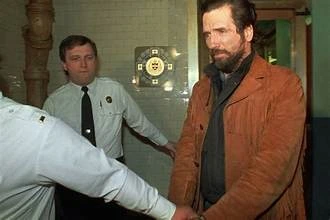
Police went to the gas station and arrested Heidnik.
His associate, Cyril Brown, was also taken into custody.
Brown eventually agreed to testify against Heidnik after being released on bail. His testimony became an important part of the prosecution’s case because he told investigators that he had witnessed events inside the basement, including Lindsay’s death and the subsequent handling of her body.
The discovery of Rivera’s injuries and her account finally opened the door to the house on North Marshall Street.
What investigators found there exposed the full extent of the captivity.
The Insanity Defense
After his arrest, Heidnik attempted to portray himself as mentally incapable of being held responsible for his actions.
At his arraignment, he reportedly claimed that the women had already been inside the house when he moved in.
At trial, defense attorney Charles Peruto Jr. pursued an insanity defense.
Prosecutors, led by Charles Gallagher III, worked to demonstrate that Heidnik understood what he was doing.
One important piece of evidence involved Heidnik’s finances.
He had accumulated approximately $550,000 through his brokerage account, demonstrating that he was capable of managing complicated financial matters.
His financial adviser, Robert Kirkpatrick of Merrill Lynch, also testified regarding Heidnik’s investment activities and described him as someone who understood his financial decisions.
The prosecution used this evidence to challenge the argument that Heidnik was legally insane.
The question before the jury was not simply whether Heidnik behaved in a bizarre or disturbing manner.
It was whether he understood the nature and consequences of his actions sufficiently to be held criminally responsible.
The jury ultimately rejected the insanity defense.
Conviction and Death Sentence
On July 1, 1988, Gary Heidnik was found guilty of multiple serious offenses.
His convictions included:
- Two counts of first-degree murder
- Six counts of kidnapping
- Five counts of rape
- Four counts of aggravated assault
- Two counts of involuntary deviate sexual intercourse
He was sentenced to death and transferred to Pennsylvania’s prison system.
Even after his conviction, Heidnik continued to challenge the proceedings and his own fate.
In January 1989, he attempted suicide by taking an overdose of prescribed Thorazine.
His legal battle continued for years.
The Final Appeals
In 1997, Heidnik’s daughter, Maxine Davidson White, and his former wife, Betty Disto, sought a stay of execution in federal court.
Their argument centered on whether Heidnik was mentally competent enough to be executed.
The legal proceedings continued through several courts for approximately two years.
On July 3, 1999, the U.S. District Court for the Eastern District of Pennsylvania issued a ruling that cleared the way for the execution to proceed.
Pennsylvania Governor Tom Ridge supported carrying out the sentence.
There were no further legal developments that prevented the execution.
The End of Gary Heidnik
On July 6, 1999, nearly twelve years after his conviction, Gary Heidnik was executed by lethal injection at State Correctional Institution–Rockview in Bellefonte, Pennsylvania.
His final meal consisted of two slices of cheese pizza and black coffee.
He was 55 years old.
His body was later cremated.
Heidnik’s execution was historically significant because he became the last person executed by the Commonwealth of Pennsylvania before the state’s subsequent long pause in executions. He was also one of only three people executed in Pennsylvania after the death penalty resumed in the modern era, following Keith Zettlemoyer and Leon Moser.
A Case That Still Disturbs
The Gary Heidnik case remains remembered not simply because of the murders, but because of the prolonged captivity endured by the surviving women.
A house in an ordinary Philadelphia neighborhood had concealed a basement where victims were held for months while people outside remained largely unaware of what was happening.
The case also raised difficult questions about warning signs, missed opportunities, mental illness, criminal responsibility, and how authorities respond when disturbing behavior is hidden behind the walls of a private residence.
Most importantly, the women who survived were not merely witnesses to a notorious crime. They were victims who endured prolonged captivity and violence before one of them, Josefina Rivera, found an opportunity to escape and seek help.
That decision ultimately exposed what was happening inside Heidnik’s basement—and brought an end to one of Philadelphia’s most disturbing criminal cases.
This story is based on publicly available information and reported facts. It has been independently written and presented for informational purposes. Images, if any, belong to their respective owners.