A Quiet Home in Cape Coral
Robin Cornell was born on November 30, 1978, in Florida. She grew up with her mother, Jan, and an older sister. After Robin was ten, the family moved to Cape Coral, where Jan found work at a nearby hospital.
The new town quickly became home for Robin. She made friends at school, participated in sports, and loved spending time outdoors. Animals were especially important to her. She once brought home an injured bird and cared for it until it was healthy enough to fly away.
Jan was also beginning a new chapter in her own life. She had started dating a man named Donald, and she had also become close friends with Lisa, a woman she met through work.
In early May 1990, Jan invited Lisa to move into the family townhouse. Lisa needed an affordable place to live, while Jan had a spare bedroom. The arrangement seemed convenient for everyone.
Lisa soon became comfortable around Robin and agreed to look after her when Jan was working.
No one expected that, only a week after Lisa moved in, the house would become the scene of a brutal double murder.
The Night Jan Came Home
On May 9, 1990, Jan planned to spend the evening with Donald watching a game. She initially felt uncomfortable leaving 11-year-old Robin with Lisa for several hours, but Lisa assured her that everything would be fine.
Jan left and expected to return later that night.
Instead, she fell asleep while watching television at Donald’s home.
Around 3 a.m., Jan woke up and drove back. When she reached her townhouse, something immediately felt wrong. Both locks on the front door were secured, even though Lisa was only supposed to have a key for one of them.
Jan heard footsteps inside.
She knocked, expecting someone to answer. Nothing happened.
She eventually went around to the back of the house, where she noticed that the sliding door was partially open.
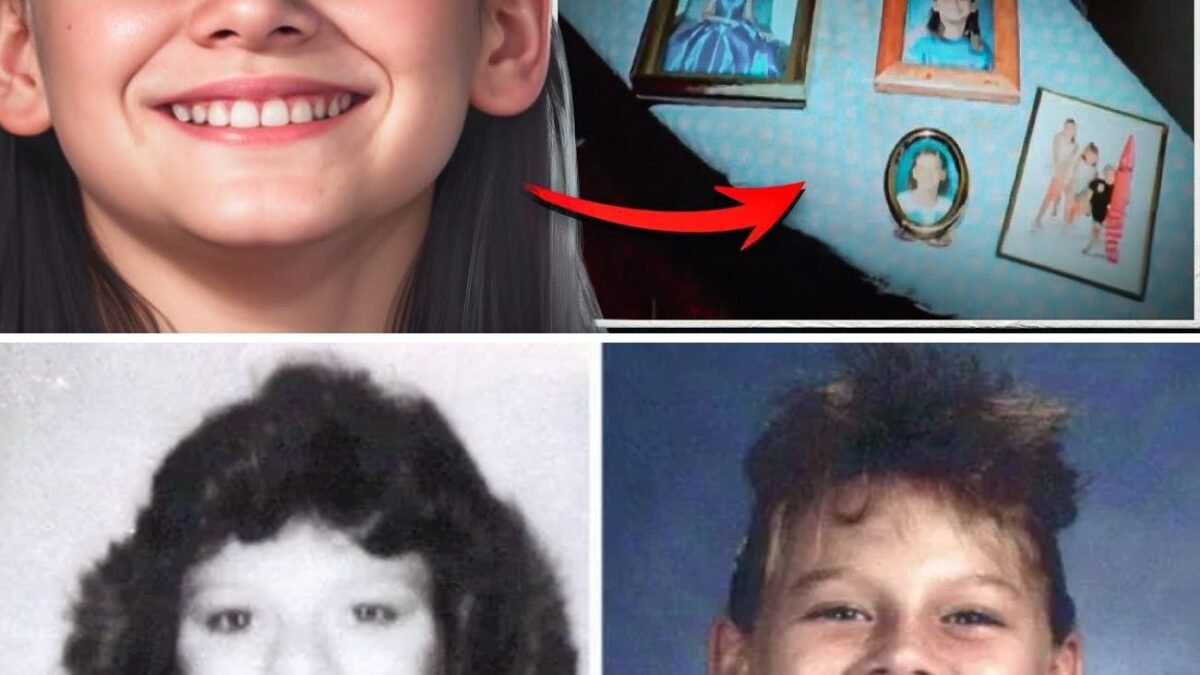
When Jan stepped inside, the scene became increasingly disturbing. The house was disorganized, and objects had been knocked over or broken. Even more strangely, photographs of Robin and her older daughter had been removed from the wall and arranged on an ironing board.
Then Jan went upstairs.
Robin was lying on the floor beside her bed. She had suffered severe injuries and was already dead.
Jan called for emergency help, desperately hoping something could still be done.
But the tragedy was even larger than she initially realized.
Police discovered Lisa’s body in another bedroom. She was also dead.
Two women had been killed inside the same home, and whoever had done it had disappeared without leaving an obvious explanation.
The Clues Left Behind
Investigators immediately began documenting the townhouse.
Cigarette butts were discovered inside that did not appear to belong to Jan or Lisa. A set of Toyota keys was found in Jan’s bedroom. Investigators also believed the killer had showered after the attacks, possibly attempting to remove evidence.
A pair of socks was left behind as well.
Several of Lisa’s belongings were missing, including her driver’s license, credit cards, checkbook, and a watch she intended to give to her boyfriend. The watch carried a personal inscription, making its disappearance particularly unusual.
Detectives also examined the strange arrangement of Robin’s photographs. They considered whether the placement was meant to communicate something to Jan or investigators.
Forensic examination eventually provided the most important evidence.
Investigators determined that both victims had been beaten and suffocated with pillows. Evidence also indicated that both had been sexually assaulted.
Biological material recovered from Robin’s body, her bedding, and her pillow was sent for testing.
The samples all came from the same man.
But in 1990, there was no database match waiting for detectives.
The killer’s identity remained unknown.
A Case That Refused to Die
Jan later told investigators about something frightening that had happened before the murders.
For several nights, she had heard strange sounds outside her home. She noticed the backyard gate moving and thought someone might have been near the sliding door.
Then, on the morning of May 9, she saw a man outside her bedroom window.
He smiled at her before disappearing.
Jan was frightened but did not call police because she had not been able to see him clearly.
Investigators began interviewing residents in the surrounding area. Nineteen men were initially considered possible suspects, eventually narrowing to ten.
One resident attracted particular attention because neighbors reportedly said they had seen him looking through windows. He later moved out of state, and detectives traveled to Missouri to question him. Jan also said his photograph resembled the man she had seen outside her window.
But investigators could not connect him to the murders.
Another resident reported seeing an unfamiliar vehicle slowly moving through the townhouse complex the day before the killings. A man wearing a red cap was reportedly behind the wheel.
Again, there was no way to establish who he was.
Detectives also investigated Lisa’s personal relationships, including her boyfriend and former partners, because some of her belongings had been taken. Nothing produced the breakthrough they needed.
The case eventually went cold.
Television coverage generated hundreds of tips, but none identified the killer.
In 2005, fifteen years after the murders, police reopened the investigation and assigned a detective to work on the case exclusively for six months.
Still, the DNA remained unmatched.
For years, it seemed that the person responsible might never be identified.
A DNA Match After 26 Years
Then, in August 2016, an unrelated arrest changed everything.
A 54-year-old man in a neighboring community was arrested after an altercation involving his adult son. Because of the circumstances of that arrest, authorities obtained his DNA and entered the profile into a database.
That profile produced a match.
The man was Joseph Ziller.
His DNA corresponded with the biological evidence recovered from the 1990 crime scene.
Investigators obtained another sample directly from Ziller, and laboratory testing confirmed the connection.
The evidence that had sat in storage for more than two decades had finally identified a suspect.
Ziller had been 28 years old when Robin and Lisa were killed. Investigators also learned that he had been arrested only two months after the murders on unrelated charges involving stolen property and an illegal firearm.
At the time, those offenses did not result in a mandatory DNA collection that would have placed him in the database.
He had never been identified as a suspect in the original investigation.
For 26 years, his name had never been part of the case.
The Trial Decades Later
Ziller was arrested and prosecutors announced that they intended to pursue the death penalty.
He denied responsibility for the murders.
The trial eventually began in May 2023, nearly thirty-three years after Robin and Lisa were killed.
The prosecution’s case centered heavily on the DNA evidence. The defense did not dispute that Ziller’s genetic material was connected to the crime scene, but argued that there was no clear motive and suggested someone who knew Jan could have been responsible.
When Ziller testified, his explanation for the DNA created another dramatic moment in the courtroom.
He claimed that he had previously slept with Jan and suggested that the biological evidence could have come from that encounter. Jan denied ever knowing him or having him in her home.
Prosecutors presented expert testimony challenging Ziller’s explanation, including evidence concerning the condition and location of the biological material.
Ziller continued to deny involvement.
The jury deliberated for only a few hours before finding him guilty of the murders.
The Final Chapter
During the sentencing proceedings, Ziller’s defense team presented arguments concerning his childhood and claimed he suffered from mental disorders. They also raised a claim that he had experienced memory loss following a motorcycle accident.
Experts who evaluated him did not support those claims, according to the source material.
Then came another disturbing courtroom incident.
As Ziller entered the courtroom for sentencing, he approached his attorney and unexpectedly struck him in the head with his elbow. Security officers immediately restrained him.
Despite everything that had happened, his attorney continued representing him.
The judge ultimately sentenced Ziller to death.
For Jan and Lisa’s relatives, the case had finally reached an ending that had seemed impossible for decades. The DNA evidence had connected a previously unknown suspect to biological evidence preserved since 1990.
But one part of the story remains striking.
The answer did not come from a confession, a witness finally coming forward, or a forgotten piece of evidence.
It came from DNA that had been waiting for a match for more than two decades.
Robin Cornell was only 11 years old when her life was taken. Lisa was 32.
For years, their deaths remained an unanswered mystery in Cape Coral.
Then, after 26 years, a completely unrelated arrest finally gave investigators the name they had been searching for.
This story is based on publicly available information and reported facts. It has been independently written and presented for informational purposes. Images, if any, belong to their respective owners.